

There are plenty of television series about criminals. Far fewer are interested in the contradictions that make them human.
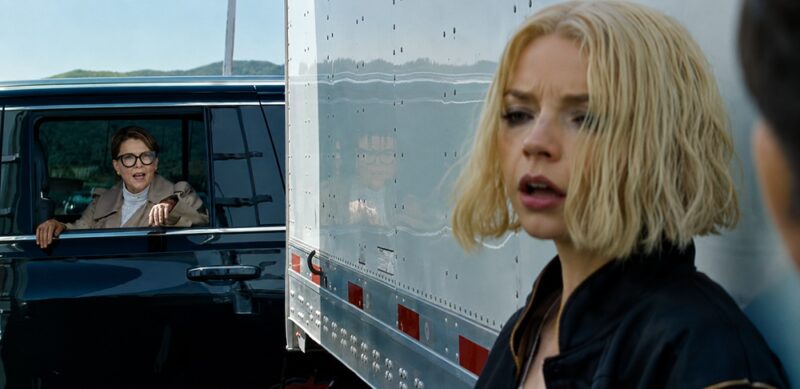
On paper, Lucky has all the ingredients of a high-stakes thriller. Based on Marissa Stapley’s bestselling novel, the Apple TV+ series follows Lucky (Anya Taylor-Joy), a gifted con artist forced back into the criminal world she thought she’d escaped after a multi-million-dollar heist unravels. Hunted by both the FBI and a powerful crime syndicate, survival means confronting the very instincts she has spent years trying to bury.
But beneath the chases, betrayals and shifting alliances lies something more psychologically compelling. Rather than dividing its characters into heroes and villains, Lucky is fascinated by people capable of holding opposing truths at the same time.
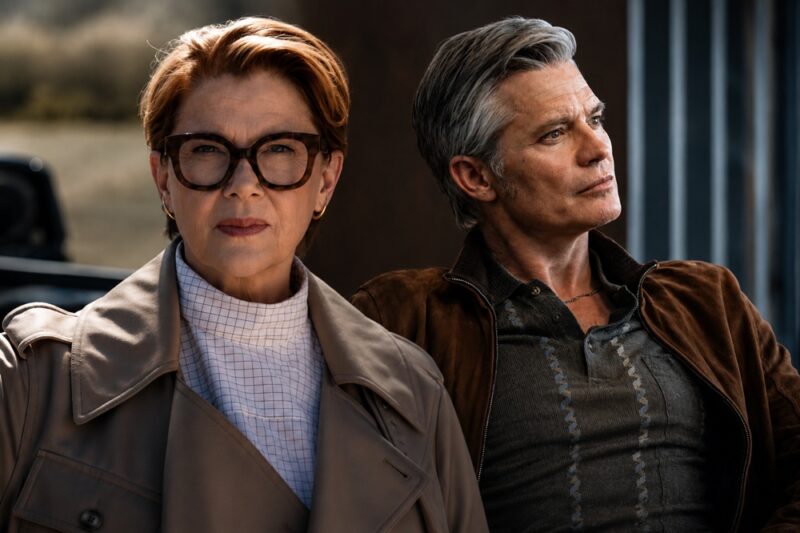
It’s a quality that immediately drew Academy Award nominee Annette Bening to Priscilla, the formidable crime boss standing in Lucky’s path.
Asked what decades of acting have taught her about people, Bening doesn’t point to fame or performance technique. Instead, she describes acting itself as an exercise in radical empathy.
“Getting to act out things that you would never do in real life is actually quite therapeutic,” she says. “Every job is an exercise in delving into someone else’s point of view from the deepest level possible.”
That philosophy explains why Priscilla appealed to her. Playing someone she cheerfully describes as “sort of a sociopath” wasn’t about embracing cruelty for its own sake. It was about understanding the emotional logic that allows someone capable of monstrous decisions to still believe they’re acting from love.
“I really got into it,” she laughs. “It’s very liberating.”
Priscilla’s most revealing relationship isn’t with Lucky at all, but with her own son. Asked whether her hostility towards Lucky stems from maternal protectiveness or jealousy over the woman entering her son’s life, Bening rejects the idea that it has to be one or the other.
“I think it’s both,” she says. “Anytime I find a contradiction in a character, I know I’m in good territory, where two things are true at the same time.”
It’s an observation that feels almost like a thesis statement for the series itself.
Priscilla can exploit her son while genuinely mourning his suffering. She can weaponise love without ever questioning that the love itself is real.
“Is she willing to exploit her son? Yes, I think she is,” Bening says. “Is she heartbroken when something happens to him? Yes, I think it’s both.”
The performance isn’t built around asking audiences to sympathise with Priscilla’s actions. Instead, it’s about recognising that contradiction isn’t hypocrisy. Human beings are often capable of sincere love and extraordinary selfishness simultaneously.
That complexity extends beyond the screenplay and into the physical construction of the character. Bening credits costume designer Christine Wada with helping her discover Priscilla long before cameras rolled.
“The great designers, in a way, hand you the character,” she says.
For Bening, costume isn’t decoration. It’s psychology.
“Shoes are extremely important,” she explains. “Depending on which pair of shoes you put on in the morning, how it makes you feel. It’s kind of like that, except on steroids in my work.”
Rather than arriving with a fixed image, she embraces collaboration, allowing costume to reshape her understanding of the role.
“Sometimes a designer will take me in a direction I never would have imagined,” she says. “I like that.”
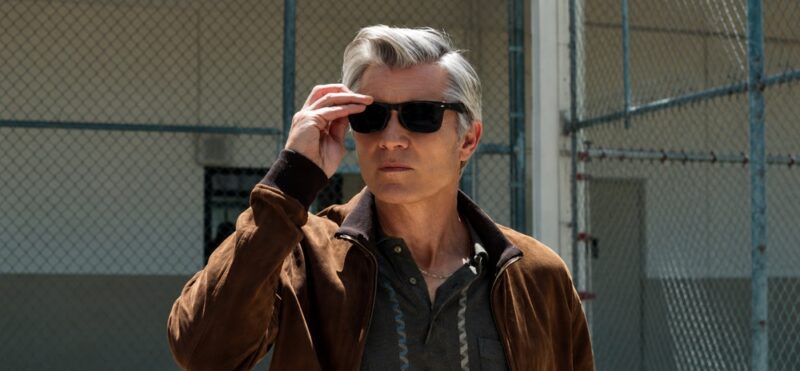
Timothy Olyphant‘s John occupies a similarly fascinating moral grey area.
Having spent much of his career playing sheriffs, marshals, lawmen and outlaws, Olyphant suggests those labels have never mattered nearly as much as the contradictions beneath them.
“The thing that’s so attractive about this part is the contradiction,” he says. “He’s behind bars, but he behaves as though he’s one of the good guys. He genuinely loves his daughter. He’s genuinely trying desperately to do the right thing. He just isn’t capable.”
Like Priscilla, John refuses to fit neatly into a moral category.
Viewed from the outside, Olyphant acknowledges, he’s “arguably a bit of a monster.”
Playing him, however, reveals something else entirely.
“There was humour, and there was genuine vulnerability,” he says. “The part of him that’s arguably sort of despicable is he’s so unaware of it.”
It’s an observation that hints at one of Lucky‘s greatest strengths. Its antagonists don’t wake each morning believing they’re villains. They justify themselves. They rationalise. They convince themselves they’re protecting the people they love, even as they’re destroying those same relationships.
That’s infinitely more unsettling than straightforward evil.
Olyphant also recognises that this stage of his career has brought opportunities to inhabit characters whose histories are already etched into every interaction.
“It’s been fun reaching this stage, both in life and in my career, to get these characters that have lived a life,” he reflects. “You already get a feel for that at hello.”
That accumulated emotional weight gave him some of the richest material of his career.
“This role is some of the greatest material I’ve ever been given,” he says. “The show as a whole had such a beautiful arc to it, but individual scenes had incredible arcs as well.”
Taken together, Bening and Olyphant speak less about Lucky as a conventional crime thriller than as a drama about identity. The heists, shootouts and criminal conspiracies may provide the engine, but the real tension comes from watching characters negotiate the stories they tell themselves about who they are.
A mother who weaponises love while believing every word of it. A father convinced he’s trying to do the right thing despite a lifetime proving otherwise. A con artist forced to decide whether escaping her past means rejecting it or finally accepting that it’s part of her.
In a genre often driven by spectacle, Lucky appears to find its greatest thrills somewhere quieter: in the uncomfortable truth that the people we fear most are rarely defined by a single instinct. They’re defined by the contradictions they carry, and by how long they can convince themselves those contradictions can coexist.
Lucky will premiere globally on Wednesday, July 15th, 2026 on Apple TV with the first two episodes, followed by new episodes every Wednesday through August 19, 2026.
