

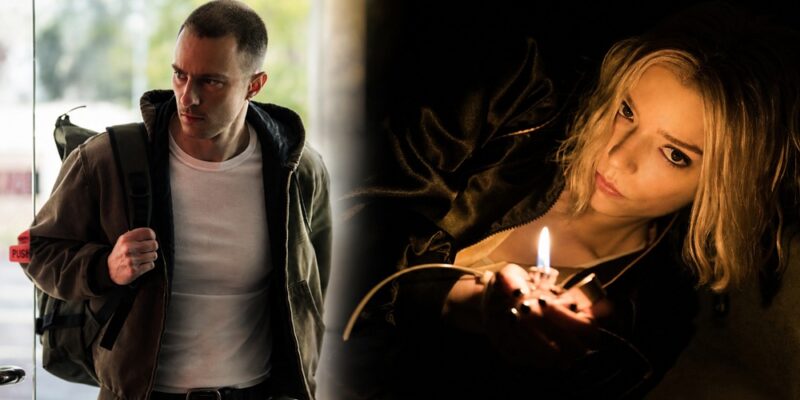
On paper, Lucky has all the ingredients of a gripping crime thriller.
There’s a multimillion-dollar heist gone wrong, a woman on the run from both the FBI and a ruthless crime boss, and a protagonist forced to revisit a life she desperately tried to leave behind. But beneath the danger, deception and high-stakes action, the new Apple TV+ limited series is interested in something far more personal: the stories we inherit and the people we’re trying to become.
Written by Jonathan Tropper and Cassie Pappas and based on Marissa Stapley’s bestselling novel, Lucky follows Lucky Armstrong (Anya Taylor-Joy), a former con artist who has spent years distancing herself from the criminal world she was raised in. When circumstances force her back into that life, she finds herself confronting not only her past, but the worldview that shaped her from childhood. For Taylor-Joy, that psychological complexity was what distinguished Lucky from the many glamorous con artists that have populated film and television.
“I love con movies,” she admits. “They’re always very slick and sexy, and George Clooney looking handsome, and I adored them. But what was interesting to me about Lucky was it gave a very different vision of what it is to be somebody that can never sit still and somebody that has to keep moving in order to survive.”
The actress was fascinated by the less glamorous reality of life as a confidence artist – someone who is constantly reading people, calculating situations and, ultimately, taking from others in order to survive. “That was a side of the con that I hadn’t seen before, and that’s what I was excited to bring to life.” That tension between survival and self-discovery sits at the centre of the series. Throughout Lucky, the character begins questioning not just the choices she’s made, but the lens through which she’s always viewed the world.
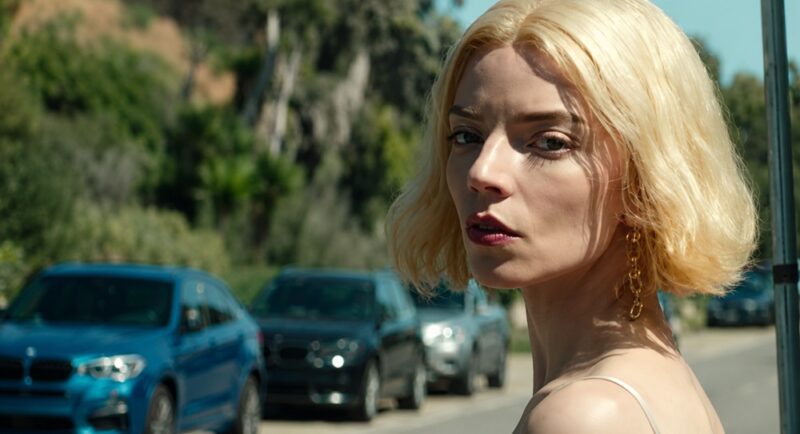
One of the show’s recurring ideas is that Lucky inherited more than criminal skills from her father. She inherited a way of interpreting reality itself. In the writers’ room, the creative team often described Lucky as someone who could “see the matrix” whenever she entered a room. She instantly identifies vulnerabilities, motivations and opportunities. Yet what initially appears to be a superpower gradually reveals itself to be a burden. “What we liked is that her dad taught her to see the world that way,” Taylor-Joy explains. “But what she didn’t realise is that there’s this whole other side to life that she’s possibly missing out on, which is one of human connection and empathy.” Taylor-Joy sees a clear distinction between herself and the character in that regard. “I think I’ve always been a very empathetic person,” she says. “I pick up on feelings inherently. But I think probably what separates Lucky and myself is in order to be able to see the game everyone’s playing, I think inherently you have to have an amount of cynicism that I just don’t have.”
Instead, Taylor-Joy remains stubbornly optimistic about people. “I really do believe the best in people, and I do believe that people can change. So that’s a cynicism that I don’t want to inherit.” That idea of inheritance – both emotional and psychological – extends beyond Lucky herself and into her relationship with Cary, played by Drew Starkey.
For Starkey, the series is ultimately about confronting the paths we’re told we’re destined to follow. “I think there’s a big question about destiny and fate,” he says. “We’re all born into this idea that we’re meant to go down a certain road.” Like Lucky, Cary finds himself wrestling with expectations about who he’s supposed to be. What connects the pair is their shared desire to define themselves outside of those expectations. “I think these are two characters who have had incredibly similar life experiences in two totally different worlds,” Starkey says. “They’re able to kind of shape their own fate. There’s some hope in that, and hope within each other.”
Taylor-Joy jokingly suggests that Sigmund Freud would have had plenty to say about the pair. “You could argue that, in a way, they’re both dating a vision of their parents,” she laughs. “But also desperately trying to move away from that and trying not to play out those roles again.” The relationship becomes one of the emotional anchors of the series, grounding the action in something recognisably human. That humanity was also central to the casting process.
As a producer on the project, Taylor-Joy was deeply involved in shaping the world of Lucky, including advocating for Starkey to play Cary. “I fought very hard for Drew to be in this show,” she reveals. “I knew he was our Cary.” What impressed her most was his ability to balance vulnerability and strength. “You have this ability to be very vulnerable whilst wrapped in a lot of strength,” she tells him. “This character needed to be somebody that you would miss as the audience and then also want to hear out after he does something which is technically unforgivable.” The admiration was clearly mutual. “It’s always a gift as an actor to have source material to work from,” Starkey says of adapting Stapley’s novel. “But Jonathan (Tropper, creator) really offered a great sense of freedom.”
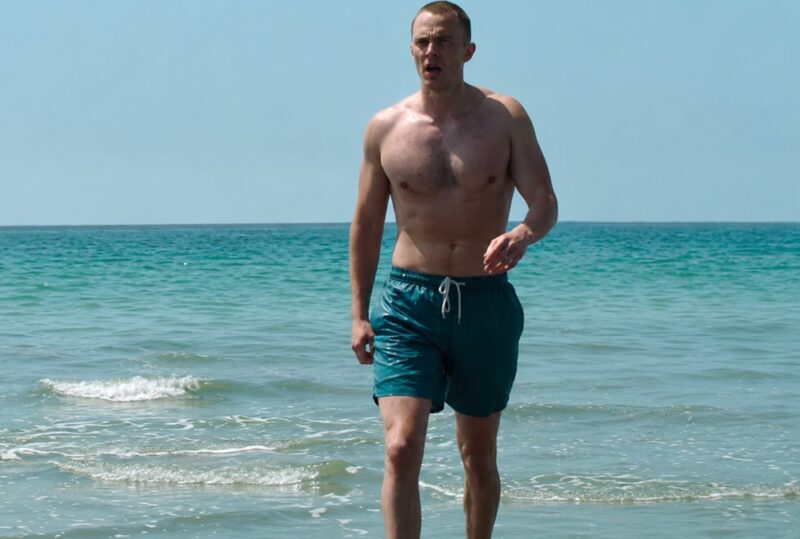
Rather than feeling constrained by the existing fanbase of the book, Starkey found himself encouraged to explore. “We got to really play with it, which was lovely.” Taylor-Joy felt similarly. While the novel served as a crucial foundation, the adaptation quickly evolved into its own beast. “The main difference between the book and the series, without giving too much away, is that the book centres very heavily on a lottery ticket, and we don’t have that in our show,” she explains. Those changes were made with the blessing of Stapley herself, who remained closely involved throughout the process. “She was just so gung ho and so supportive about it all.” That willingness to expand and reshape the story allowed the creative team to push Lucky into increasingly difficult situations.
As Taylor-Joy recalls, it was showrunner Jonathan Tropper who challenged the writers to turn up the heat. “He said, ‘I love these characters. I wonder if we can put them in the hottest water possible. What can we do to up the stakes and make this a very muscular television ride for everybody?'” Yet for all its twists, betrayals and action sequences, some of the show’s most revealing moments are surprisingly quiet. One early sequence finds Lucky observing an ordinary family dynamic – something she’s never truly experienced herself. What begins as a simple stopover becomes a painful confrontation with everything she has been missing. “I think you only know what you know,” Taylor-Joy says. “Lucky’s been operating with a story in her mind that has helped her get to the point where she’s at in life.” Part of that story involves convincing herself that her childhood wasn’t worth examining. “‘My childhood was fine. Full stop. I don’t want to talk about it,'” Taylor-Joy says, describing Lucky’s mindset. “Because if I have to, then that’s going to change the way that I look at my present and ultimately my future.”
Watching a functioning family forces Lucky to recognise what she’s been denying. The sequence is particularly impactful thanks to Alanna Ubach, whom Taylor-Joy praises enthusiastically. “She brings so much gravity to every role that she plays. She really eats up the screen.” More importantly, the moment forces Lucky to confront something she rarely allows herself to consider: the possibility that she’s become the villain in someone else’s story. “I think it’s a moment where you get to see her really struggle with the decision to take from people who have been nothing but kind to her,” Taylor-Joy says. “She’s the bad in this environment, and I don’t think she’s used to necessarily seeing herself that way.” It’s a moment of reckoning that encapsulates what makes Lucky so compelling.
While the series certainly delivers the thrills audiences expect from a crime drama, its real interest lies in the internal battle unfolding beneath the surface. Lucky may be running from the FBI, a crime syndicate and the consequences of a disastrous heist, but her most difficult challenge is something far more universal: figuring out who she is once she stops seeing the world through somebody else’s eyes.
Lucky will premiere globally on Wednesday, July 15th, 2026 on Apple TV with the first two episodes, followed by new episodes every Wednesday through August 19, 2026.
