

On the surface, Lucky is a high-stakes thriller about a woman running from both the law and the criminal world she thought she’d left behind. Beneath the twists, cons and near-constant danger, however, lies a far more universal story about inheritance – not of money or possessions, but of perspective.
Adapted from Marissa Stapley’s bestselling novel, the Apple TV+ series follows Lucky (Anya Taylor-Joy), a gifted con artist whose greatest challenge isn’t escaping the FBI or a ruthless crime boss, but untangling who she is from who she was taught to be. Raised by a father who viewed every room as a puzzle to be solved and every person as a potential mark, Lucky has spent her life seeing the world through a lens she never consciously chose.
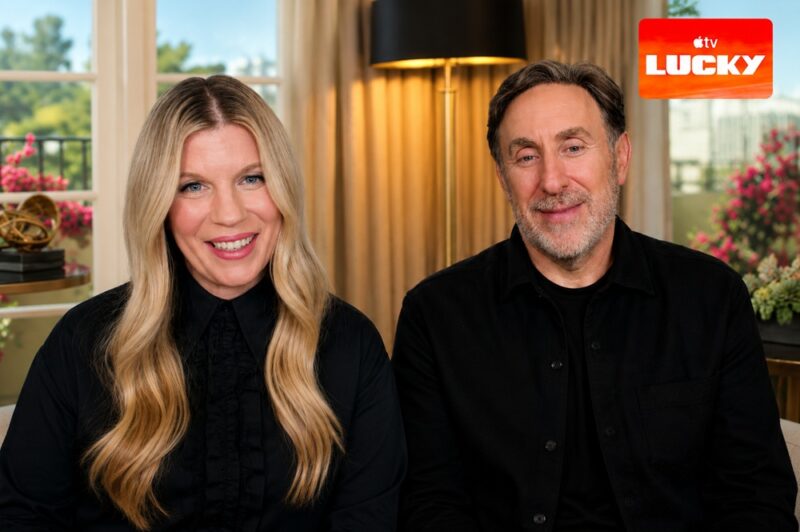
When our Peter Gray spoke with series creators Jonathan Tropper and Cassie Pappas ahead of its streaming premiere, the conversation quickly moved beyond crime and suspense into something more deeply human: the ways our parents shape how we interpret reality, the inherited beliefs we spend years either embracing or resisting, and the lifelong challenge of discovering where their influence ends and our own identity begins. For all its danger and deception, Lucky is ultimately a story about self-definition – and whether any of us can ever truly escape the people who made us.
I wanted to ask both of you, because one of the ideas that I found really fascinating is that Lucky doesn’t just inherit the skills from her father, she inherits a way of interpreting reality. Do you think that’s something all of us experience – inheriting a worldview from our parents that we’re either trying to embrace or spend our lives changing?
Cassie Pappas: Yeah, I think so. Even if we may not be aware of it. I mean, my parents may not be con-artists, but I might read the room in the way they taught me to read the room, you know? You may not even realise you’re doing it until you reach a certain age, and then you realise that maybe you don’t see the world that way – which is why I think there are so many parts of this show that are deeply universal. But what gives it that juice in terms of stakes is the criminality of it. What does it look like when your mother-in-law’s a mob boss and your dad’s a con-artist? What does that family dysfunction look like?
Jonathan Tropper: Yeah, I think we all remember moments in our lives that are like the first moment you realise, “Hey, my dad might not be right about everything.” Those moments comes, and then moments later on when you realise you’re still seeing things you don’t even know you’re seeing your parents framed for you. Once in a while I’ll say a word wrong, and my wife will say to me, “Oh, is that how you pronounce that?,” because I’m just saying it the way my mother used to say it. We carry so much forward with us. And then there are struggles, even from good childhoods, there are struggles to figure out where do (my parents) end and where do I start? And how do I become truly who I am and not just the product of them imprinting their points of view on me?
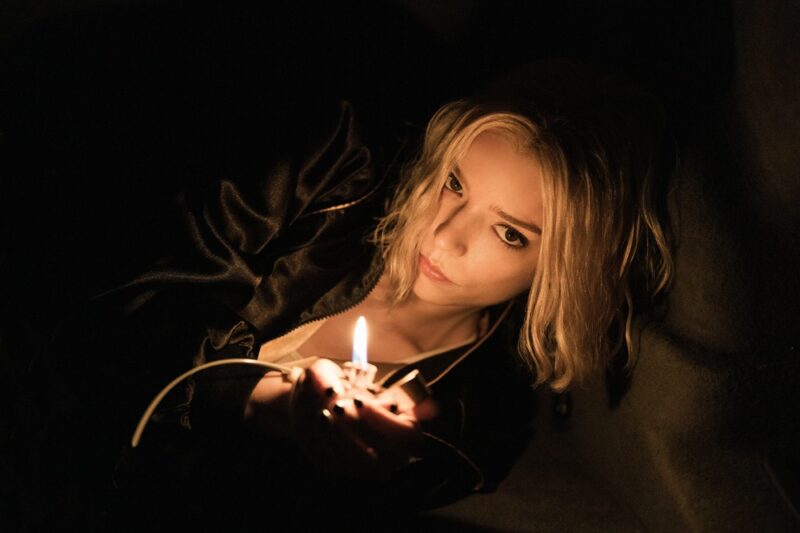
Cassie, I know that you’ve talked about Lucky as seeing ‘the matrix’ when she walks into a room. Most people spend their lives trying to become more aware and observant, but for Lucky, that awareness feels almost like a curse. Did you ever think of her intelligence as the thing preventing her from finding peace?
Cassie Pappas: Yeah, we talked a lot about that. That just sort of became this shorthand for us in the writer’s room, where (Lucky) walks into a room and sees the matrix. How do you unsee it? How do you unsee that guy as the obvious mark? How do you see him as human? What we liked is that her dad taught her to see the world that way, and she’s always operated that way. But what she didn’t realise is that there’s this whole other side to life that she’s possibly missing out on, which is one of human connection and empathy. I think at the time that we meet her, she’s on the run physically, but then she’s mentally kind of on the run and having this own self-awakening of going, “Holy shit, I’m seeing the world in a new way, and I don’t know what to do with it.”
And Jonathan, you’ve described the father-daughter relationship as the emotional spine of the story. What interests you about the way parents can continue shaping our choices long after we’ve convinced ourselves we’ve moved beyond them?
Jonathan Tropper: I think that’s always been something I’ve been drawn to. I’ve written a lot about family dysfunction, both in novels and in film and TV. It’s just this notion of what makes you a fully formed person, and when you are a fully formed person, can you escape your upbringing? Can you escape your genetics? Or the way you were nurtured? It’s all really the same thing. Lucky’s journey is all about freeing herself to actually become the version of herself that she wants to be. And we’re along for the ride. I think we relate to that, even if we can’t relate to the fact that, for her, finding it out might get her killed. It’s still the same journey.
Lucky will premiere globally on Wednesday, July 15th, 2026 on Apple TV with the first two episodes, followed by new episodes every Wednesday through August 19, 2026.
