

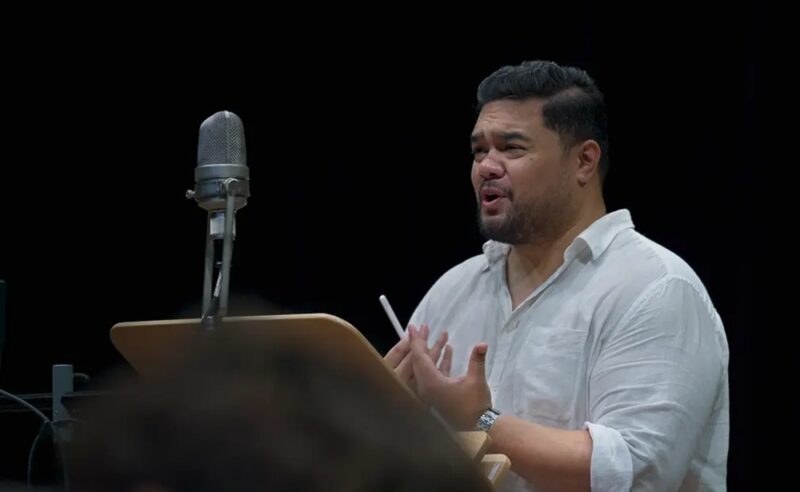
For Pene Pati, opera has never just been about perfect notes or standing ovations. Despite becoming one of the world’s most celebrated tenors and earning comparisons to Luciano Pavarotti, the Samoan-born New Zealander remains driven by something far more personal: family, community and the hope that his journey might inspire someone else to believe their own dreams are possible. In Tenor: My Name Is Pati, audiences witness the extraordinary rise of Pene and his brother Amitai from singing in church in South Auckland to the grandest opera houses in Europe, but the film never loses sight of the values that keep them grounded.
As the documentary releases in Australian theatres, our Peter Gray poke with Pene about embracing vulnerability on camera, carrying the weight – and pride – of his family name onto the world’s biggest stages, challenging opera’s traditions with his own Samoan identity, and why, in the end, moving an audience will always matter more than impressing one.
One of the first things we hear is someone telling you that opera isn’t “in your blood because you’re Samoan.” Looking back now, do you think proving them wrong ever became the goal? Or did you kind of eventually realise you were never singing for them in the first place?’
You know what? I’ll be completely honest with you – there was a part of me that pursued it out of spite. I thought, ‘I’m going to prove you wrong. You all said I couldn’t do it, so I’m going to do it just to show you’ (Laughs). Along that journey, though, was when I realised, ‘Actually, I really love this.’ But if I’m being truthful, that first motivation was stubbornness. It was, ‘You told me over and over that it wasn’t going to work, so I’m going to make it work.’ So yeah, you’re right. I’d be lying if I said it was my passion from the very beginning. The passion came halfway through.
The film’s title feels like a declaration rather than a biography. At what point in your life did your surname stop feeling like something you carried and started feeling like something that carried you?
Oh man, what a question! What a question! You know, I feel like that’s still what carries me today. More than anything, it’s so tied to family and where I come from. Every time I step onto a stage, or every time I’m away overseas, that’s my motivation. I’m singing for them. I’m singing for the people back home and trying to show them what’s possible.
And it’s true – my wife can testify to this – whenever I have a difficult moment overseas, I always say, ‘I can’t stop.’ Because what if someone back in New Zealand is watching and thinks, ‘Oh wow, Pene gave up. Maybe it’s okay for me to give up too.’ I always come back to the same thought that I’ve got to keep grinding so that people can see that the journey isn’t always easy, but you keep showing up anyway. So yeah, I carry the name, but in many ways, the name has carried me far more than I’ve carried it.
I know you’ve said you’re more an emotional singer than an operatic singer. Has that philosophy changed the way you approach success? Is moving one person enough, if they know nothing about opera?
Oh, absolutely. It’s always been my thing. I think you get to a point where you can be the most technically perfect singer – you can hit all the high notes – but if you don’t leave an impression, if you don’t leave an emotional trail, people won’t remember it.
I always tell people that singing is what brings audiences to the opera. They’ll come to hear your technical ability, but it’s the emotion they remember. That’s what brings them back. It’s true even for this film. The people who leave the theatre don’t walk away thinking, ‘Man, he’s such a great singer.’ They leave thinking, ‘Wow, that really moved me. That was inspiring.’
I think that’s the true purpose of art. How do you move someone, rather than simply show them you’re a genius at what you do.
Looking at your family, they feel less interested in fame and more whether you’ve remained a good son, a good brother, Samoan. Has success ever complicated those relationships? Or has it actually simplified what really matters to you?
It’s really simplified what truly matters, and I think that’s probably why the success has been magnified. My family still treat me exactly the same as they always have. When I come home, they’re not saying, ‘Let’s treat Pene like the star.’ They’re saying, ‘Right, the bushes over there need trimming. The lawn needs mowing.’
They treat me as a brother and as a son, and they keep me grounded. Of course they’re incredibly supportive of everything I’ve achieved, but they also know, ‘You go and do your thing, and we’ll support you from here.’ At the end of the day, though, I’ll always just be Pene – the son, the brother. And I think that’s what keeps everything in perspective.
Speaking of brothers, there’s that moment where Amitai asks why you two have to be compared. It feels like such a universal experience for siblings. Has singing together taught you that that comparison disappears once you’re genuinely celebrating someone else’s success?
Yeah, you know, from the beginning I understood this was going to happen. I told Amitai, ‘People are going to compare us from the start.’ But the more we sang together, the more people saw our interactions on stage. They realised we’ve never been competing with each other or at odds. Instead, they began to appreciate the different qualities we each bring.
In one sense, I felt sorry for him because of those comparisons. But at the same time, it made him stronger, and it made me stronger too. It’s been a wild journey, but now people talk about our brotherhood in a completely different way. They see that our story isn’t about two rival brothers competing against each other – it’s about two brothers lifting each other up.
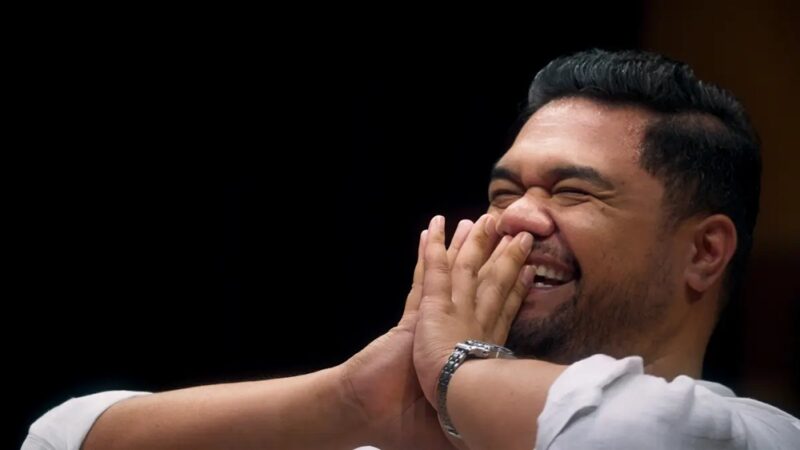
Looking at things differently, I feel like opera audiences around the world now see a Samoan tenor walk onto the stage and it’s no longer an image that at one point seemed unimaginable. Do you ever stop and think, “I’m changing what the next generation thinks an opera singer looks like?”
Yes, I’ve definitely had moments like that. One that really stands out happened in Paris during the Bastille Day celebrations on July 14th. I was standing in the wings before going on stage, and performing at that concert – underneath the Eiffel Tower, live across France – is one of those moments where you feel like you’ve really achieved something.
As I walked out to sing the final song, it suddenly hit me. I thought, ‘This has probably never happened before.’ To have a Samoan walk onto that stage to sing the finale, to sing the French anthem – I couldn’t help but wonder how many people were watching and thinking, ‘Who is this kid?’
But more importantly, I wondered how many Polynesian kids – or any young person – might be watching and thinking, ‘Wow… if he’s done it, what’s stopping me?’ Those are the moments that stay with me. They remind me that this journey is about more than my own career. I look at the industry now and realise that, in some small way, I’m helping change what people think is possible.
It really is incredible watching the film and hearing you sing…
It’s interesting because – I don’t know if I mentioned this in the film – but there has also been some backlash from opera purists. They’ll say, ‘Who is this guy coming in and singing our music in a style that isn’t true to Puccini or true to Verdi?’ But I can’t help thinking, “What if those composers were alive today?” I honestly don’t think they’d care about those boundaries. I think they’d simply ask, “How are you going to interpret my music?” That’s all they’d want.
We’re the ones who create these rules and say, ‘It has to be sung in the Italian style,’ or, ‘It has to be sung in the French style.’ And I think, “Well, it’s Italian because it was written there, but why can’t I bring my Samoan identity to it? Why can’t I interpret it through who I am?”
That’s what makes music alive. It’s about bringing yourself to it, not trying to become someone else.
There are so many extraordinary performances in the documentary. I’m curious, are there moments on stage when the audience disappears completely and you’re almost singing to just one person?
Yes. Oh yes. I have that moment quite a lot, actually. Everything else just fades away, and it’s almost like you’re up there singing to yourself – or to the child version of yourself. It probably sounds strange, but it’s almost like you’re singing to a flag. What I really mean is you’re singing to your people, to your nation. You’re thinking, ‘I hope they’re proud. I hope the people back home are proud.’
At that point, the audience disappears, and I don’t feel judged anymore. I think that’s something a lot of singers experience. They walk onto a stage thinking, ‘The moment I sing a wrong note, someone’s going to critique me or write about it.’ But for me, I step out there thinking, ‘I’m just going to do the best I can.’ If it works, it works. If it doesn’t, it doesn’t. That’s just the way it is.
I feel like conductors and critics have spoken about the beauty of your voice, but when you walk off the stage, what tells you it was a great performance?
Man, you’ve got some good questions. I think what tells me it’s been a good performance is how I feel afterwards. Not vocally, but emotionally. If I’ve been moved by the performance myself, then I know we’ve done something right.
A lot of it comes down to how everything comes together, especially the relationship you have with the person you’re sharing the stage with. It doesn’t even have to be a romantic scene. It could be something really tense, where you’re arguing or fighting on stage. You can walk off afterwards thinking, ‘Wow, we were completely locked in.‘ There was something dramatically happening between us that just felt right. It might not even have been my best performance vocally, but there was real drama there.
When I walk off feeling that way, I can’t help but think, ‘Surely someone out there was gripping the edge of their seat (laughs).’ That’s what tells me we’ve connected with the audience.
Well that brings me to vulnerability, because this film lets audiences see moments of doubt just as much as we see the triumph. Was there anything you felt uncomfortable to leave in because it revealed the person rather than the performer?
Yeah, you know what? There were a lot of uncomfortable truths in the film, but I was the one who wanted them in. In fact, Rebecca (Tansley, director) was the one saying, ‘Are you sure you want to include this? We don’t have to. We can just show the success.’
But I said, ‘I think people relate more to the doubt than they do to the success.’ There are far more people questioning what they’re doing than there are people at the top. They’re constantly asking themselves, ‘Am I doing the right thing? I’ve failed so many times—what do I do now?’ I wanted to show that side of the journey. I wanted people to see that it isn’t easy. The loneliness is hard. The sacrifices are hard. The criticism is hard. But in the end, it’s worth it.
That’s something that goes beyond opera. It can relate to anyone’s journey. When you look back, all the sacrifice and hardship are outweighed by the satisfaction of being able to say, ‘It was all worth it.’
Tenor: My Name Is Pati is now screening in Australian theatres.
