

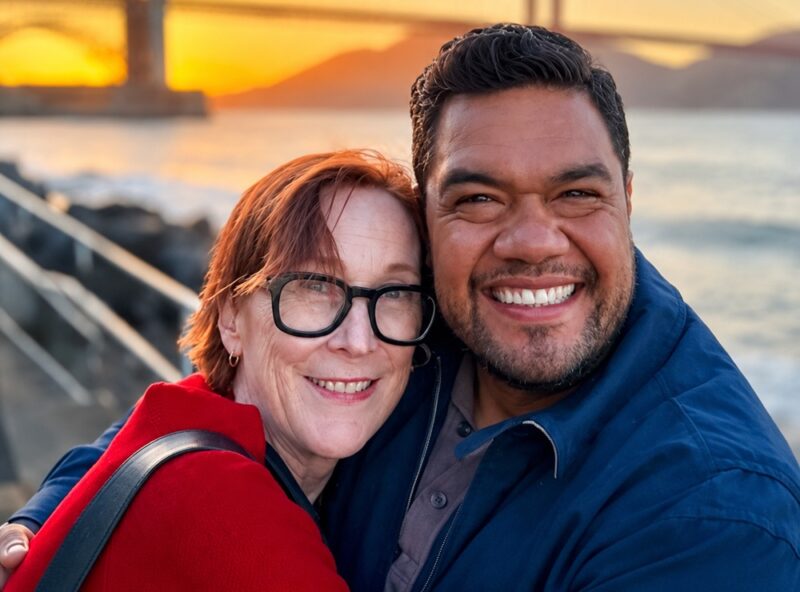
The film on paper feels almost mythic, because you’ve got these two boys from South Auckland reaching these opera stages. As a filmmaker, what interested you the most – was it the success story or was it what the success costs the people that pursue it?
Oh wow, I think it was both. There are just so many elements to the story, and that’s what people say when they come away from the film. They say, ‘Wow, there’s so much there.’ It’s a classic underdog success story, it’s an immigrant story, and it’s about what it cost them, but also what they weren’t prepared to give up. In a way, it didn’t cost them that, because they remained true to who they are.
I was just talking to someone about the film before, and you’ve got these guys who can move so naturally between the Samoan world and the Pālagi world in New Zealand, but then they’re also navigating this incredibly rarefied operatic world in Europe. There are just so many fascinating layers to it. I guess the short answer is there were so many aspects of the story that attracted me to it.
Audiences describe these stories as inspirational, but then inspiration can sometimes flatten the complexity of a person’s life. Were you determined to not simplify their story? Is that why it’s My Name Is Pati and not My Name Is Pene? It makes it feel bigger than one individual…
Yeah, absolutely. I think you’ve hit the nail on the head. One of the things I really set out to do was show what drove me to make the film in the first place. I’d seen both of them up close, especially Amitai, because I’d filmed an opera he was in. I’d watched them perform and seen the incredible connection they have with an audience, and I thought that was something really special.
I found myself wondering how they do that. What is it about their background that gives them that ability? So I wanted to show audiences all the different elements that came together to give them this kind of superpower. I wanted the film to feel elemental in a way. I love the way you described it as mythical, because it almost is on that scale. So yeah, it is. It’s epic.
Looking at the family and collective identity, because one of the things that struck me is that this film is not looking at an individual achievement in the way a lot of documentaries are. It feels more about an entire family carrying this dream together. Did that shift your understanding of what success looks like at all?
Yeah, totally. I knew that Samoan culture is a collective culture, which is very different from the much more individualistic Western approach. And obviously, in the operatic world, if you want to be a star, that’s a very individual pursuit as well. As people will see when they watch the film, that created real challenges at times, particularly for Pene. He was told, ‘No, you have to think for yourself, not for everyone else.’ But his response was, ‘No, I’m not going to do that.’
So it did change my perspective, but it also confirmed what I was interested in exploring. I expected that tension would be there, and it was one of the things that attracted me to the story in the first place. Here were these guys succeeding by doing things differently from what so many other people do, and I found that really compelling.
And the film captures their talent, but it also captures obligation. How did you navigate portraying the tension between pursuing a global career but remaining connected to family, faith, and community at the same time?
Yeah. I really came to realise that it’s the family’s story just as much as it’s the brothers’ story, or Pene’s story. You can’t separate them. That became more and more apparent as I got to know the family. That also brought a greater sense of responsibility for me as a filmmaker, and as a Pālagi filmmaker. I’m not Samoan, so that was a little daunting, but it was also an incredible privilege. If you’re entrusted with telling a family’s story like this, then you have a responsibility to do it justice.
I took that responsibility very seriously, and I learned so much from them. I was embraced by the family, and I’m richer for that experience. So yeah, I hope that answers your question (laughs).
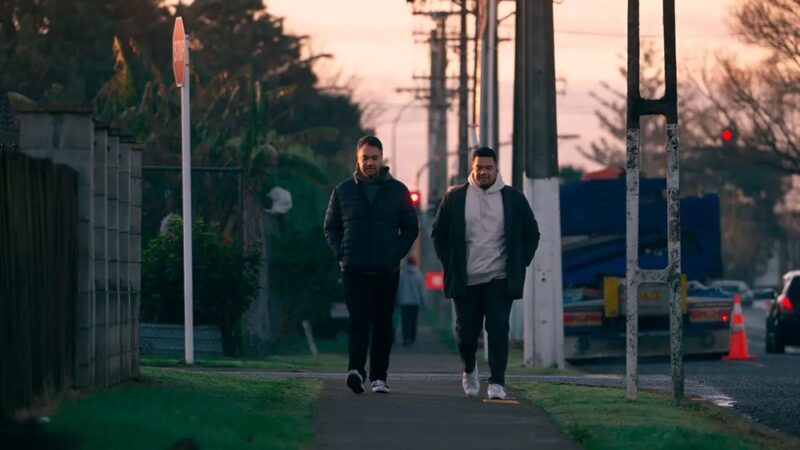
One of the things that I found really remarkable about the film is the archive footage. It’s not just evidence, it feels like a memory. When you’re going through all these recordings, was there a moment that completely changed your understanding of who the brothers were?
I think, yeah. I’ll just say first that around 90% of the archive footage we used in the film was filmed their eldest sister. When I first met her, she said, ‘I used to film the family and the boys, and I’ve got some old footage if you want it.’ I was like, ‘Hell yeah.’ Then, when I went to pick it up, she presented me with two boxes full of different tapes. It was incredible. We were so blessed to have access to all of that.
In terms of what changed my perspective, you’ll see there’s a lot of footage filmed in church, particularly around White Sunday, which is a really significant tradition in many Samoan churches. You can watch that footage, but actually experiencing a White Sunday service myself, while we were filming at Samoa Pula Theological College, was something else entirely.
It was like a wall of music, sound and voices washing over you. You could feel it physically, almost at a cellular level. It was a life-changing experience, and it made me appreciate even more what a crucible that weekly experience must have been for the boys growing up. To be immersed in that every single week of their lives gave me a much deeper understanding of what it meant to them and how profoundly it shaped them.
There’s this beautiful tension between them being these polished public performers and the children preserved in family footage. Were you consciously interested in the gap between those two versions of the same person?
I guess I was almost flipping the question. In a way, there isn’t such a big gap between those two worlds.
When they go back to New Zealand, and we filmed with the family there, they’re just the boys. No allowances are made for the fact that they’re operating at this incredibly high level in the opera world. With Pene, we didn’t make up the stuff about him doing chores – that’s genuinely how it is. When you’re back in the family home, there’s a pecking order, and they slot straight back into those roles.
So, for me, it became less about the contrast between those worlds and more about exploring how they can exist so comfortably in both at the same time.
Because I feel like opera is probably one of the most emotional forms of music. It’s often described as “emotions that are too large for speech.” Did working on the film change the way you think about music as a storytelling language?
I guess so. I work in documentary filmmaking where I’m constantly dealing with music, so I really loved the way you described it as being bigger than words. I completely believe that.
I didn’t grow up as an opera buff. I really only came to it in my late 30s, and even then my appreciation was probably more intellectual because my daughters were singing. But as I’ve become more familiar with it, I’ve realised you just have to let it wash over you. It doesn’t really matter if you understand every word that’s being sung, because it’s really about the emotion.
Making this film definitely deepened my appreciation for that. It also made me appreciate just how extraordinary what these singers do really is – how difficult it is, and what an incredible achievement it is to perform at that level.
I wanted to communicate some of that to audiences, but I also wanted to demystify opera a little. It’s certainly at the epic end of the musical spectrum, but it’s still part of that spectrum. It’s not this separate, fenced-off art form that’s inaccessible. It’s another expression of music, and I wanted to show everything that goes into developing that extraordinary musical ability.
I love when he’s watching Pavarotti sing, and you just see that power. It looks so effortless. Pene talks about wanting to train to get to that point where he’s not straining. It really gives you a whole new appreciation for what it takes to emote with such effortless precision. In a film like this faith is such a big thing too, it’s quietly running through the narrative. What interested you about exploring faith not as a subject to be explained, but as something woven into their life and decision making?
Yeah, I don’t come from a background of faith. I wasn’t raised as a churchgoer of any denomination, so that was something I learned a great deal about through making the film. That’s why attending the White Sunday service was such a powerful experience for me. It gave me a much deeper understanding of what faith means in this context.
I actually spoke with both of the brothers about their faith in our interviews, although those conversations didn’t make it into the film. What’s interesting is that they each have a different relationship with their faith now, but it was so formative in their lives. It’s part of their DNA. You can’t really separate it from who they are because it’s shaped them from such an early age. That’s true for so many Samoan families as well. Faith is so deeply woven into family life and culture that it’s hard to know where one ends and the other begins.
And on a craft level, this film is balancing intimacy with scale. You’ve got these family living room and then the metropolitan opera. From a directing perspective, which one of those spaces was harder to capture?
That’s a really good question. I think the most difficult moments to capture authentically are the intimate ones, because you want to make sure they don’t become performative. You don’t want people to behave differently just because the camera is there. That’s always the documentary filmmaker’s dilemma, isn’t it? You’re trying to capture reality, but the simple act of pointing a camera at someone can change that reality.
I was fortunate that the family were incredibly welcoming. I’d put a lot of work into building those relationships before we started filming, and I think that really helped, both in the family home and with the brothers. The same was true backstage, in dressing rooms and those more private spaces, because those are moments where people are vulnerable. I think audiences are genuinely interested in seeing people in those vulnerable spaces, and they’re certainly the moments I find most compelling. Some of my favourite scenes in the film come from those intimate, behind-the-scenes moments.
Tenor: My Name Is Pati is now screening in Australian theatres.
