

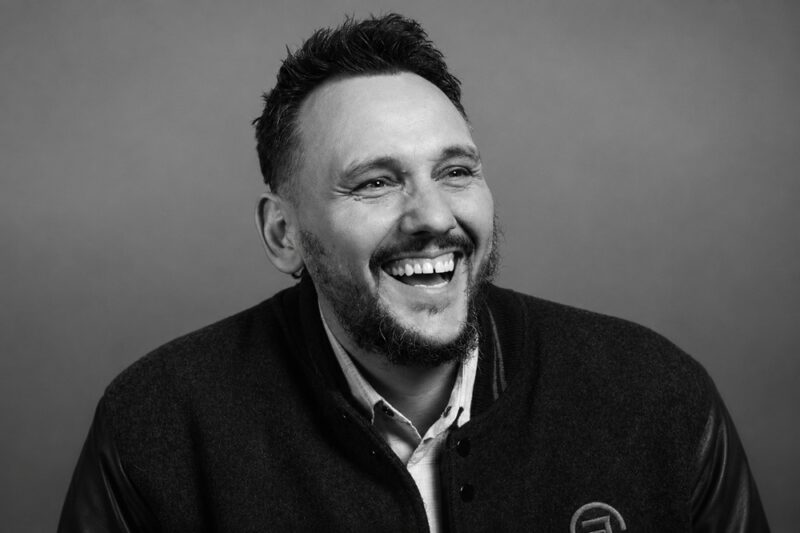
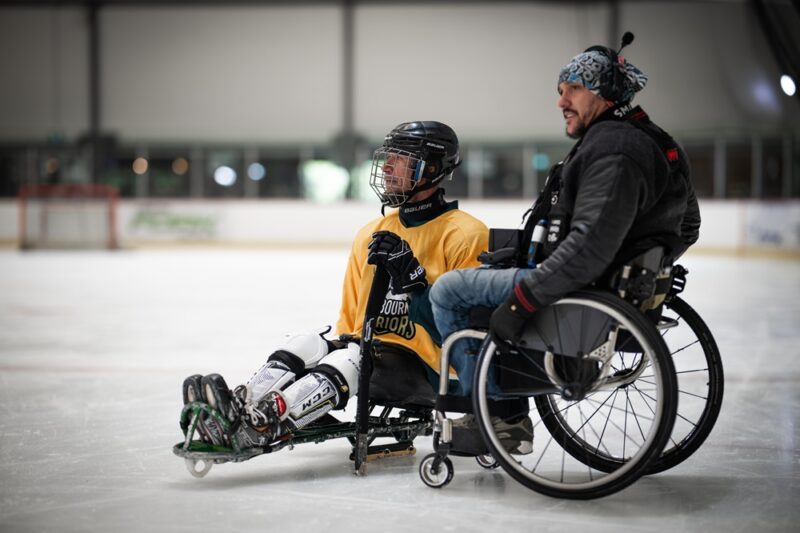
Passion might be what brings people together, but it doesn’t necessarily mean they’ll get along. In the wonderfully chaotic world of grassroots sport, where personal ambitions collide with club politics, financial pressures and the occasional bruised ego, sometimes the greatest achievement isn’t winning a championship, but simply keeping the doors open. It’s this beautifully contradictory spirit that drives Hard as Puck, a candid, frequently hilarious and unexpectedly moving Australian documentary about the Garden Island Pirates, a struggling para ice hockey club in Perth, Western Australia, where scorching summers and limited resources make their very existence something of a minor miracle.
Written and directed by Isaac Elliott, the film follows a fiercely passionate collection of players and volunteers as they navigate leadership changes, dwindling funding, internal rivalries and the exhausting realities of keeping a community sporting organisation afloat. But when an opportunity arises to compete at the inaugural Women’s World Championships in Slovakia, their ambitions extend far beyond their local ice rink. What emerges is a story about the complicated nature of belonging, the tension between individual success and collective survival, and the peculiar reality that the people most determined to preserve something can sometimes be the very ones threatening to tear it apart.
Crucially, Elliott refuses to frame his subjects through the familiar lens of inspirational disability storytelling. His players are competitive, stubborn, funny, occasionally unreasonable and unapologetically human, afforded the freedom to be as messy and contradictory as anyone else. Speaking with our Peter Gray ahead of the film’s Australian theatrical rollout, the filmmaker reflected on resisting what he describes as the traditional “trauma narrative”, the ethical responsibility of documenting real conflict without manufacturing drama, the inequities of funding grassroots disability sport, and why, despite the arguments, exhaustion and seemingly endless administrative battles, love remains the one thing capable of holding the Garden Island Pirates together.
One of the things that I really appreciated when I read in your director’s statement is your resistance to what you called “the act of trauma narrative,” because it so often defines documentaries about disabled athletes. I’m interested in whether you feel there’s almost an expectation that people with disabilities have to be inspirational and likeable to be considered worthy of having their stories told? Was there something liberating about allowing your subjects here to be messy, stubborn, unreasonable, and just completely human here?
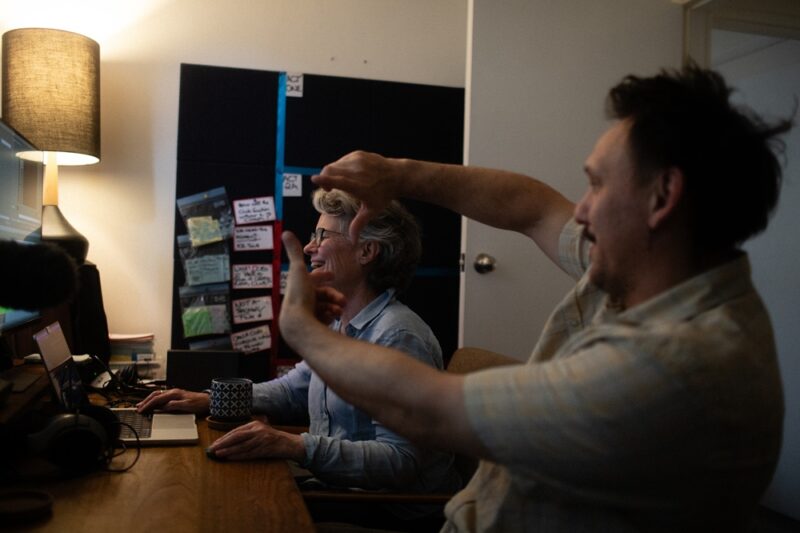
Often, when you’re making a film, you’re searching for as much empathy as possible, so actively choosing to hold back things you know will create empathy is challenging. It really took a commitment to what we wanted this film to be, and then finding the human story beneath that. We had a sign on our board throughout the planning and editing process that said, “This is not a teaching film.” That applied to both disability and the sport itself. You’ll learn about the sport by watching the film. We never felt the need to cut away to an explainer, and we didn’t want to do that with our characters either.
I think there’s still an ingrained expectation that stories about disability should be inspirational. Filmmaking is still a fairly WASPy, small liberal world, and people are often inspired by these stories in ways that can be limiting.
I briefly considered motivational speaking, but I realised I didn’t particularly like it. I don’t know if there’s a way to be a disabled public speaker without relying, to some extent, on the empathy people feel towards your disability. And in doing that, you’re perpetuating the idea that disability itself is something people should feel sympathy for. There’s also money in that space. So many prominent people within the disability community do public speaking because it’s financially rewarding. As much as we try to push back against what’s often called “trauma porn” or those familiar appeals for sympathy, the need to make a living can perpetuate those narratives from within the community itself.
Even Murderball, which is considered this groundbreaking documentary about disability sport, opens with someone getting out of bed and getting dressed. Later, they visit a newly injured person in hospital and introduce him to the sport. It’s presented with punk music and characters who swear, which makes it feel rebellious, but those familiar storytelling conventions are still there. We couldn’t afford the punk music, but we did let our characters swear!
I don’t entirely know how we move beyond that on a larger scale. And I don’t always reject those approaches myself, because when you’re telling truthful, personal stories, disability inevitably forms part of someone’s journey. For me, the question is how we respect the reality of disability without making it the defining feature of someone’s identity. How do we acknowledge it without anchoring ourselves to it or allowing it to dictate the entirety of who we are?
I know that you’ve mentioned that when you started, you asked yourself how these volunteer-run clubs survive, and the only answer you could find was love. What’s fascinating is that love obviously doesn’t necessarily make people easy to work with. Sometimes the people who care the most passionately about something are the very people who make it difficult to sustain. Did making this film change your understanding of how love for a community can simultaneously hold it together and threaten to tear it apart?
That was clearly the crux of the film from quite early on. Passion and love are powerful things, but they also mean you want things done a particular way so you can experience them at their best. For some people, experiencing sport at its best means being the best in the world. For others, it’s about community, bringing people together, having fun, or making friends off the ice. And all those different motivations inevitably come into conflict.
The one thing we didn’t have, which a lot of other sporting clubs do, was that element of the overzealous parent. Junior clubs are often run by parents who ultimately want what’s best for their own children. We didn’t have that dynamic, but what we did have was something equally fascinating.
The people fighting to keep the club alive were also the ones stepping onto the ice alongside, or against, the very people they were having internal political conflicts with. There’s no real separation between the personal relationships, the sport itself, and the organisation of the club. It’s all intertwined, and that’s what makes the world of the Garden Island Pirates so fascinating.
Looking at the responsibility of observation, I know that you’ve spoken about wanting to stay close, stay quiet, and let the story emerge organically. I’m curious about the responsibility that comes with that approach, particularly when you’re filming a community that’s already struggling to survive. Was there ever a tension between recognising that someone’s difficult moment might make for compelling documentary storytelling, and then knowing that for them it was a very real situation with consequences beyond the film?
That was an interesting thing to balance because, early on, we didn’t know where the film was going. I’d never directed a feature documentary before. I’d produced one about the Finke Desert Race, but that was essentially filming over a single weekend, throwing as many cameras at it as possible, and finding the story in the edit. This was different. It was an evolving story, and we had to trust the documentary gods that something compelling would emerge. It took a very long edit to find that.
I set myself some clear rules during filming, particularly that I would never repeat something one subject had said about another. I didn’t want to poison the soup. We weren’t making reality television, where you deliberately stir up drama by telling someone what another person has said to provoke a reaction. That might give you a great moment on camera, but it also breaks trust. People become wary of opening up if they think you’re going to repeat their words to someone else.
Obviously, I could use that information to inform my questions or guide conversations, but I wouldn’t directly repeat anything. It was important that when we were filming privately with someone, what they shared stayed within that space until it appeared in the finished film.
The edit was particularly challenging because there were moments when people were quite aggressive towards one another or expressed very strong opinions. We knew some of that would be difficult for the participants to watch, but our guiding principle was to remain truthful to the story, even if that didn’t always mean presenting events in the exact order they unfolded.
We were essentially crafting a year in the life of the Garden Island Pirates. Because I live in Melbourne and the club is in Western Australia, we’d film for a week, return home, and sometimes not come back for another two months. Inevitably, things happened while we weren’t there. We’d ask about those developments and sometimes work them back into an earlier part of the narrative where they made the most sense.
Ultimately, we wanted to build a story that was faithful to the truth of the characters and their experiences, rather than being rigidly tied to the precise chronology of every event.
And what I found interesting about the Pirates is that their ambitions eventually become international, but their everyday reality is still shaped by funding applications, volunteer exhaustion and trying to keep everyone in the same room. Did the experience make you question how we measure success in sport? Because perhaps keeping a club alive for another season is every bit as significant an achievement as winning something on the world stage…
I think, politically, it made me question why there isn’t more funding available and why everything has to operate within this capitalist structure. It’s almost like someone in America suffering an injury and having to start a GoFundMe. If you’re popular enough, you raise the money. If you’re not, you’re potentially bankrupt.
The same principle applies to these niche sports. They’re constantly having to prove they’re popular or deserving enough to secure grants, and if they can’t, they risk losing their club or their sport altogether. It creates what feels like unnecessary pressure, particularly when participation offers so many benefits, not just socially and physically for the individuals involved, but from a broader governmental perspective.
Sports like netball, AFL and cricket have established corporate structures that ensure they’ll continue to exist at school, club and state levels. Smaller sports don’t have that security. They’re constantly approaching corporations and local governments, essentially begging for relatively small amounts of funding just to survive.
Personally, when I play sport, I want to be the best. That’s my competitive nature. But I also recognise that’s just my individual perspective, and ultimately, the importance of a sport continuing to exist is far greater than any one person winning at it.
That tension between local club politics and international ambitions was something we had to carefully balance in the edit, particularly with the international competition in Slovakia. I actually read ‘Save the Cat!’ during post-production to help structure the narrative and work out how to introduce information. We experimented with introducing the World Championships right at the beginning, then five minutes in, fourteen minutes in, and eventually around twenty-two minutes, which is where I think we landed.
There was also the challenge of gradually revealing the conflicts and keeping certain characters present in the story after they’d stepped away from the club. We had to find ways to maintain their presence through shorter scenes and snippets so that their eventual return still felt meaningful.
What was fascinating, though, was that even the people who left during filming eventually came back for the sport. Whatever disagreements or frustrations existed, that underlying love for the game was always there.
Well, going off that and looking at the sport and the people. There’s something really beautiful about the idea that this film is about people fighting to preserve something that the wider world might not realise exists. Having spent so much time with the Pirates, do you think the thing that they’re ultimately fighting to protect is the sport itself, or the version of themselves they’re able to be when they’re a part of it?
So many of the players hadn’t participated in sport before. Belinda (Green), in particular, didn’t play any sport until she discovered para ice hockey, and I think she’s grown enormously as a person. She’s found a sense of purpose that perhaps wasn’t as strong before, and that’s what drives her. Her partner is incredibly supportive of everything she wants to achieve, and he’s subsequently fallen in love with the organisational and fundraising side of the club.
There are also genuine international ambitions. Rosa-Lee (Principe) is very focused on reaching the Paralympics, and one of the goals of the Women’s World Championships is to help get the sport introduced to the Paralympic Games. That possibility is a huge motivator for some of the players. They also recognise that to improve, they need more people participating, more competition and more opportunities to train. So I do think the prospect of Paralympic inclusion is helping keep the club alive.
But I still question why there’s so much infighting, and that hasn’t stopped just because the film found its ending. Those conflicts continue today.
I grew up with my parents working as caretakers of the Alice Springs Motorcycle Club, and I remember the endless arguments. Parents and club members would sit around the table complaining about everyone else, convinced that nobody was doing anything properly except themselves. You’d listen to these conversations and wonder how anything could possibly get done. Yet somehow, it always did.
That’s ultimately where I landed with the Garden Island Pirates. It has to come from love. Someone still has to organise the insurance, collect memberships, complete paperwork and book ice time. There’s an enormous amount of work involved, and somehow it all gets done, even when the people responsible are fighting with one another.
I think that can only be explained by a genuine love for what they’re doing. Otherwise, it’s baffling. But you see it in sporting clubs and community organisations everywhere. Anything volunteer-led seems to inevitably descend into some degree of anarchy, yet somehow, people keep showing up and making it work.
Hard As Puck will screen with exclusive Q&A sessions from November 4th, 2026 at the following Australian locations:
PERTH – Wednesday, November 4th, 5:45pm
Luna Palace Cinemas, Leederville
Q&A: Chanel Bowen, Rosa-Lee Principe, Mike Francis, Cliff Nutt, Belinda Green and Daniel Perrett
Tickets
ADELAIDE – Friday, November 6th, 7:00pm
The Piccadilly, North Adelaide
Q&A: Isaac Elliott
Tickets
MELBOURNE – Saturday, November 7th, 3:00pm
Lido Cinema, Hawthorn
Q&A: Isaac Elliott and Noel Smyth
Tickets
SYDNEY – Friday, November 13th, 6:00pm
Dendy Cinemas, Newtown
Q&A: Isaac Elliott and Chanel Bowen
Tickets
BRISBANE – Sunday, November 15th, 6:00pm
The Elizabeth Picture Theatre, Brisbane City
Q&A: Isaac Elliott and Chanel Bowen
Tickets
NEWCASTLE* – Friday, November 20th, 6:30pm
Tower Cinemas, Newcastle
Q&A: Isaac Elliott, Chanel Bowen, Belinda Green, Dawn Watt and Rosa-Lee Principe
Tickets
*The Newcastle screening is presented in conjunction with Ice Hockey Australia and World Para Ice Hockey, ahead of the 2026 Women’s World Championships.
