
For audiences expecting little more than Minions-fuelled chaos, Minions & Monsters has a delightful surprise waiting. Beneath the slapstick, sight gags and monster-sized mayhem lies an unexpectedly heartfelt tribute to the magic of cinema itself. Set during Hollywood’s seismic transition from silent films to talkies, Illumination’s latest adventure isn’t simply about the Minions accidentally conquering the movie business – it’s about the artists, dreamers and unlikely collaborators who built it.
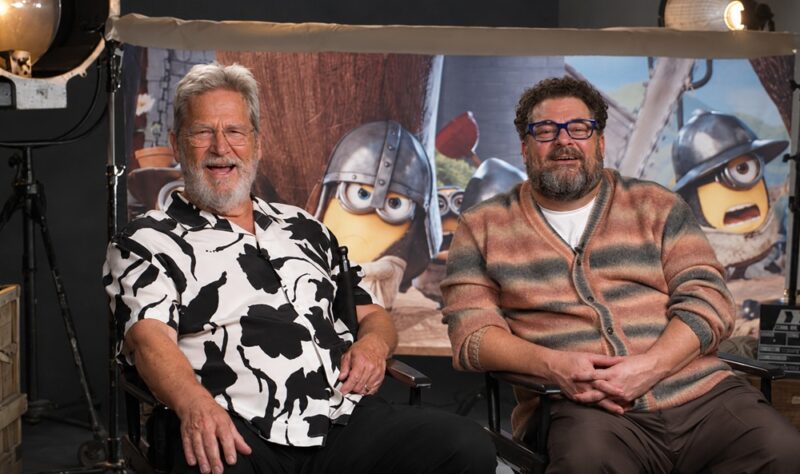
Speaking with our Peter Gray, Jeff Bridges and Bobby Moynihan were every bit as enthusiastic about filmmaking as the characters they portray. Bridges, voicing ambitious studio heads Frank and Elwood, reflected on the excitement and uncertainty that accompanies every technological revolution, comparing today’s AI boom to the arrival of sound in cinema. Moynihan, who lends his voice to the surprisingly lovable monster Phillips, celebrated the joyful chaos behind every production, arguing that the best creative breakthroughs often emerge from mistakes rather than meticulous planning.
What followed became less a conversation about animated monsters and mischievous Minions than a warm discussion about movie magic itself – happy accidents, childhood films that sparked lifelong passions, the importance of nurturing new filmmakers, and why, even after more than a century, cinema continues to preserve a sense of wonder.
I was not expecting Minions & Monsters to be a beautiful love letter to Old Hollywood, which made me very happy as someone who loves films with all of my being. This being set during one of Hollywood’s biggest turning points, when silent films gave way to found, it made me wonder whether every generation of filmmaker feels like they’re living through the end of an era and the beginning of another. To both of you, do you think that’s always been part of making movies?
Jeff Bridges: Yeah, not only making movies, but just life in general. This change, it’s kind of frightening and exciting at the same time. We’ve got this AI stuff that’s going to change everything, man. It’s frightening and exciting. That’s what the talkies must have been like back in those days.
Bobby Moynihan: Just ever changing. And trying to figure it all out. And also growing up, as we were saying earlier, I used to make stop-motion videos on a VHS camera by pausing and rewinding. Editing on a VCR. Now kids have a TV studio in their pocket. They can make a movie, edit it, record all the sound, and do animation. If I had this when I was a kid, I’d be a millionaire!
Jeff Bridges: Whenever a young actor asks if I have any tips. I say, make a movie, man. You got that thing in your pocket. Do some writing, figure out a character that you want to create, and do it. Film it. Jam with your buddies.
Bobby Moynihan: That’s what this movie’s about.
Well, that makes me think, because one of my favourite things about the film is that it celebrates the chaos of making movies – even when everything goes wrong. I feel like that’s kind of where the magic happens. For both of you, does that feel true to your own experience of filmmaking?
Bobby Moynihan: I mean, that’s everything. Yeah, being on SNL (Saturday Night Live) for so long and realising, like, I loved that show, it was my life’s dream to be on that show, but the reality of getting a show done in a week sets in, and there’s a lot of, like, “Okay, we need to build a giant cow that has wings,” and then two days later it’s like, “We can’t do it.” There’s always something. How do you do it? How do you get past this problem? How do we fix this with comedy? I feel like that happens on every production where something either goes wrong or something you didn’t expect happens.
Jeff Bridges: There’s a term, “Happy accident.” Where you do a take, and people will say, “Why are you doing that?” I’m looking for that happy mistake that makes it real. That pops.
Bobby Moynihan: Something happens in one take, and that sets you off on a whole new direction for the whole thing. I mean, that’s half of this job, I feel.
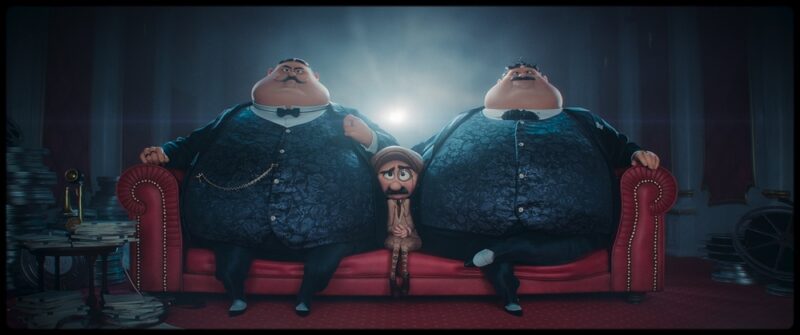
Jeff, you play Frank and Elwood, and they represent the business side of Hollywood, rather than the artistic side, yet I think they’re also genuinely excited about discovering something new. Do you think the best producers have to preserve a little bit of that childlike excitement?
Jeff Bridges: Oh yeah, man, a great producer – and there’s not a whole bunch of them – but they really are so important when you get a great producer who’s supporting the director and wanting to facilitate his vision. I’ve had great success with first time directors who had a strong producer behind them.
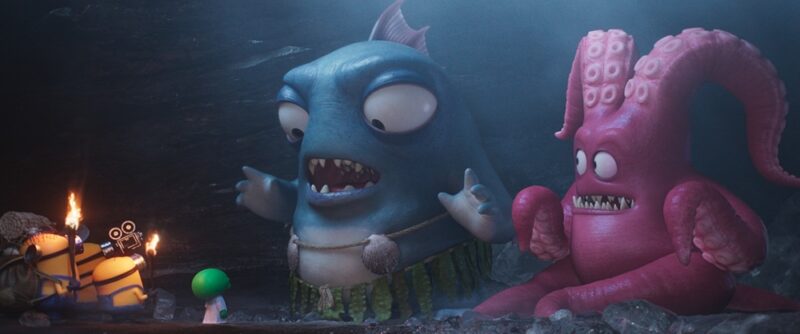
Bobby, Phillips looks like he should be terrifying, but he’s kind of one of the sweetest surprises in the film. Why do you think audiences have always loved monsters who turn out to have so much softer hearts than their appearance suggests?
Bobby Moynihan: I love a big scary guy who turns out to be a nice guy. That’s always a fun thing in movies. Being cast in something like that, too, where you get to play both sides. Where you get to play this angry monster who maybe has a heart that just wants to eat Minions, but then realises that they might be friend, or he’s like, “Now I like making movies, ” and now they’re in the movie industry. It’s fun and it’s beautiful.
I love all the male relationships in this movie. There’s a lot of very non-toxic male relationships in this movie. James and Ed and Henry are three little movie nerds that found each other in the 1920s, and that’s beautiful. Howard and Phillips, the two monsters, they’re best buddies. Phillips would do anything for Howard, I think, in my opinion. Yeah, I love all of that in this movie. You don’t see that often.
And watching the film, I couldn’t help but think it’s really arguing that movies don’t just entertain us, they preserve wonder. Is there a film from both of your childhoods that genuinely changed how you saw the world?
Bobby Moynihan: Wow
Jeff Bridges: A bunch popped into my mind. I mean, Fantasia when I was a kid. Seeing that “Night on Bald Mountain” scared the shit out of me. I’m thinking Citizen Kane, that was amazing. Talk about first-time directors! (Orson Welles) was 25-years-old. I’m thinking 2001. These are just a couple of my favourite movies in general.
Bobby Moynihan: The Muppet Movie. When Kermit is riding the bicycle, I remember seeing that as a kid being like, “What am I looking at? How is Kermit riding a bicycle?” And then getting older and watching all those videos of how they did it, and how Fozzie and Kermit, they dug out the middle of a Studebaker and they’re sitting inside that car, and there’s all that stuff. You get bitten by that bug, and you want to, at least I did…I just wanted to work with the Muppets.
Jeff Bridges: Making movies is like pulling off a magic trick.
Bobby Moynihan: A bunch of creative people doing what they do best, and when they all love it and work hard…
Jeff Bridges: What you were saying about Saturday Night Live. I did a couple, man, it’s so exciting pulling it off in a week…
Bobby Moynihan: And hosting is probably the hardest part. The host has to do the most work.
Jeff Bridges: One of my favourite parts is the joke room, where everybody’s pitching their joke…
Bobby Moynihan: I’m glad you like it (laughs).
Jeff Bridges: That’s a terrifying place. My brother and I are pitching and we’re laughing, and (the writers) are just looking as cold and implacable as possible. That’s really funny to me.
Bobby Moynihan: There’s a famous story isn’t there? Didn’t you get your head stuck inside of a cast?
Jeff Bridges: I don’t think that was Saturday Night Live? No, my experience with Saturday Night Live was…I couldn’t resist. It was live TV, and I had a chance to expose my big brother, who teased me all through my childhood, to expose his naked ass in a massage skit. Who are the guys who tell you practice standards? They came roaring down! “We let you do this massaging (skit) because you were brothers, and now look what you’ve done!”
Bobby Moynihan: Oh, Lorne (Michaels, SNL producer) was probably so happy you got high ratings.
Jeff Bridges: What a show.
Bobby Moynihan: It’s amazing.
Well, the best segue that I have from that is, when I was seven-years-old I saw Batman Returns, and Michelle Pfeiffer changed my life, and it led me to watching The Fabulous Baker Boys when I was like eight-years-old. I love that film so much.
Jeff Bridges: Talk about first time directors. (Stephen) Kloves, he wrote that when he was about 22, directed when he was 25, and he had Mark Rosenberg producing. All kinds of directors wanted to direct that movie. (Mark) said, “No, hold off for the kid.”
Bobby Moynihan: You have a fantastic memory. I can’t even remember how I got here (laughs).
Minions & Monsters is currently screening in Australian theatres. It is scheduled to open in the United States on July 1st, 2026.
