

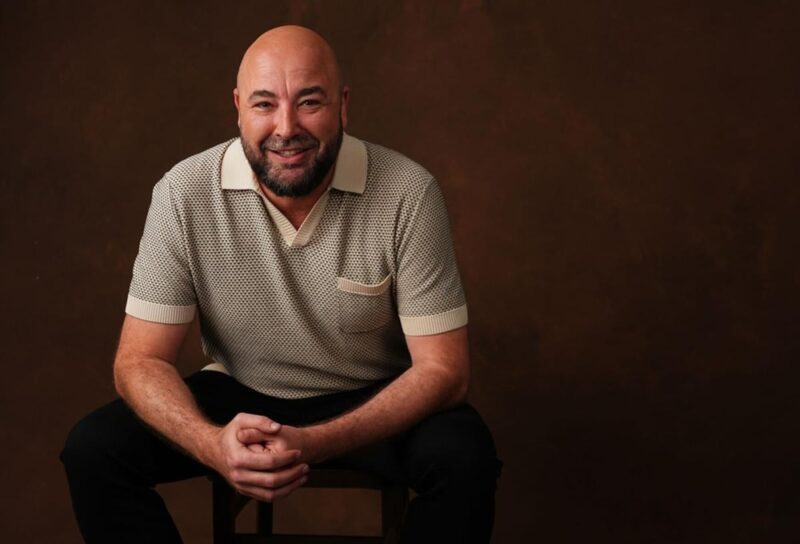
History has a way of making the inevitable seem obvious. We look back on defining moments with the comfort of knowing how they unfolded, often forgetting that the people responsible for shaping them were operating without that same certainty. In the 72 hours leading up to D-Day, as the Allied forces prepared to launch the largest seaborne invasion in history, the fate of the free world rested not simply on military strategy, but on something far less predictable: the weather. For General Dwight D. Eisenhower (Brendan Fraser) and meteorologist Captain James Stagg (Andrew Scott), the question was deceptively simple but almost unbearable in its implications. Proceed with the invasion and risk catastrophic losses, or delay and potentially jeopardise the entire war effort. In Pressure, Australian filmmaker Anthony Maras transforms that extraordinary moment of historical uncertainty into a gripping examination of responsibility, expertise and the terrifying consequences of making decisions when no outcome can ever be guaranteed.
Speaking with our Peter Gray ahead of the film’s Australian theatrical release, Maras reflects on finding cinematic suspense in an invisible threat, why Andrew Scott’s uncompromising Stagg doesn’t need to be likeable to be compelling, and how Brendan Fraser’s inherent warmth helped reveal the vulnerability beneath Eisenhower’s historical stature.
I wanted to ask first about making the invisible feel terrifying. In a conventional war film, the threat is obviously something that we can see approaching. Here, it’s a weather system nobody can see in its entirety or fully predict. Did you have to find yourself inventing a new cinematic language for suspense? One that can frighten the audience, even though they can’t actually see anything?
That’s a really good question, and it gets to the heart of why I wanted to the film, actually. After making Hotel Mumbai, I didn’t want to do another terror-related film. To be honest, I had been sent other war (scripts) and I wasn’t interested in doing those, because I might be playing with the same notes as Hotel Mumbai.
However, when I got Pressure, it was exactly that element you just spoke of that intrigued me: this idea of an invisible, systemic threat that humans haven’t really evolved to fear in the same way as a predator. We fear sharks, heights, fire, or predators stalking hallways with guns. As a filmmaker, there’s a very established language for dealing with those threats, and I tried to work with that in many ways on Hotel Mumbai.
But with Pressure, the challenge was how to make this slow-moving, amorphous weather system feel compelling, thrilling and genuinely terrifying. What interested me was that some of the greatest threats we collectively face are these invisible, amorphous forces that we’re not biologically equipped to fear or even fully understand. I thought there was a real allegory in Pressure, particularly in compressing the story into this short period of time where understanding a slow-moving weather system could literally change civilisation as we know it. And it all comes down to one decision.
What’s so fascinating about the story is how simple the plot actually is: do we launch the biggest invasion in history on Monday, or don’t we? You have all these characters driving themselves insane because they don’t know the answer. They don’t have certainty, and they’re desperate for it. There’s an inherent drama in watching these different intellectual and strategic forces clash against one another. These titans of history, before they became titans, were simply people who didn’t know what to do. And the question becomes: how do they operate under pressure? That’s what the film tries to explore.
The film is ultimately asking: Is this the right decision, or is it learning to live with the possibility that there is no right decision? Stagg and Eisenhower are both working with incomplete information, but they have very different responsibilities. One has to interpret the evidence, the other has to act on it. Where did your own sympathies lie when you were writing the film? Or did that change as you came to direct it?
Well, when we were rewriting the film, it was happening right throughout COVID, and many of the same debates were taking place around disease, its spread, expert opinion and scientific consensus. You have a political imperative on one side and a scientific reality on the other, and those two things often clash. One of the things that really struck me about the film was that, even though it’s about people trying to predict a weather system 80 years ago, the debates they’re having and the conflicts they’re facing apply to almost any major decision we have to make in life.
What really impressed me about Stagg was that here was a man standing before the most fearsome military leadership in the world, knowing they’d put all their efforts, all their eggs, into one basket: invading on Monday. And he had to tell them something they didn’t want to hear. What impressed me was his thinking. He never said, “This is the right answer. Here’s certainty, and you have to take this road.” Instead, he said, “We don’t know for sure which way it’s going to go, but based on the evidence and information we have at hand, I can be certain this is the right decision. What I can’t be certain of is whether the outcome will be the one you want.”
It’s a careful distinction to make. He was never promising 100% certainty about the outcome, but he could offer certainty about one thing: based on the information available, this was the decision they should make. It sounds simple, but it’s incredibly difficult to get people to think that way because we all have our own biases and preconceived ideas.
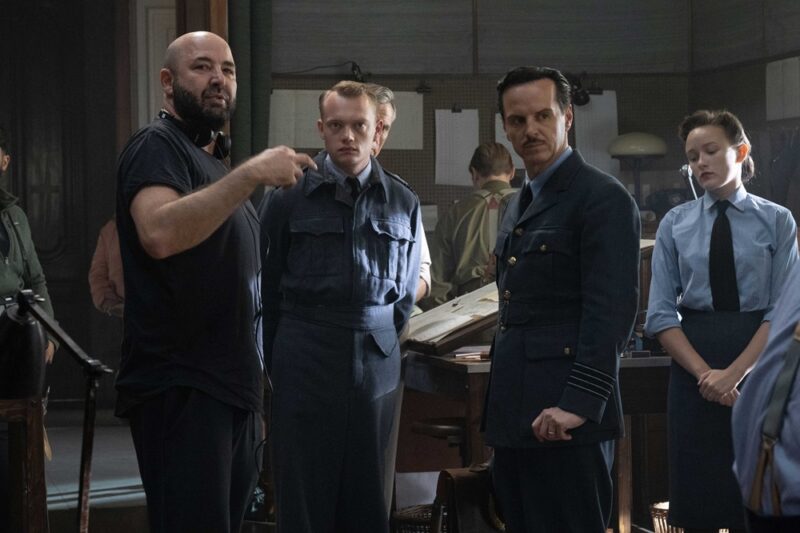
It makes me look at leadership, because Eisenhower has to made a decision that will cost lives whichever way he chooses. But Stagg has to stand behind a prediction that can never be certain. Did it change your understanding of what a good leader looks like? Because I feel like real leadership is less about having answers and more about the uncertainty in bearing the responsibility you ask others to bear.
Yeah, I think it very much is a meditation on leadership and just being real. You might have a problem or a question, and effectively you can do one of two things: you can make up an answer because it makes you feel good in that moment, or you can admit, “I don’t know the answer, so let’s try to find it.” That latter approach can be really terrifying. I think a lot of people would rather hear a soothing falsehood, or an answer that may or may not be true, than face the uncertainty of someone saying, “I don’t know.”
And that gets back to something else: we’re inherently afraid of the unknown. I don’t know if you were, but as a kid, I was afraid of the dark. I saw The Evil Dead when I was far too young, and there was this tree outside my bedroom that would scrape against the window while I was sleeping. In The Evil Dead, the trees came alive and killed everyone, so every time I heard that scraping at night, when I couldn’t see what was out there, I’d think, “Oh my God, what is that?”
During the day, I didn’t care because I could see it. That uncertainty was gone.
In a broader sense, I think the film explores that same fear. People are desperate for certainty, but leadership sometimes means moving forward without it. It means having the courage to say, “I don’t know,” and the wisdom to recognise that you don’t need to know everything about everyone or every subject. Instead, you need to know how to find the right person, someone who has dedicated their life to understanding that particular issue.
These days, so many people seem to think they know everything. They know what’s happening with the climate, they understand virology, they have answers for all these incredibly complex subjects. But have they actually spent decades studying them? If your toilet breaks down, you call a plumber. In a way, the film is a celebration of expertise.
But the other important thing is that it’s not about blindly trusting expertise, either. They had two experts, and Crick was a formidable one. It’s not simply saying, “Trust anyone who calls themselves an expert.” What I find so powerful about the underlying story of Pressure is that you had two camps of experts, both presenting theories that, at the time, were sound in their own ways. Through this great argument, this competition of ideas, a truth emerged. And ultimately, the leadership had the wisdom to choose well, and D-Day was a success.
I think there’s something really profound in that.
It would be nice to live in a world where leaders actually had common sense. With Pressure, I know that you’ve described it as being visceral and immediate. With that, how do you turn people studying maps and arguing over data and waiting for information into physically suspenseful cinema?
It all comes down to subjectivity. I think it’s important in any story, but especially in this one, to get inside the head of your protagonist, who understands the consequences of failure. He has a very real reason to be frightened because he knows nature can turn on a dime, destroy the fleet and potentially destroy the Allies’ chances of victory.
But the audience doesn’t necessarily understand those consequences instinctively. So my job as a filmmaker is to find a way to put them inside the protagonist’s mind, to help them understand just how terrifying the consequences of making the wrong decision could be. It really is about experiencing the situation through his perspective.
One of the mantras I kept repeating to myself while writing the script was, “You’re not making a historical film. You’re making a film set in a historical period, but with characters who are living in their present moment.”
There’s a tendency to treat historical figures as though they’re superhuman or somehow beyond reproach. But these were ordinary people, or in some cases extraordinary people, who were still just like you and me, faced with incredibly difficult decisions. They knew they were fighting a major war, but they weren’t necessarily thinking about making history. They were thinking, “How do I get through the next five minutes?”
The challenge was how to write, perform and direct the film in a way that doesn’t feel like we’re looking back at history, but rather that we’re right in the middle of a situation that happens to be set 80 years ago. I think that’s what makes it feel contemporary and relevant to what we’re experiencing today.
It’s funny, because people would ask, “This film is set 80 years ago. Do audiences really want to see something set that far in the past?” Well, people are going to see The Odyssey, and that’s set thousands of years ago.
Ultimately, it’s the characters we connect with and the dilemmas they face. That’s why we go to the cinema, why we go to the theatre, and why we engage with storytelling in the first place. It’s those human experiences that allow us to connect with a story and hopefully come away feeling enriched by it.
On the topic of getting inside the head of your protagonists, you have someone like Andrew Scott. I met him last month in Toronto, and he’s just the loveliest man. He’s described Stagg as someone whose intelligence and humanity are not immediately apparent to the people around him. How did you work together to make an audience gradually recognise his value rather than asking them to admire him from the outset?
Well, there’s this idea you hear a lot that a character has to be likeable, or instantly likeable. I don’t buy that. I think a character just has to be compelling. Whether he’s nice or polite was always beside the point for me. What kind of person is he? What’s he striving for? And does he achieve it? I think one of the joys of the performance, and of the underlying story, is that you have a character who walks into a situation knowing, or very quickly realising, that he’s not particularly welcome. And he doesn’t really care what people think of him.
But as the story unfolds, you come to understand that while he might not be nice, polite or particularly congenial, he’s inherently a good man. He’s someone who deeply cares about his country, his duty and telling the truth. I think we can respect people like that, all the more so because he just doesn’t give a shit what anyone thinks of him. There’s something refreshing about that. Some of the most enjoyable moments we had while filming and editing were those scenes where he’d simply stand there, completely deadpan, look someone in the eye and essentially say, “Irrelevant. You’re a moron. Don’t care.”
And we love characters like that. Think about Jack Nicholson in As Good as It Gets, or so many of his other roles. He plays these abrasive, difficult characters, and we love watching them. So, more of that, please (laughs).
And then you offset that with Brendan Fraser, who brings this warmth and approachability to Eisenhower. Did that quality help you explore the tension between the public image of a trusted commander and the private experience of a man who knows that any decision he makes could become catastrophic?
That’s a really good point, and it goes back to what we were discussing earlier about looking back on history rather than experiencing it in the moment. We remember Eisenhower as a great wartime general and, later, a much-loved president. But he wasn’t either of those things in the lead-up to D-Day. He was a general who had just come through the massive debacle and horrific tragedy of Exercise Tiger. They were attempting something that had never been achieved before. They’d tried several times to get onto the continent and hadn’t succeeded.
His body was breaking down. He was smoking three or four packs of cigarettes a day, drinking 20 cups of coffee, and he was vulnerable. I thought it was really important to show that side of him. But with Brendan Fraser in particular, there was another quality I found fascinating for the role. Eisenhower had never fired a shot in battle. He hadn’t actually fought on the battlefield himself. He was too young for the First World War and too old for the Second. Instead, his great strength was his ability to win people over and hold a team together. He eventually became a president whom America genuinely loved and trusted.
And I think Brendan Fraser is inherently someone audiences love and trust, too. There’s a quality he possesses that people already bring with them into the cinema because of how they feel about him. My hope was that some of that affection and trust would naturally transfer to Eisenhower. They also share this folksy, Midwestern charm, a certain warmth and approachability. So it was less about imitation and more about exploring a different side of Eisenhower than the one we’re accustomed to seeing.
And this question might be something you haven’t thought of, because I feel like if the weather had cooperated with the original plan and Stagg’s warning had never been tested, obviously history would remember him differently. Is there something unsettling about how often a person’s greatest contribution depends on events unfolding in precisely the right or wrong way?
Yeah, I think that’s the great question of fate. What is our fate? Nobody would have known who James Stagg was if the weather had turned out differently. Does history create the moment, or does the individual create history? I don’t know if that question has ever really been settled. But what we do know is that they had to make a decision based on their understanding of an unpredictable weather system, and ultimately, we ended up with the story that we know today.
Pressure is screening in Australian theatres from October 29th, 2026.
