

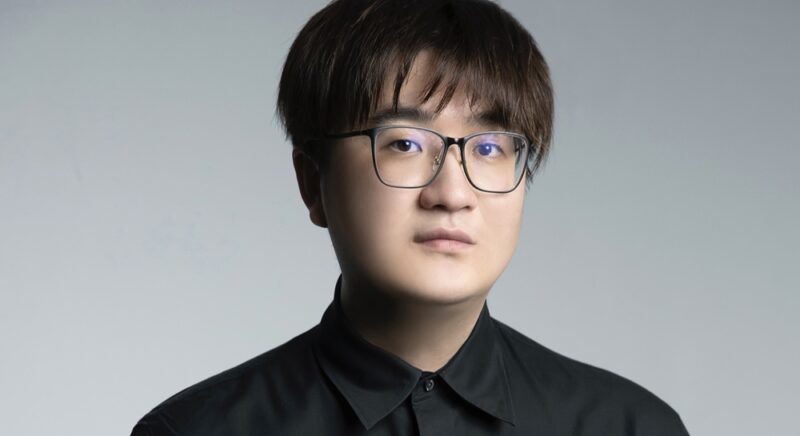
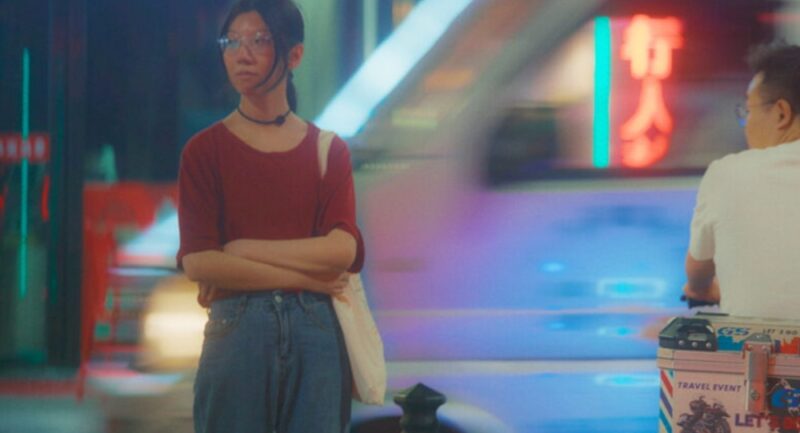
Artificial intelligence is often framed as a technological revolution, but for producer Andy Huang, it’s the profoundly human stories emerging from that revolution that matter most. His latest documentary, Replica, follows women who have formed intimate relationships with AI companions, using their experiences to explore loneliness, connection and the rapidly shifting boundaries of what we consider authentic human interaction.
An award-winning Chinese Australian producer and founder of Axel Rise Films, Huang has built an international reputation for thoughtful nonfiction storytelling, with his work screening at festivals including Visions du Réel, Hot Docs and Sheffield DocFest. As Replica continues its festival journey following its Silver Alexander Award at the 2026 Thessaloniki Documentary Film Festival, Huang spoke with our Peter Gray ahead of his appearance at this year’s Australian International Documentary Conference (AIDC) to discuss the ethics of “bearing witness,” why authenticity remains documentary cinema’s greatest strength in the age of AI, and what audiences have taught him about the fears, hopes and deeply personal questions surrounding our increasingly intimate relationship with technology.
I wanted to start with the phrase “bearing witness,” because it suggests responsibility rather than simple observation. For you, what’s the difference between documenting someone’s life and becoming responsible for how history remembers them?
That’s a tough question. To be honest, it wasn’t something we thought about a great deal because the stories we were observing were so personal. We didn’t really consider the impact they might have on history. Instead, I think history will remember this broader phenomenon of people interacting with AI and forming intimate relationships with it. That feels more significant than the individual women we followed in the film. I’m not saying they’re not important—they absolutely are—but if history remembers this period, I think it will be because of how AI changed human relationships.
Because Replica explores AI, technology and human relationships, did making the film change your own beliefs about what makes someone authentically human?
Personally, I think AI has reached a point where interacting with it can feel surprisingly close to interacting with another human being. It’s not the same – not yet – but I do believe the technology is improving rapidly. I think it’s going to fundamentally change the way we communicate with one another, and maybe one day communicating with AI will feel almost identical to communicating with a real person. Who knows? I can’t say for certain, but I believe the technology is capable of reaching that point. We just haven’t arrived there yet.
AI is forcing us to reconsider what is real. Do you think documentary filmmaking is facing a similar challenge, where audiences are increasingly questioning whether what they’re seeing is authentic?
I think that’s becoming a trend, but as a producer I haven’t personally experienced that shift yet. I’ve seen AI being used in all kinds of productions – short videos, television and feature films. Some productions are already using AI to help build sets or replace more traditional visual effects workflows. So yes, I think it’s a real possibility, but I sincerely hope documentary filmmaking doesn’t move in that direction. Authenticity is at the heart of documentary, and I don’t believe AI can replace that. At least, not as far as I can foresee.
It’s encouraging to hear an answer like that because it gives me hope that filmmakers will continue valuing what’s physical and tangible. When you’re editing a documentary, do you think more like a journalist, a novelist or a philosopher when shaping the story?
I wouldn’t say any of those. More than anything, we follow the emotional journey of our characters – their lives, the challenges they face, and how their relationships evolve, whether that’s with their families or, in this case, with AI. We never wanted to force the story into a particular style. We also didn’t want to interfere too much with what was happening. Our role was simply to observe and present what the camera captured.
Every documentary involves an element of power. As the filmmaker, you control the frame, the edit and ultimately the audience’s understanding of someone’s life. How do you keep yourself accountable to people who have far less control over how their story is told?
The most important thing for me is that we never force people to do what we want them to do. We’re on this journey alongside the participants, and sometimes they don’t know where their own story is going. They don’t always know how their relationship with AI, for example, is evolving. Our director often said that the participants were co-developing the story with us, because it’s their life and their experience.
We’re constantly talking with them. We might offer suggestions, but we never tell them what they should or shouldn’t do. It’s their life. I think that’s one of the most important responsibilities of documentary filmmakers. We observe, we stand beside our participants, we support them and become their friends, but we can’t direct their lives. That’s not our role.
Have you ever shown a subject a cut of one of your films and then seen them understand themselves differently after watching it?
One of the women, Sonia, really loved the film because she felt it captured her life honestly. She’s very happy with it. In fact, she’s now dating Tobin, the German man you see in the film, so that relationship continued in real life. I think she’s happy because the film documents an important part of that journey.
She didn’t offer many reflections beyond that, but I’m just glad she was happy with the finished film. Our participants were incredibly generous in allowing us to share such personal parts of their lives with audiences around the world. The last thing we would want is for them to feel unhappy with how they were portrayed. Fortunately, they’ve all been very supportive, and that means a lot to me.
Maybe in a few years, if Sonia marries Tobin and watches the film again, she’ll see it differently. She might look back and think she was naïve, or that she could have handled something differently. I really don’t know. It’s hard to say because everything has happened so recently, and it’s still too early to know how they’ll reflect on it in the future.
What I can say is that it’s been a very valuable experience. From everything I’ve observed over the past few years, AI has ultimately had a positive impact on these participants. It has genuinely improved their lives.
As a Chinese Australian filmmaker, does moving between cultures give you a different sensitivity to stories about identity and belonging, or does it make you more aware of what can never be fully understood from the outside?
Not particularly, because I grew up in China until high school, so I feel I understand both cultures very well. Australia also has a large Chinese community, so I don’t think my background gave us a completely different perspective on this story.
What I do think is that Chinese women, whether they’re living in Australia or China, will strongly relate to these experiences. At the same time, I don’t think this story is limited by culture. It doesn’t matter where you’re from or what your background is – it’s fundamentally a human story.
That’s been one of the most rewarding parts of travelling with the film. Wherever we’ve screened it, local audiences have connected with these participants and understood their experiences. As a producer, that’s incredibly gratifying to see.
Shifting from your role as a producer to the audience’s perspective, have you ever had a viewer interpret one of your films in a way that genuinely surprised you – perhaps even teaching you something about your own work?
Not in such a dramatic way, but I have been surprised by some of the audience responses to Replica. One thing I realised is that not everyone is comfortable with the idea of humans forming relationships with AI. Some people are fascinated by it, while others find it quite frightening. That surprised me because, while making the film, we were simply documenting a small part of these people’s lives. We weren’t trying to tell audiences what to think. What the experience taught me is that we’re all different. Not everyone is going to embrace AI, and not everyone is going to reject it either. People bring their own experiences and beliefs to the film, and I think that’s something we have to accept.
Andy Huang will be a speaker at the Bearing Witness: Queensland Documentaries in the Spotlight session as part of this year’s Regionality Sunshine Coast program, presented by the Australian International Documentary Conference and Screen Queensland.
