

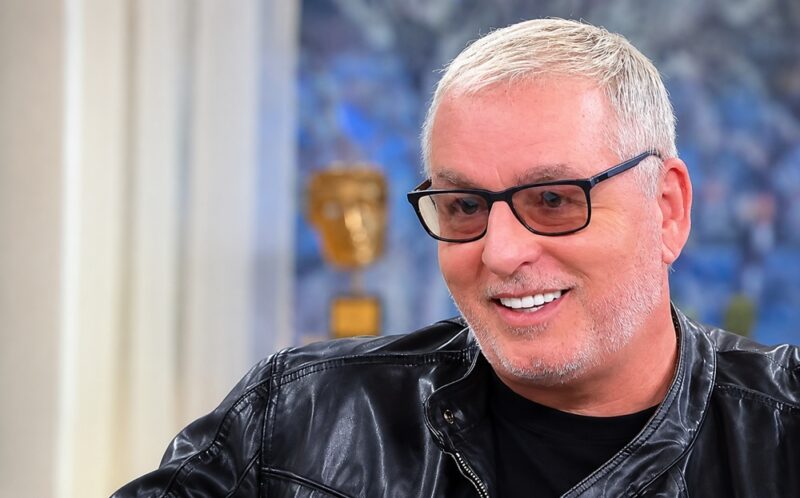
Some of the most revealing moments in music history were never intended for an audience. In 1993, Andros Georgiou picked up a Sony Handycam and began filming his cousin, lifelong best friend and creative collaborator, George Michael, as they embarked on one of the most ambitious projects of the singer’s career. The resulting footage now forms the heart of Trojan Souls, an intimate 81-minute documentary offering a rare glimpse of the musical genius behind the global superstar. At its centre is the story of what Georgiou considers the greatest album never made, an extraordinary undertaking that would have seen Michael writing and producing original material for the very artists who inspired him, including Elton John, Stevie Wonder, Aretha Franklin and Bryan Ferry.
Yet Trojan Souls is as much a celebration of an extraordinary friendship as it is a fascinating piece of musical history. Speaking with our Peter Gray, Georgiou reflects on the unfinished album, the creative perfectionism that defined Michael’s songwriting, and the circumstances that ultimately prompted him to release decades-old private footage.
When you’re looking back at the beginning of Trojan Souls, what do you remember most vividly? Is it the music that was being made, the ambition of what you were trying to achieve, or the feeling that you and George were taking on the world together?
Kind of all three, to be honest with you. First and foremost, we loved working together because there was never any pressure. It wasn’t, “Oh, we’ve got to write a number one song.” It was simply, “Let’s go into the studio and see what happens.”
The whole idea of Trojan Souls actually started life as “Boogie Box High.” We were sitting in LA, getting sunburnt, got bored and decided to go into the studio. Forty-eight hours later, we came out with “Ain’t No Stoppin’ Us Now”, the McFadden & Whitehead track, which was so important to us growing up and DJing. It’s an absolute classic. Again, there was no pressure, and we ended up creating something really special.
That night, George suggested turning it into a Boogie Box High album, and I thought, “Yeah, let’s do that.” But then I had this dream about Greek warriors and the Trojan horse. The next morning, I told him about it, and he thought I was crazy. Then I said, “What about Trojan Souls?” And he just flipped. He loved it.
He immediately started putting together this extraordinary wish list of artists: Aretha Franklin, Elton John, Stevie Wonder, Sade, Bryan Ferry, Prince. The list went on. And I thought, “Okay, this is getting serious.” George said, “It’s going to cost some money, and that’s down to you. Go and get us a record deal.”
So I went to Sony. We weren’t in court yet, but we already had a major problem with them. This was about a year before things actually reached the High Court. Sony passed on the project, which surprised me, but more than anything, it shocked me. They were cutting off their nose to spite their face. George had probably sold around 100 million records by that point, so you’d think they’d want to keep him happy and maintain some control over the situation.
But they said no, and I told them, “The moment I walk out of this building, I’m calling Warner Brothers.” My best mate, Michael Rosenblatt, was working there as head of A&R. His father, Ed Rosenblatt, had been David Geffen’s right-hand man for years. So I got in the car, called George in LA and woke him up at about six or seven in the morning. I said, “Sony passed. I’m going to Warner Brothers. I’ll let you know what happens.”
I went in to see Michael and asked if Rob Dickins, the chairman, was in the building. He was, so I said, “Bring him in. He’s going to want to hear this.” I knew these people already, so I laid everything out. “I’ve just left Sony. They’ve passed on the project. Here’s what I want to do. I want to make this album, release it on my label, Hardback, and call it Trojan Souls.” I’d already bought the domain name, trojansouls.com, and this was around 1992 or 1993. I had everything planned.
They basically said, “What do you need?” And four hours later, I walked out of the building with a cheque for a million pounds. By then, George was having breakfast in LA. I called him and said, “I’m coming back on British Airways first class. I’ve got a million pounds. All systems go!”
So I returned to LA, and we got started. George had already made his wish list, and my job was to track down the artists and their managers. I got all the numbers, made the calls, and everyone said yes. It was incredible. We booked six months at The Chapel, Dave Stewart’s beautiful private studio in Encino. And for those six months, we just worked. It was a wonderful experience, and I was essentially a fly on the wall, filming everything.
That’s the important thing about this film. It was never intended to be an official documentary. I was filming these moments for us, for our friends, our families and George’s godchildren, who are also mine. It was a family affair, really. Unfortunately, what I didn’t discover until about ten years later was that someone had copied the tapes.
We had the studio booked exclusively for six months, so we would leave everything there overnight. It was a private space, just one studio and one vocal booth, and we assumed everything was safe. But at some point, someone copied not only the music recordings but also the video footage I’d left there. Nothing happened with it for about ten or twelve years. I think whoever took it eventually decided enough time had passed that they could get away with selling it. We have a pretty good idea of who was responsible, and we’re still trying to track everything down. But essentially, the material was sold to a superfan, probably for something like £20,000.
Over the last decade, that footage has been appearing everywhere online. For years, I was able to deal with YouTube directly. They knew me because I’d been contacting them about this material for so long. Whenever something appeared, I’d email the same person, and within thirty seconds it would be taken down.
But then it would inevitably pop up again.
This year, it started appearing on TikTok, Facebook, Twitter and Threads, and those platforms are much harder to deal with. You’re essentially talking to AI rather than an actual person. I’d already spent far too much time protecting my own material, and eventually I thought, “You know what? If I can’t beat them, I’ll join them.” I’ll release a much better version myself, with improved picture quality, better audio and proper editing. I’ll turn it into a film that fans can actually enjoy, rather than having them watch these poor-quality, unauthorised copies.
And with next year marking forty years of Boogie Box High and “Drive Talkin'”, it’s a significant anniversary. I’m planning an anniversary presentation and other things around that, so the timing felt right. The idea is to finally give fans the opportunity to see this material as it should be seen, while keeping it protected so it can’t simply be downloaded and circulated all over again.
And that’s really how the whole thing came about.
Do you feel if Trojan Souls had been completed and released, do you think we would remember George’s career differently today?
100%. If you look back at some of the last interviews George ever did, he actually said, “There will never be another Madonna, Michael Jackson, Prince, or even me.” Not that he was necessarily putting himself in that category, but he wanted to be remembered for his songs.
What was so exciting about Trojan Souls was that George was writing for all these incredible artists we’d grown up listening to, people like Stevie Wonder, Elton John and Bryan Ferry. I did some co-writing with him as well. David Bowie was the only one who wasn’t entirely sure, but we loved Bowie, and we were convinced he’d come around once he’d heard what George was creating for the other artists.
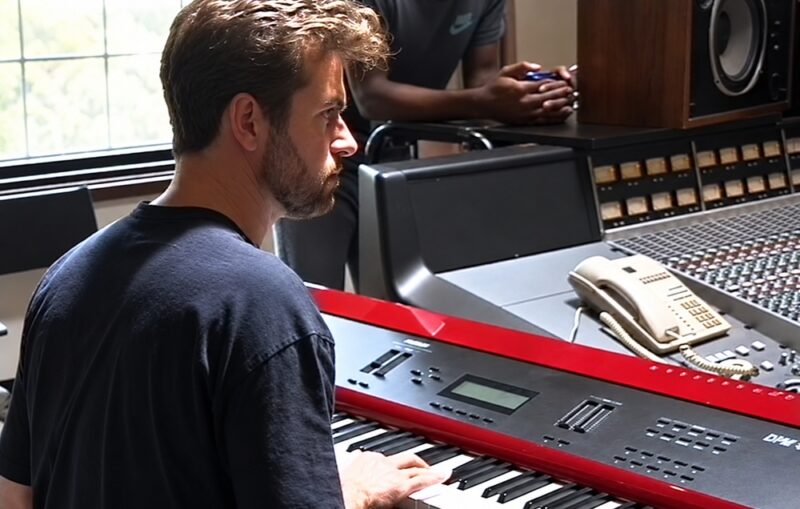
It would have been a masterpiece, but also an educational film in terms of watching how George Michael actually created a song. Nobody had really seen that side of him. You’d see him working with our bass player, Deon Estus, God rest his soul, who’d been with us for something like thirty years. George would literally take the bass off him and say, “No, it goes like this.” Or he’d be working with Wendy, Prince’s guitarist, and say, “I really like that, but I need it to go like this.” And she’d say, “Oh my God, that works!”
He’d guide the backing vocalists in exactly the same way. We had singers who’d worked extensively with Michael Jackson, including the Farrell sisters, and Lynn Mabry, who’d been with us on the Faith tour. We always tried to keep everything in the family because these people were fantastic, and loyalty was incredibly important to us. You could say whatever you wanted about us, and we’d just carry on. We wanted everyone involved to enjoy the ride.
So Trojan Souls would undoubtedly have been a significant moment in George’s history, not just as an artist, but as a producer and songwriter.
Elton John was actually the only artist we managed to get into the studio to complete a full recording. We recorded a song called “This Kind of Love”, and one of my dreams now is to release it as a duet. I’ve got a complete Elton John vocal and a complete George Michael vocal, so my idea is to bring those two recordings together. I’m trying to get in touch with Elton at the moment because I’d love to make that happen, with all the proceeds going to the Elton John AIDS Foundation.
And what’s fascinating is that the footage people have seen so far was literally just me filming everything as it happened. I didn’t even have a tripod! I’ve still got the little Sony Handycam I used. It was either in my hand or sitting on a speaker, and I’d just turn it around whenever something interesting happened. But we actually had a separate deal with Warner Brothers to make an official documentary about the making of Trojan Souls. I think the budget was around half a million pounds, which was an enormous amount of money thirty-five years ago.
We brought in Ken Ehrlich, who was directing the Grammy Awards at the time. We’d known him for years, and he’d made some fantastic music videos. More importantly, he understood how to respect an artist and give them the space they needed. We had a meeting with him about forty-eight hours before Elton was due to arrive. George was very conscious that nobody wants a camera shoved in their face while they’re trying to sing, so we came up with a solution.
The day before Elton arrived, we wired the entire studio with miniature cameras. There were four in the mixing room and three in the recording room, with the cameraman directing everything remotely from a van outside. We explained to Elton that the cameras were there, but they wouldn’t be intrusive. We wanted him to feel completely comfortable.
We spent something like £100,000 on that one day alone. Firstly, because we loved Elton and wanted everything to be perfect for him, but also because we knew that if he had an amazing experience, he’d tell everybody else. So it was worth every penny. And none of that footage has ever been released.
So when I talk about potentially releasing “This Kind of Love” as a duet, I’m not just talking about the music. I’ve also got all this professionally filmed footage that could be edited together to accompany it. And during the downtime that day, I had the cameraman sit down and interview Elton. I’ve got an Elton John interview that nobody has ever seen.
That’s what makes all of this so special to me. These aren’t just recordings or pieces of footage. They’re moments in music history that have never been shared. And, really, this is my legacy.
As you mentioned all these artists said yes, and I know that you’ve spoken of George’s ear, that it’s almost like a studio. He just hears things that other people don’t. Can you recall a moment where you saw that mastery at work?
It was pretty much from day one. I was a DJ and producer, but I’d never seen anyone work the way George did. I’d go into the studio and start with a drum track or bassline, then structure the song: a 16-bar intro, four-bar verse, middle eight, whatever it might be. But George would go in and complete the first verse as though it were an entire finished song. Nothing else existed yet. He wanted to make sure that first verse, and all the music accompanying it, was absolutely the best it could be before moving on.
Then he’d build the rest of the song around that. He might start with the chorus and move to the verse, or vice versa. But to work that way, you almost have to have a mixing desk inside your head. You need to know exactly where the drums, bass, guitars, piano, backing vocals, lead vocals and harmonies are going to sit. He’d come out at the end of the day with this perfectly completed two-minute section of a song, and I’d say, “How do you do that?” And he’d just say, “Well, make sure it’s right, and then we can carry on.”
And I’d think, “That makes sense, but not many people can actually do that.” I certainly couldn’t!
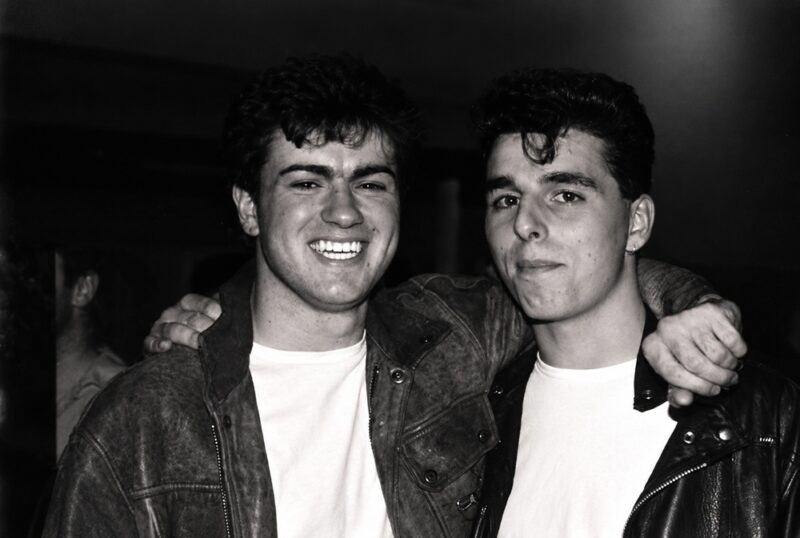
As for the first record that really affected us, I’d probably say Elton John’s “Rocket Man”. Our musical journey started when I was nine and George was eight. Our parents didn’t really understand it, but we’d beg, borrow and steal enough money to buy a vinyl record on a Saturday in Edgware Road, near his father’s restaurant. His father was my godfather, by the way. Then we’d go across the road to Woolworths, buy a couple of blank cassettes, take everything home and listen. George would completely dissect the album. He’d even come up with alternative harmonies for songs like “Rocket Man”.
He’d say, “I love this track, but you know what? If Elton had sung it like this, I think it would’ve been better.” And I’d say, “Are you crazy?”
We’d record the album onto cassette, take the vinyl back and exchange it for a Queen album. Then we’d do exactly the same thing. Eventually, if we were lucky enough to afford two records, I’d buy Elton and he’d buy Bowie. We’d get two more cassettes and copy them both. So we essentially grew up with the same record collection.
But eventually we got fed up with having to return everything because, back then, the artwork was just as important as the music. You’d have the lyrics printed on the inner sleeve, details about who produced the album, who wrote the songs, where they were recorded. All that information was fascinating to us. And we wanted to keep the actual records. In fact, I’ve still got those records now. They’re the same ones we used to DJ with. I’m actually preparing to go back out DJing next year for the 40th anniversary, so I’ve been going through all those old records again. I’ll play them on my decks, and if I think something still works, I’ll get the MP3 and add it to my playlist.
Music was absolutely everything to us.
We grew up listening to Elton John, David Bowie, Queen, Genesis and Supertramp. But the really big influences were Bowie, Queen, Elton, Stevie Wonder and Diana Ross. And that’s where the soul influence started coming in. George’s sister Melanie, God bless her, was three years older than us, and she became a real disco queen. She used to go ice skating, where the DJs would play all these incredible records. She’d track down the songs, buy them and bring them home for us to hear. And we’d think, “Oh, there’s another world out there. It’s called disco!”
From that point, we got massively into disco and dance music, and I think you can hear that influence in pretty much everything we ever did together.
But I’ll tell you a quick story that I always love sharing.
When we were eight or nine years old, we were sitting at home listening to Elton John records, completely in awe of him. Fast-forward about ten years, and suddenly we’re sitting around a dinner table with Elton himself. We used to have dinner with him practically every week, and he was just so entertaining. I’m a massive Beatles fan, so he’d tell us stories about John Lennon, or something David Bowie had done, or Freddie Mercury. And George and I would literally pinch each other under the table.
Even after twenty dinners, we’d still look at each other and think, “Can you believe we’re actually here?” We were still those two little boys who’d grown up idolising these people. George had sold millions and millions of records himself by then, but it didn’t matter. We were still completely in awe.
It’s so nice to maintain that wonder. And just before letting you go, as you mentioned Stevie Wonder, George’s voice is so distinctive, but what happened creatively when he wrote a song intended for someone else to sing? Did writing for someone like Stevie allow George to express something he might not have expressed in his own voice?
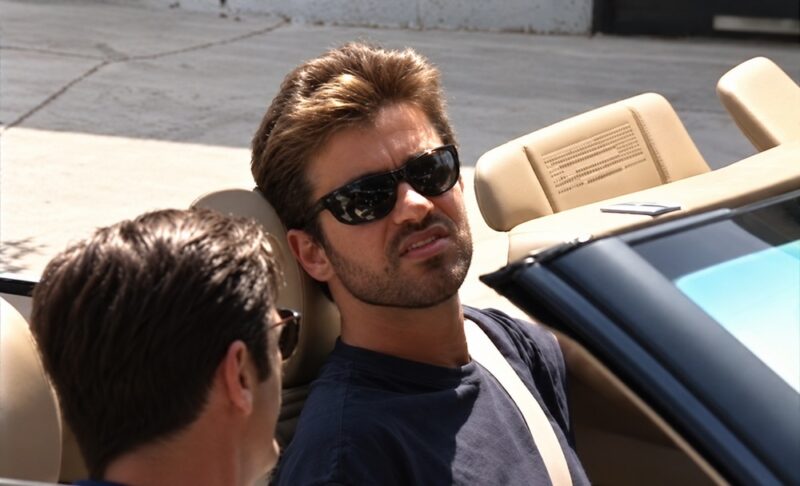
Absolutely, and lyrically as well. When George came out, he had to fight quite a battle, but that’s another story for another day. If you go back and listen to songs like “A Different Corner”, or even some of his earlier work, those lyrics were very much coming from his own experiences. They were about a man, not a woman. He wanted to write from his heart, and that was fantastic.
But when you’re writing for other artists, you can’t necessarily bring your own sexuality or personal experiences into their lyrics. You have to write for them. Once everyone had agreed to participate in Trojan Souls, apart from Bowie, we started really studying their music. We actually recorded a version of “Space Oddity” out of spite! I never got around to sending it to David, but we did record it.
We collected what we considered each artist’s best albums, sat down and listened to everything. We’d think, “Okay, for Stevie Wonder, we need to do this. For Sade, we want something like that. For Bryan Ferry, something completely different.” George knew exactly what he wanted to achieve with each artist. So lyrically, vocally and musically, it would have been a very different record. Every song would have had its own identity.
I genuinely believe Trojan Souls would have been the most important project of George Michael’s career. Even more important than Faith.
Faith was a runaway bullet train. It became too big, too quickly, and George didn’t particularly enjoy that experience. The last time I was in Australia was actually for the Sydney, Melbourne and Brisbane shows on the Faith tour. What a place! But Trojan Souls would have allowed him to demonstrate something entirely different about his artistry. And I knew how he worked better than almost anyone. From the first Wham! single through the Wham! albums and virtually all his solo records, apart from Patience, I was constantly in the studio with him.
Sometimes we’d still be working at two in the morning, and by then I was married with a young son. I’d say, “George, I’ve got to go home. The missus is calling.” He’d say, “No problem, no problem.” Then, two hours later, at four in the morning, there’d be a knock at my front door. My wife would say, “Who’s that?” And I’d say, “It must be George.”
Sure enough, I’d go downstairs, and there he’d be with a cassette in his hand, saying, “Okay, what do you think?” Four o’clock in the morning! I’d say, “George, I’m coming round at eight to make you a cup of tea. What are you doing?” But, of course, every time he’d play me something, it was amazing.
“Fastlove”, for instance, is my classic example. When George first played it to me, it was a ballad. And I said, “This is a mid-tempo dance track. It cannot be a ballad. That doesn’t make sense to me.” He went away, and by the time I arrived at the studio later that day, he’d turned it into a dance track. He listened to me. And the thing is, he didn’t really listen to many other people.
But you have to understand our relationship. We’d known each other since we were practically babies. We’d grown up together and bonded throughout our entire lives, not just through music. We were closer than brothers. I can’t even explain it properly. People ask me about our relationship, and I struggle to find the words because it really was something extraordinary.
We fed off each other creatively. If George told me he didn’t like something I was doing, I wouldn’t do it. And if I told him I didn’t like something, he’d change it. We had this wonderful, equal relationship, and there was never any competition. I mean, I’m not in competition with George bloody Michael, am I? (Laughs).
I was just honoured to be part of it.
Trojan Souls is now available to rent or buy from the official site.
