

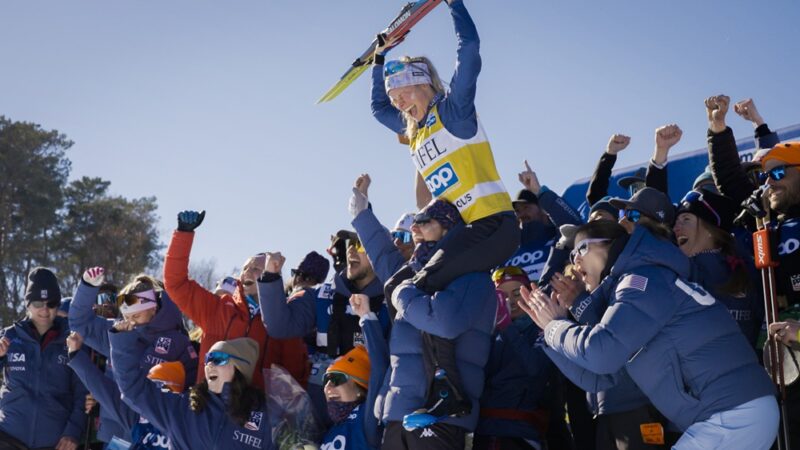
For Olympic gold medalist Jessie Diggins, the “pain cave” has long represented the place an elite athlete willingly enters when the body is screaming to stop, but the mind insists it can keep going. In Threshold, that celebrated capacity to endure takes on a far more complicated meaning.
Unfolding across a single high-stakes cross-country ski season, the documentary follows Diggins as she continues competing at the highest level while experiencing a relapse of an eating disorder. What began as one film for directing brothers Lars and Torsten Brinkema fundamentally shifted when Diggins trusted them with the reality of what she was going through, forcing the filmmakers to consider not only what story they were telling, but what responsibilities came with being granted access to someone at their most vulnerable.
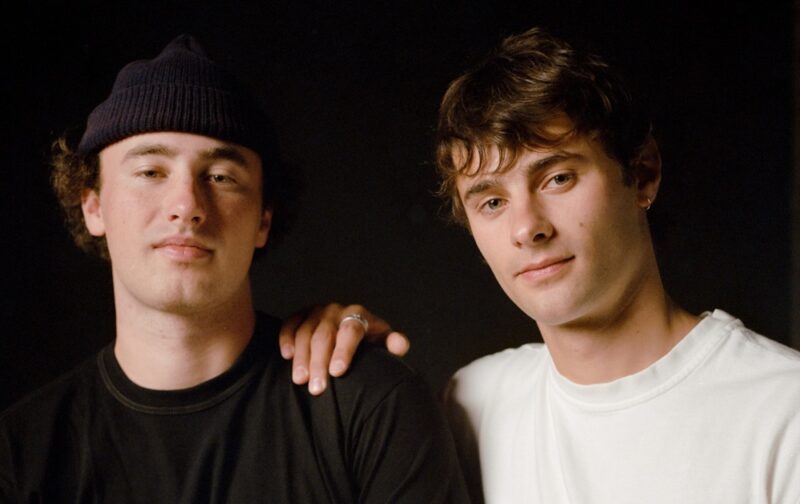
Former competitive skiers themselves, the Brinkemas understood the tunnel vision, physical punishment and relentless pursuit of improvement embedded within endurance sport. But Threshold ultimately challenged them to reconsider where perseverance ends and self-preservation begins. Their relationship with Diggins became central to that process, with the brothers prioritising being there for her as people before filmmakers and often allowing the simple question of “How are you?” to guide their conversations.
Speaking with our Peter Gray ahead of the film’s digital release, Lars and Torsten discussed the ethical complexities of filming Diggins through her recovery, how stepping away from competitive skiing changed their own understanding of elite sport, the danger of allowing any profession to consume your identity, and why the haunting silence of the Scandinavian landscape proved an ideal visual and sonic language for an illness that can so often remain internal.
Jessie is famous for going into what she calls “the pain cave” and for never quitting. Did making this film force you to question whether knowing when not to push through something can require an even greater form of strength?
Torsten Brinkema: Lars and I both came from skiing backgrounds, so at different points we’d pushed our own boundaries and been in our own pain caves. But once we met Jessie and saw it unfolding in front of our eyes – the lengths she goes to that make her the greatest women’s skier in the world – we were both in awe. At the same time, we saw her pushing the boundaries of the sport and started wondering about that same pressure you put on yourself to push boundaries in other parts of your life. I think that’s something we hope to uncover with the film.
Lars Brinkema: Yeah, and I think what we learned through Jessie is this idea that it’s okay to go into those painful places when you’re in sport, whether you’re training or racing, but you can’t let that pain carry into other parts of your life. If you’re suffering in your day-to-day life, that pain cave isn’t somewhere you can stay all the time. And if that pain does start carrying into other aspects of your life, it’s worth reaching out for help.
I know you started making one documentary and then Jessie trusted you with the revelation that she had relapsed. Do you remember the moment you realised both the film had fundamentally changed and your responsibility to Jessie has changed?
Torsten Brinkema: Yeah, definitely. I was actually in New Zealand filming one of their summer training camps up at the Snow Farm, and I remember being at a coffee shop with Jessie when she told me she was struggling. It definitely came as a shock. She’s an idol of both of ours, and to hear your idol be so honest about a mental health struggle was incredibly inspiring because of the honesty and vulnerability she showed.
But it also came with this weight of, “Oh my gosh, is this somehow going to make its way into the film?” In those early stages, there was some uncertainty around that, but it was really about showing up and being there for her as a person before being there as a filmmaker. It meant making the effort to travel around the world and meet her wherever she was at.
We always tried to start our interviews with, “How are you?” – just the most open-ended question in the world. As filmmakers, we felt it was our duty to step back, let life play out in front of us, and trust that whatever she was telling us, she wanted to be part of her story.
Once she disclosed her relapse, was there ever a moment when getting extraordinary footage and being a responsible human being came into conflict? And how did you recognise when the camera needed to stop?
Lars Brinkema: Yeah, I think that came through in our interview style. We moved towards just letting Jessie share what she wanted to share. Honestly, the question, “How are you doing?” would take up most of our interviews. It became this constant dialogue about what was going on.
There were definitely some very difficult parts of filming, particularly with all these different pieces of the story involving her teammates and coaches, and the conflict that came with that. It was difficult to figure out how we, as filmmakers, should play a role in telling that story.
There was also the role that attention from the media had on her during that time. I think we were able to offer a more complete picture and make her feel comfortable around the camera, whereas other media outlets on the road were often looking for a very short piece of the story that didn’t necessarily capture what was really going on.
I feel like documentaries so often celebrate having such unprecedented access, but then you’ve got access to somebody at their most vulnerable, and that isn’t automatically something a filmmaker is entitled to use. Were there moments you filmed that you ultimately decided belonged to Jessie rather than to the movie?
Torsten Brinkema: That’s a great question. I would say yes, there were definitely those moments. We filmed her over the course of an entire year, and a lot of the editing process was about narrowing the story down to the moments that would progress the film from A to B, but also communicate that, for people struggling with mental health issues, it’s not as simple as taking a pill and suddenly everything is fixed.
While we wanted the film to progress from beginning to end, there’s also this open-ended idea, particularly with eating disorders, that there can be a presence that stays with you. Jessie describes it as this voice in her head that returns at different points. It becomes more about how you confront that as an individual, knowing those doubts may continue to surface, and understanding that recovery itself is an ongoing process.
Yeah, about four years ago, I had my own mental health really tested. It’s one of those things where you push through it and feel like, once you’ve gotten through it, that’s it, but it’s always something that can linger. Hopefully, you surround yourself with the right people who keep you going. I’m lucky that I love film as much as I do, because it gives me a sense of purpose and somewhere to channel all of that.
And as you said, you both come from skiing, so you understand that culture from the inside. Did that familiarity initially make you less likely to question certain behaviours within elite sport that you’d spent your own lives regarding as normal?
Lars Brinkema: Yeah, I think so. And because we looked up to so many of these athletes on the team, we were a little wonderstruck at first. But I think the experience also allowed us to look at our own lives as athletes from a new vantage point and understand just how complex it is when your body is both the thing giving you that rush of adrenaline and the thing you rely on to make a living. It’s such an interesting profession in that respect.
You’ve both stood on skis and you understand the mentality of competition. Was there something Jessie said or experienced that made you both look backwards at your own relationship with sport differently?
Torsten Brinkema: Yeah, I think so. We’ve also had some distance from our own time as elite athletes, and now, being in the world of filmmaking and art, we’ve left skiing behind in a way. We’re no longer as obsessive about our own races or competitions, and stepping away from that space has given me a lot of perspective on endurance sports in general.
I think even Jessie asks herself that question: “Why do I do this? Why do I spend a thousand hours a year training? What are the rewards?” We’ve seen endurance athletes across so many different disciplines ask themselves the same thing. But there’s something incredibly alluring about pushing your body to its limits and discovering something about yourself that’s hidden deep within you. I feel like that’s something you can only really experience when you’re in that extreme state of the pain cave.
Do you feel being former competitors helped Jessie trust you, because she didn’t have to translate that world for you? Or do you feel there was a danger that you could understand it so instinctively that you might overlook what an outsider would find troubling?
Lars Brinkema: Yeah, I think having that skiing background was really helpful in allowing us to become such good friends with Jessie. I remember at the first training camp we were filming, we went on a ski with her without our cameras and had this amazing conversation about why we were there and what we wanted the film to be about. I think that really became the heart of our friendship and our ability to make this film.
We also understood that tunnel vision that can come with sport, or really anything you dedicate yourself to. When we were ski racing in high school, it felt like it was everything, even though we weren’t competing professionally. You become so focused that you don’t necessarily know who you are outside of your sport or profession. Being removed from skiing, while still following it, allowed us to see that more clearly.
And I think that applies to filmmaking too. We spent three years on this film and became consumed by this idea that we are filmmakers, putting every ounce of ourselves into making it. Then, once it’s finished, you suddenly have to ask, “Okay, who am I outside of being a filmmaker?”
Going from skiing to filmmaker, was there a film or documentary, or a filmmaker, that inspired such a change?
Torsten Brinkema: I feel like I would look back to some of Herzog’s films, as someone willing to drop everything in his life to tell a story about another person or place. You see clips of him in the jungle, even doubting himself and questioning why he made that choice, but all of that energy is ultimately captured in this thing that becomes something you’re no longer attached to. I think that’s the beauty of it.
Lars and I have all these experiences from making the film, whether it’s losing feeling in our fingers in the Arctic Circle or listening to other athletes tell their stories, and those experiences all shaped our perspective. But now other people are developing their own interpretations and finding ways the film speaks to them that we never could have predicted.
Continuing looking at the filmmaking side of things, you chose not to use narration or easy explanations. You allow silence and physical experience to carry meaning. When the subject is something audiences may desperately want to explain, how did you learn to trust what you weren’t saying?
Lars Brinkema: Yeah, I think especially during the editing process, we met a lot of people who had either personally experienced an eating disorder or had family members who had. It can be such a secretive, internal illness, and when we came back to our footage after almost a year of not looking at it, we were struck by how much silence there was. We didn’t want to explain that silence; we wanted to simply sit with Jessie in it.
The locations influenced that as well. In Finland, Sweden and Norway, it was often dark outside, and there was this almost eerie silence – the kind of quiet that makes your ears ring. So there were different layers of influence that ultimately shaped how we used silence throughout the film.
Threshold will be available on Digital in the United States and Canada from August 28th, 2026.
