
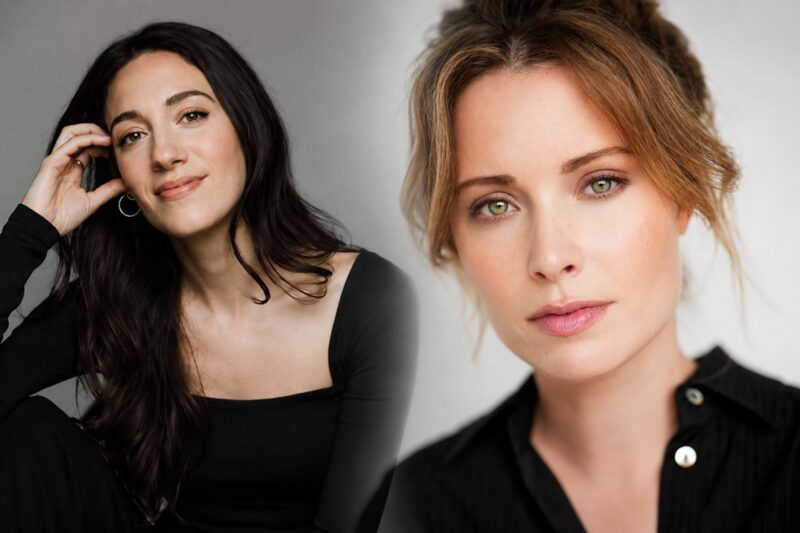
Sarah, I was fascinated by the film’s visual language. Eva is encouraged to wear purple because it projects power, the blue pen gradually becomes loaded with emotional meaning, and throughout the workplace there are these recurring greens in the lamps, furniture and plants. Were you consciously using colour as another form of emotional programming? And were you also saying something about environments that appear supportive and calming, while quietly regulating how people think and feel?
Sarah D’Ambrosio: Yes, the environment and the colour palette were very intentional. We went with cool tones because we wanted the space to feel beautiful, but also very sterile. We played with the idea of colours being packaged and sold as specific emotional tools – like purple representing power, something that’s meant to empower you and that you can lean into. But ultimately, it’s just another extension of (the AI’s) control.
And Hannah, what I found moving about Eva is that she’s not really fighting AI, she’s fighting the expectation that she should be over her heartbreak already. Did you approach her as someone resisting technology or someone defending her right to feel something as difficult for as long as she needs to?
Hannah Emily Anderson: That’s a really interesting question. I think a bit of both. I think she is someone who is very resistant to it, but she doesn’t feel like she has the power or right to be because of the world that she lives in. It’s not until the end where she’s able to break totally free of that.
The film made me wonder whether we’ve started treating emotional pain the same way we treat every other inconvenience in modern life – something that should be just optimized away as quickly as possible. Do you both think we’ve become uncomfortable with the idea that heartbreak, grief and disappointment might actually serve a purpose?
Sarah D’Ambrosio: I think it’s part of what we’re being sold and trained to believe in a lot of ways. There’s this idea that we need to have the perfect response to everything, or that there’s a problem we can’t solve on our own – that we need a third element in the conversation to resolve it. That creates a reliance, and with any reliance comes a distrust of yourself. You’re less vulnerable, you’re less connected to your community, and you’re not engaging with people in the same way. I think we’re filling a lot of those spaces with external solutions, and in doing that, we’re not allowing ourselves to sit in our real emotional experiences.
Hannah Emily Anderson: Yeah, I think more than ever we are. The benefits of AI are sold to us as efficiency – that it’ll make our lives easier and erase all of our flaws. But in doing that, I think we also erase the things that make us human, and that’s both sad and dangerous. I can see certain benefits, particularly in areas like medicine – helping doctors take notes or speeding up administrative processes – but beyond that, I don’t see much use for it. I’m worried it could become the downfall of humanity. I know that sounds heavy, but I genuinely think it’s something we should be concerned about.
AI should do the laundry and the taxes so we have more time to create art and connect with each other, not the other way around. Your film flips that idea. So if a technology genuinely existed that could erase heartbreak, grief or loneliness, would either of you choose it? Or do you think those painful emotions are too essential to what makes us human?
Hannah Emily Anderson: I think we’d all just implode. If you don’t process the feelings that you need to process, they’ll come out anyway and probably not in the way that you want them to. Like what happened with Eva in the film.
Sarah D’Ambrosio: It’s also such a beautiful part of being human. You can’t experience the joy in life without also experiencing the pain – that full spectrum of what it means to be a living, breathing person. And if a technology claims it can eliminate those feelings, I don’t think it ever truly could. It doesn’t have a life of its own; it only has an average of human experience. It doesn’t have a unique perspective, and that’s what we seek in relationships. That’s why we live in community. I think it would be really sad if we ever reached that point.
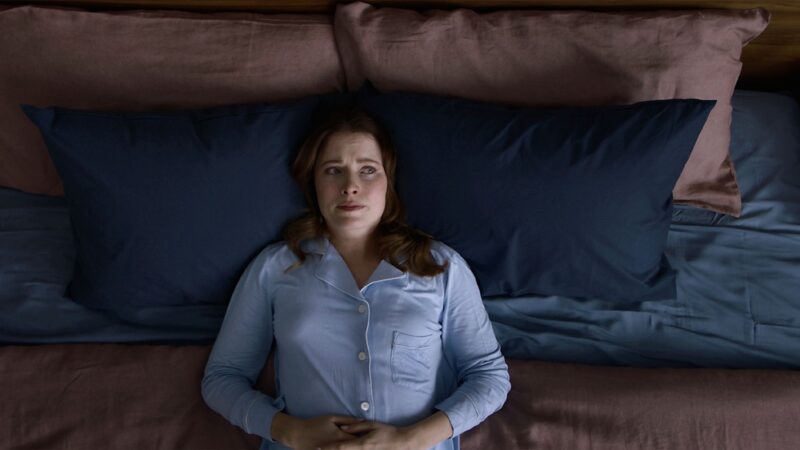
The unsettling thing is that the AI voice sounds like the healthiest voice in the room. It uses the language of wellness and self-care and emotional intelligence. Sarah, were you interested in exploring how even positive language can become oppressive when it leaves no room for messiness or contradiction?
Sarah D’Ambrosio: The inspiration actually came at a time when AI wasn’t being used the way it is today. I knew a few people who were experimenting with it, but it wasn’t part of everyday life in the way we now understand it. My real point of reference was social media and the way we use it for a dopamine hit – when we’re uncomfortable, we reach for this injection of distraction or positivity. So much of the language on social media is packaged as relentlessly positive, and it struck me that AI could very easily do the same. It’s interesting that that’s exactly what’s happened, with AI often offering this kind of insincere flattery to whoever is using it. That ended up being a happy accident.
And Hannah, heartbreak on screen is so often dramatic and explosive, but in reality it’s repetitive, quiet and exhausting. Was that important to you in portraying Eva’s grief in a way that felt recognisable rather than heightened?
Hannah Emily Anderson: I’ve gone through periods of pretty intense grief in my own life, and that’s how it feels. You go through the motions, but underneath everything there’s this constant vibration of sadness and heartbreak. For Eva, it was about playing with the different levels of that – when does she reveal something or open herself up in an attempt to connect, and when does she try to mask it completely? But with Eva, it’s almost impossible for her to hide it. She’s such an open, vulnerable person that there’s always something shining through.
She spends much of the film fighting for her right to feel bad, and that’s such a strange sentence to say. For both of you, do you think we’ve started to confuse happiness with emotional health when the two aren’t necessarily the same thing?
Sarah D’Ambrosio: Yeah, I think that has been true for a while. I think, culturally, we look at happiness as a place that we need to arrive at versus an emotion. I do think that a lot of products are sold to us that way in “finding the solution to happiness.” To me, it feels like another form of that.
Hannah Emily Anderson: I think we do get it confused that if you’re not happy, there’s something wrong and you need to make changes in your life in order to fix that. Whereas emotional health really is the ability to persevere through whatever comes your way. That the goal should be contentment rather than happiness is kind of an impossible place to live all the time.
In people watching this and realising they’ve been using productivity – self-improvement, social media, therapy language, maybe even AI – to avoid feeling something painful, what do you hope happens next for them?
Sarah D’Ambrosio: My hope would be, and it’s a hope for myself, also, but it’s to just be more sincere and in genuine conversation with yourself. Follow your own instincts and direction. Don’t try to fill the silence with so much noise.
Hannah Emily Anderson: Yeah, I hope it brings an awareness to that, and an ability to look deeper within yourself and be able to really think for yourself.
Good Vibes Only is screening as part of this year’s Dances With Films Festival, which runs between June 18th and 28th, 2026, out of TCL Chinese Theatres, Ovation LA, Los Angeles. For more information head to the official site here.
