
There’s a particular kind of horror film that doesn’t just aim to scare you – it lingers, quietly burrowing under your skin by tapping into something far more recognisable than any monster. That’s exactly what Proclivitas achieves, weaving together grief, addiction, and memory into something as emotionally raw as it is unnerving.
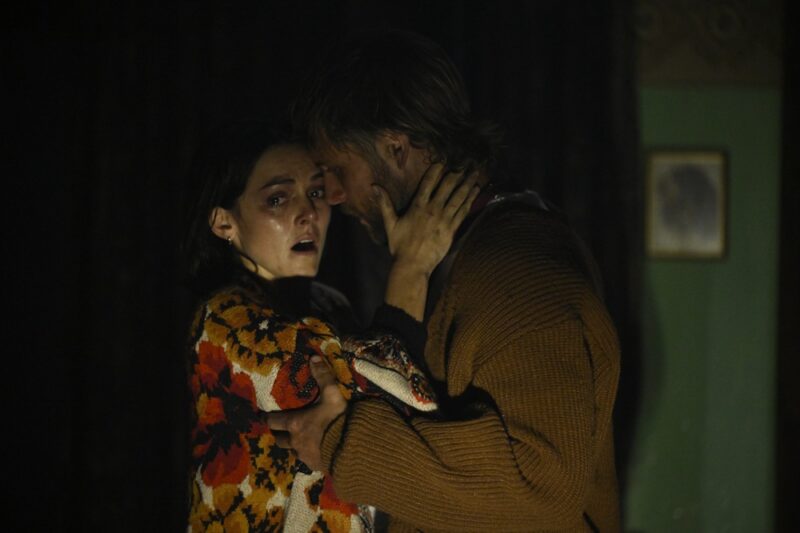
At its centre is Clare (Rose Riley), an addict in recovery whose fragile sense of control is shattered by the sudden death of her mother. Returning to her hometown, she reconnects with her teenage love, Jerry (George Mason), a relationship frozen in time for fifteen years after a shared tragedy pulled them apart. But as old feelings resurface, so too do the unresolved wounds that come with them – and in this case, they manifest as something far more sinister. What begins as a story of rekindled romance and second chances gradually gives way to something darker, as Clare’s internal battles with grief and addiction take on a terrifying, external form.
Rather than relying on conventional horror beats, the film uses its supernatural elements as an extension of Clare’s emotional state – a demonic presence that feels less like a separate entity and more like the embodiment of everything she’s trying to suppress. It’s a smart, unsettling approach that places the horror not just in what we see, but in what we understand about her.
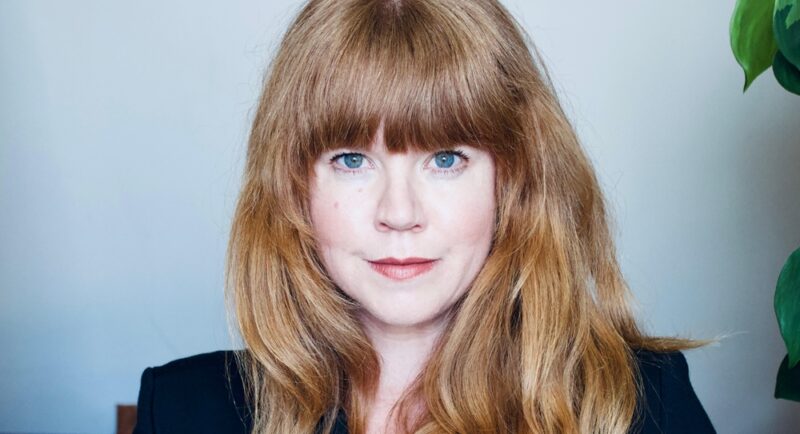
When our Peter Gray spoke with the film’s writer/director, Miley Tunnecliffe, their conversation quickly moved beyond surface-level scares and into the deeper mechanics of the genre – from the influence of formative horror like Scream and Poltergeist, to the ways in which monsters can act as a conduit for exploring addiction, trauma, and the stories we tell ourselves about the past. What emerged was a thoughtful look at horror not just as entertainment, but as a language for confronting the things we often struggle to articulate directly.
It’s that balance – between the visceral and the deeply personal – that makes this film such a compelling watch, and a fascinating one to unpack.
I went into this not knowing anything, and it felt like one of those really nice slow-burn films where you’re constantly wondering, “Where is this going?” So first of all, as a writer and director, was there a particular film, filmmaker, or writer who was a gateway for you? Someone who made you realise this was what you wanted to do, especially within genre?
That’s a great question. There are so many, but I grew up on ‘80s and ‘90s horror. Poltergeist was my favourite film as a kid, I watched it the way other kids watched The Wizard of Oz (laughs). I was also obsessed with Predator and Aliens – I’ve probably seen Aliens 200 times. And then more recently, filmmakers like Mike Flanagan and James Wan – that more modern supernatural horror that still has a lot of heart – that’s been really inspiring. Their work is kind of my comfort horror.
I feel like if you weren’t watching horror as a kid – or watching films you weren’t meant to – you didn’t really do childhood properly.
Exactly. And now there are all these studies linking a love of horror to anxiety and things like that – I’m like, maybe I should bring that up with my therapist (laughs).
Same. Horror is definitely one of my comfort genres.
What was your gateway film?
Mine was Batman Returns. I saw it when I was seven – Michelle Pfeiffer just changed my life. From there, I watched everything she did – The Fabulous Baker Boys, The Witches of Eastwick – which is probably a bit odd for a kid. But Scream was the big one for me. I was about 11, and that really opened the door to horror.
Same. Scream made me realise what the genre was doing – the commentary behind it. Suddenly I was like, “Oh, Aliens is basically a slasher in space.” It made me appreciate how clever those films are.
And that’s what I love about horror – it lets you explore big ideas in a way that disarms people. This film deals with addiction, grief, and the supernatural – did the horror element come first, or did it grow out of wanting to explore addiction?
It really came hand in hand. The core idea was about a couple with unresolved trauma, and that resurfacing in the form of a supernatural presence – forcing them to confront their past and decide whether they could move forward together. Over time, it became more effective to have them reconnecting, rather than already being together, so that became the catalyst.
That makes sense – especially because their relationship feels built as much on memory as reality. Were you interested in the danger of romanticising the past?
Not consciously, but I did want the structure of the film to mirror addiction – becoming more unreliable as it goes on. We all assign meaning to our memories, and that meaning isn’t always the truth. So when we look back, we’re seeing things through that lens.
And with Claire returning – is that healing, or is it another form of relapse?
I think it’s healing. But I also believe things often get worse before they get better. Growth can be painful, and a lot of people avoid that. Claire has to go through that to come out the other side.
In terms of the horror, the demon never feels like spectacle, it feels deeply personal. How did you approach that?
The rules of the monster are the same as the rules of addiction. We mapped that out very clearly and made sure every scene aligned with that journey. The monster itself is essentially Claire’s shadow – that led us toward that kind of shadow-figure horror you see in things like Lights Out or some of Mike Flanagan’s work, and even Japanese horror. We also worked with a movement artist and studied animals – like leeches and cats – to inform how it moved and sounded. Everything came back to Claire’s psychology.
That’s fascinating. And with a largely female-led production – which still feels rare in genre – did that shape the atmosphere on set?
We did have men on the crew, but it was predominantly female. For me, the key difference was the focus on people – making sure everyone felt valued and safe. We made a conscious decision that nothing creatively was worth negatively impacting the crew. That’s the only way I think this industry can be sustainable.
That’s great to hear. And it does feel like horror is becoming a space where more female voices are really thriving. Do you think monsters allow us to explore emotional truths in a way realism sometimes can’t?
Absolutely. It can be more engaging and entertaining. You’re not being hit over the head with a message. You’re invited to interpret what the monster represents.
And the parallel between addiction and the supernatural here – that feeling of resisting something stronger than you – was that always intentional?
Very much so. It came from my own experiences and reflections on pain and avoidance. Even if someone hasn’t experienced addiction, I think they can relate to that internal pull.
After making this, what scares you more – the supernatural or human nature?
Human nature, always. I’d much rather deal with a monster than the realities of humanity.
That tracks. And it’s interesting – you’ve worked in both horror and comedy, which can look deceptively easy but are incredibly precise. Did one feel harder than the other?
Comedy came more naturally – I started as an actor in comedic roles. Horror felt scarier to tackle, even though I was a big fan. But both genres let you explore serious themes in a more accessible way.
That really comes through here. I love when horror goes beyond what it “says on the tin” and becomes something deeper. This really does that – using genre to explore something emotional and human in a way that makes the scares hit harder. And honestly, I think women just tell better stories – so it’s great to see more of that space being claimed, especially in horror. And the fact this is getting a proper cinema release feels like a real win. So thank you so much for your time.
Thank you, Peter. I really appreciate it.
Proclivitas is screening in Australian theatres from March 19th, 2026.
