

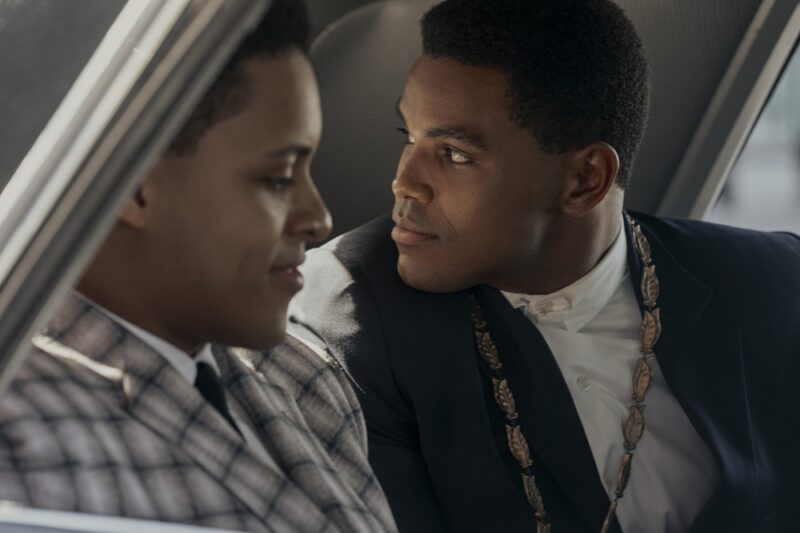
Before he became Muhammad Ali, the larger-than-life sporting icon whose confidence, charisma and conviction would transcend the boxing ring, he was Cassius Clay, an ambitious young man still discovering the extraordinary power of his own voice. With Prime Video’s The Greatest, creator and director Ben Watkins and rising star Jaalen Best look beyond the familiar mythology to explore the complexities, contradictions and vulnerabilities of a man whose legacy has become almost inseparable from the legend. Speaking with our Peter Gray, Best reflected on the unexpected freedom of portraying Ali before he fully understood the weight of his own destiny, and how inhabiting such an unapologetically ambitious figure transformed his own relationship with history and personal achievement. Watkins, meanwhile, discussed the delicate balance between celebrating an icon and preserving his humanity, revealing how even the show’s visual language was deliberately constructed to dismantle our preconceived image of Ali, allowing audiences to discover the man behind the myth, one piece at a time.
One of the things that I found really interesting about this particular period of Ali’s life is that we know the figure he’s going to become, but he doesn’t have the same hindsight as we’re watching it. Did you find there was a certain freedom in playing Cassius before the weight of the Ali legacy had fully formed? When he was still a young man making decision without knowing how history would eventually judge him?
Jaalen Best: That’s a great question, and I think absolutely there was an element to this where it hadn’t been before. I’m like, “Okay, I have the ability to tell this story,” and there was no preconceived notion of what I needed to do or what I needed to compare myself to – except Muhammad Ali, young Cassius Clay himself. I thought there was beauty in that.
I think I still had a little pressure or a little question in myself (in that) I don’t want anyone to go and redo this project or redo this portion of his life anytime soon because I didn’t do it well enough. I think there was that element of knowing where the story was going to be told, and knowing that we weren’t going to cover parts that have people have already covered that I could make this incredibly special.
I think it’s a beautiful thing that we got to tell a story that was different than what we’ve seen before. It made it a lot easier for me.
I think you’re safe. I don’t think anybody’s going to be touching it anytime soon. I do feel like there’s this interesting parallel between you and Cassius, because both your young men being asked to prove themselves on this enormous stage with other people’s expectations and defining how you’re perceived. I wondered whether playing someone who was so unapologetic about believing in himself change your relationship with ambition at all?
Jaalen Best: Oh man, absolutely. It was almost fascinating to me every time we were reading the scripts or I was watching interviews of him, I was thinking how smart he was. This man knows what he wants! And then you’re like, “Wait, he’s 18, he’s 20, he’s 22, he’s 28…”, he was truly made to be a great. He was made to change the way we see this world in different ways. To stand for some people, a community, a nation…I think he was that person that could do it because of how willing he was to make people laugh and bring people together, but also to fight for his people and be so knowledgeable.
It’s mind blowing. But it did change my ambition a lot. It made me want to actually learn my history and be able to talk about it and see where our world has evolved to and how we can continue to make changes. That’s one area, specifically, I became more ambitious about.
Ben, I wanted to ask you about the difference between being seen and being understood, because Ali was someone who understood the power of controlling his own narrative long before we had personal branding. He knew how to make the world pay attention to him, but being watched and being understood are two very different things. Was there a particular challenge in telling the story of someone who’s so brilliant at presenting himself to the public whilst trying to reveal the private person underneath that performance?
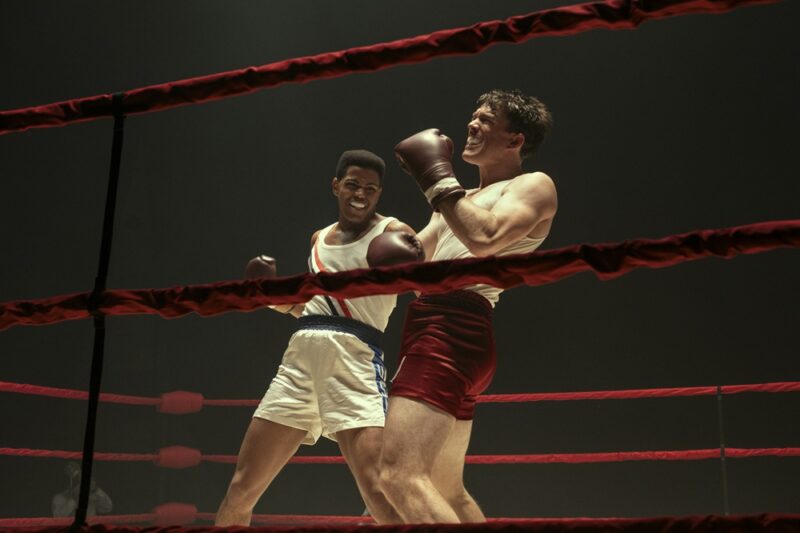
Ben Watkins: Yeah, I think that’s a really interesting interesting way to frame that. It’s so important to my version of what I think Muhammad Ali was about, and that was his self-awareness. By the middle of our story, we have a key scene – my son actually wrote this episode – where we understand that Muhammad Ali was fully aware of what he was doing. I wanted to see an evolution up until that point, where he’s going off instinct and swagger. There’s a key moment where he’s talking to Faversham in the gym, and he says people in Louisville (are) already talking about him, and when we did that I needed to see in his eyes that he’s got the understanding that now he’s the conductor. He’s always been the best musician in the orchestra. Now he’s the conductor, and now he understands the difference between being watched and being understood. He understands how he can play with people’s emotions, and it will lead to better things.
When you see how he was an activist, how he was a promoter, and sometimes not always in the way people agree, but you understand how intentional he was with that. You really understand that when you talk to the family and they talk about how quiet he was behind the scenes.
Well, looking at that, I feel like one of the challenges here is that we have collectively decided what he represents. I wonder whether there’s a danger in celebrating someone so completely that we almost stop allowing them to be human? Did you feel a responsibility to protect the imperfections and the contradictions? Even the moments when he might have been particularly likeable? I feel like that’s what ultimately makes his achievements so extraordinary.
Ben Watkins: Definitely. I feel like the competition between how we see Muhammad Ali as this fully formed icon and then the real person Muhammad Ali was has been won. Everyone sees him as a superhero, and I saw that as something that I wanted to change for the show. That was really the biggest reason why we should do this show. Otherwise, we can watch documentaries, we can watch YouTube videos, we can watch the movies that have already come out. What would be different? We need to remind people there’s a real person, and I wanted to do that in every way; the storytelling, visually, the performances.
In fact, when we talked to the DP and the production designer and all of our team, I said, “Hey, we’re going to literally disconnect people from how they view Ali and introduce them. We’re going to construct this in pieces.” So, early in the season, we do a lot of close-ups, extreme close-ups that I’m doing intentionally to say, “Here’s pieces of the puzzle.” If I show you his whole face, you’ll say, “There’s Muhammad Ali.” But if I show you his eyes or his cheekbone or his chin or his hands, you’ll just focus on these pieces of a real person, and then you’ll start to see the full formation and construction by the end of it.
All episodes of The Greatest are now available to stream on Prime Video.
