

A remote massacre. A decades-spanning mystery. A signal from somewhere beyond understanding. On the surface, The Killings at Parrish Station has all the hallmarks of a gripping cosmic horror thriller. But beneath the murders, the occult intrigue and the lingering questions of what happened at the isolated Parrish Research Station lies something far more human.
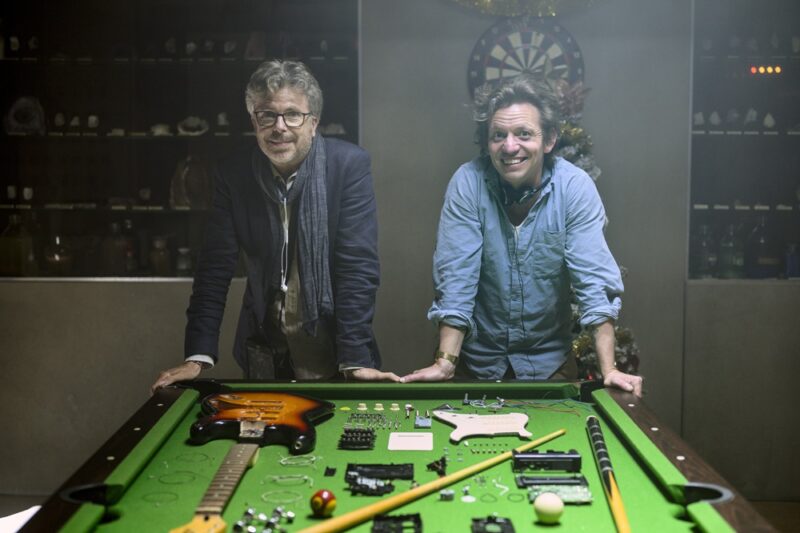
Created by Ben Jenkins and directed by Daniel Nettheim, the Stan Original explores obsession, family, and the devastating consequences of refusing to let go. Speaking with Peter Gray ahead of the series’ premiere, the pair discussed building an urban legend across 37 years, grounding cosmic horror in emotional reality, and why detective Georgia Cooke’s greatest strength may also be the thing that destroys her.
The Killings at Parrish Station is a cold case mystery, a horror story, a cosmic myster/character drama. For both of you, when you’re first developing together, what was the thing that you both agreed this show was beneath all of the labels?
Ben Jenkins: Oh, what a great question. What’s the thing that has not budged and has been our north star on this?
Daniel Nettheim: Definitely the fact that it was a mystery investigation involving sci-fi and supernatural elements. That’s the hook that got me in.
Ben Jenkins: Yeah, to me, that was always the core of it. Whatever else it became, and however much it morphed and changed through all the different developments, it was always about people in a remote location experiencing something impossible and dealing with the aftermath. I was really interested in the idea of ripples because, if you’re going to tell a story that spans 37 years, you’ve got to have a good reason for it, you know? I always wanted to tell a story that justified that timeline and explore how those ripples keep spreading. You drop a rock in a pond in ’87, and those waves are still moving decades later.
I’m going to say that the ending of the second episode…such a mic drop ending! For you, Ben, what was the first image, idea, or question that sparked Parrish Station? Was it the massacre itself? Was it Georgia’s obsession? Or was it the possibility that there are some mysteries humanity simply isn’t equipped to understand?
Ben Jenkins: Do you know what it was? It was this. I come from a sketch background, and I also find it difficult to understand something unless I’ve written it. If I have an idea, I tend to write a scene, and from that scene I get character, tone, and eventually the story.
The image I had in my head wasn’t quite a sketch setup, but it was a strong setup. It was a woman waking up in a hospital room. The room is empty except for a two-way mirror, and there are cops behind it fiddling with an intercom, trying to interview her because they don’t want to be in the same room as her. They don’t know if she’s safe. They think she might be contaminated by something. She’s survived this ordeal, but they still don’t understand how.
I started writing that scene, and out of it came Georgia, Mick and Kate Reynolds. They haven’t really changed at all in five years. That image was really unsettling, but also slightly comic because the cops couldn’t get the controls to work and were fumbling around trying to talk to her. As I was writing it, I was really enjoying myself, and I stopped to wonder why. Kate was telling this story, the cops were asking questions, and I realised, “Oh, you’re building an urban legend.” That’s what you’re doing. You’re telling a story about stories.
Then I started thinking how cool it would be to see where that urban legend ended up and how people would talk about it in the present day. So I started writing the podcasters. By the time I went to bed, I had two timelines and about five characters. I remember thinking, that’s kind of enough. If I have two timelines, then some of the characters from one will still be alive in the other, and that’s really interesting. What’s happened in between?
From there it just kept growing. It all came from that single image of someone who survived something they couldn’t explain, combined with the idea of a timeline stretching across decades. So that’s a very long answer (laughs).
Daniel Nettheim: And what was born out of that was a beautiful surprise to me. As it developed, (it) was a profoundly moving and beautiful portrait of a mother and daughter, and that kind of dysfunctional relationship across a 37-year time span.
Ben Jenkins: Yeah, I don’t think it’s a coincidence that when I started writing it, (my wife and I) just had our second kid and my eldest was about four. I was starting to realise that the thing I was most frightened of in the world was not understanding him.
He was beginning to become his own person. I mean, they’re always people, but at that age they really start to emerge as individuals. He’d say things I didn’t understand. He’d have problems I couldn’t help him with. Around four is when that starts happening. They come home with an emotional problem and suddenly it’s not a Band-Aid or a cuddle. It’s, “Well, fuck, man, this is life, and I’m really sorry about that.”
I remember thinking, this is only going to keep happening. It’s only going to get harder. So I think, subconsciously, that’s what I was writing about. I was writing about a parent with a young child who is starting to not understand that child, and then watching that gulf grow over the years. That’s what the story became about for me.
Looking at what Ben wrote, obviously cosmic horror is notoriously difficult to write. Daniel, when you first read these scripts, what was the first thing that made you say, “I know how to direct this?” Because, I feel, sometimes these things are impossible to show directly…
Daniel Nettheim: The thing that grounded it for me was the idea of signals coming from space. That’s not something that just exists in the ether; it’s a real, scientific concept. That’s what radio telescopes are doing out in the desert – they’re receiving signals. So the fact that this story, whether you want to call it cosmic horror, sci-fi, or even supernatural, was grounded in something very precise and scientific really appealed to me. That was the thing that drew me in.
And look, there have been various iterations of what that thing coming from space actually is, and what it does, but the foundation was always that idea: a signal, something tangible and measurable, arriving from somewhere beyond us. But, essentially, it’s a signal, and I could relate to that. I liked the visual of this big tower and dish in a very remote location, because of secret stuff happening. It bought into the whole Area 51/conspiracy idea.
Ben Jenkins: Something (Daniel) used to say to me all the time in prep, whenever I’d come to you with an idea, was, “What are we seeing?“ And I think that’s such a great way to ground something like this because, as you say, cosmic horror is notoriously difficult to shoot.
It’s such a literary form for a reason. When Ambrose Bierce writes, “And then I beheld something beyond the comprehension of man,” that’s fucking cheap, you know what I mean? You can get away with that on the page. Doing it in a visual medium is much harder.
One thing Daniel kept saying to me was, “What do we see?“ We can talk about what the characters see, and we can talk about what they’re experiencing, but constantly bringing it back to what’s actually on the screen in that moment was incredibly helpful. It kept everything grounded.
Daniel Nettheim: But really, the cosmic horror is just a thin layer of icing on top of a very grounded cake. Underneath it, you have a desert setting with all of that visceral, tangible desert reality, and then a city setting with all of its human interactions, complications and messiness. The genre elements are there, but they’re sitting on top of something that is ultimately very grounded and recognisable.
Ben Jenkins: That was something we talked about a lot. I started using this shorthand: “terrestrial stakes and goblin stakes” – not that there are any goblins in the show, but you know what I mean. It’s something a show like The X-Files did brilliantly in the ’90s. Nobody in that show is ever saying, “Well, ghosts are real, so none of the other stuff matters.” The emotional, terrestrial stakes were always just as important. You cared as much about Mulder getting kicked off the X-Files as you did about discovering vampires were real in that world.
That’s a balance you have to strike. You can’t just do one or the other.
It comes back to that question of what’s actually on the screen. We were constantly reminding ourselves: what is real? What has always been there? This woman has had this daughter for five years – that existed long before any of this strange stuff happened. She has this partner and this complicated relationship with them – that’s always been there too.
Once you realise those things are foundational, the supernatural or cosmic elements become something new that’s entering these characters’ lives rather than the thing the story is built on. They’re not superfluous, but they’re not the foundation either. When you approach it that way, the extraordinary stuff has somewhere meaningful to land because it’s disrupting lives that already existed before it arrived.
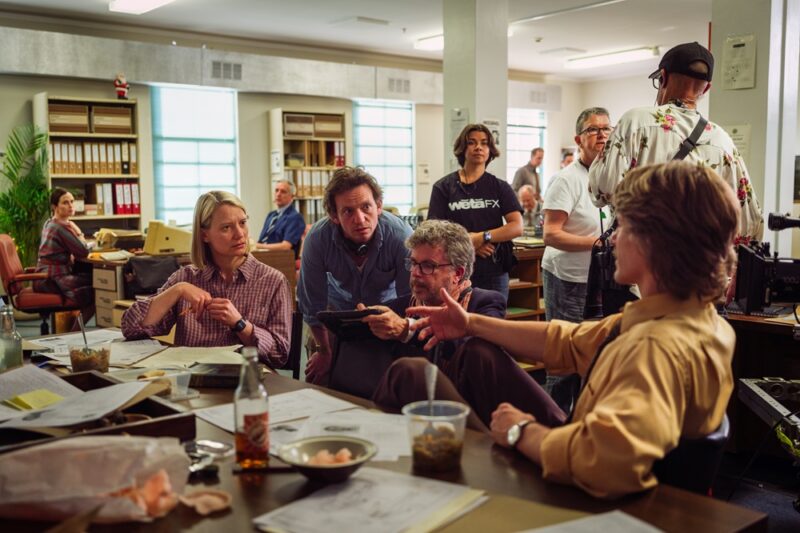
Well, looking at that balance, obviously Georgia is the emotional center, and what’s fascinating about her is that she’s not chasing a killer. She’s chasing certainty. Was the character always designed as someone whose need for answers becomes potentially as dangerous as the mystery itself?
Ben Jenkins: Yeah, exactly. That’s such a good way of putting it. I wish I’d written that somewhere in the script (laughs), but I guess I just spread it across six episodes.
That’s absolutely it. I wanted to tell a story about the worst possible person to encounter something like this – someone whose instinct is, “No, no, I can solve this.” Someone who believes that if they just keep pushing, keep digging, keep ramming their head against the wall, they’ll eventually find the answer. And ultimately, that’s her downfall. The thing that makes her so capable and so determined is also the thing that leads her into trouble.
And crime dramas celebrate obsessive detectives as heroes. This series feels more interested in asking what obsession costs. What conversations did you both have about where Georgina’s determination ends and her self-destruction begins?
Ben Jenkins: That’s a good question.
Daniel Nettheim: I think Ben probably had those discussions specifically with the writing team.
Ben Jenkins: Yeah, and with Mia (Wasikowska) too. It was funny – I was talking to a TV commissioner a few months ago and they said, “If I get one more pitch where the female lead is described as dogged, I’m going to scream.” I remember thinking, “That’s so true.” Then I immediately thought, “Oh God, is Georgia dogged?“
But I realised that (Daniel), (screenwriters) Catherine (Smyth-McMullen) and Tim (Pye) were all really pushing back against doing that version of the character again. You know, the investigator who always gets her man, the brass won’t believe her, but she’s right all along. There’s a little bit of that in there, but hopefully what makes Georgia more interesting is exactly what you’re talking about.
This isn’t actually inspiring to watch.
My hope is that by episode four, people are still completely invested, but they’re also yelling at the screen: “Fucking drop it, lady.” You know what I mean? This isn’t empowerment. This is somebody self-destructing.
When I think about some of the tonal references and benchmarks we discussed, there is definitely a common thread there – the detective who won’t let go. But when you look at where those tropes originally came from, when you go back to writers like Hammett and that tradition of crime fiction, I think that’s what they were doing in the first place.
Then somewhere along the line it got sanitised. So it’s not even about inverting the trope. It’s more about returning to what it originally was. The futility of believing that solving something will fix everything. That’s the real tragedy. That’s the thing at the heart of it.
Being across two different timelines, and you’ve got Mia and Heather (Mitchell) playing the same person in different chapters of the same life. How did you, Daniel, as a director approach their performances to make them feel connected across both decades?
Daniel Nettheim: Look, a lot of the heavy lifting is done in the writing, but we had this really interesting moment out in the desert. I’d been shooting with Mia for three or four days before Heather arrived. I’d seen Heather perform before – I’d seen her do a lot of things – but after seeing her on stage in RBG, I remember thinking, well, she’s capable of anything. She’s capable of becoming anyone.
One day, Heather was standing beside me at the monitor and asked, “Can you show me some of Mia’s rushes?” So I rewound and showed her a couple of scenes. I showed her Mia walking, and Heather just looked at it and said, “That’s right, Mia was a ballet dancer.” Then she straightened her back, pushed her shoulders back, turned her feet slightly outwards, and suddenly she was Mia.
It was extraordinary.
The next day she came onto set in the wig and costume, and there was a wide shot of her walking, almost in silhouette. I remember looking at the monitor and thinking, “That’s incredible. That is Mia walking.” It wasn’t an imitation. It was something much deeper than that. She had somehow found the physical essence of the same person at a completely different stage of her life.
And looking at personal fear. What frightened each of you more while making the show – was it the supernatural possibilities at its center? Or was it the very human idea of spending decades unable to let something go?
Ben Jenkins: Yeah, the second one was the stuff I really gravitated towards, and that Heather and I talked about quite a bit. When you have a 37-year gap in a story, the actors naturally want to know what’s happened in that time. It’s a fun conversation to have, but it’s also a useful one.
I think there’s something about being a writer and not being able to solve something – being completely stymied by it – that really resonates with me. It reminds me of something Charlie Kaufman once said about Synecdoche, New York, where his version of a horror movie is a person who just keeps making bad art. That’s the nightmare.
There’s something about what Georgia goes through – not being able to solve something, but also not being able to let it go – that I find tremendously distressing. I love mystery thrillers, but I often find the journey more satisfying than the resolution. You spend six episodes following a murder mystery, weighing up suspect A, suspect B, suspect C, becoming invested in the detectives and their lives. Then, in the end, suspect C or D did it.
The answer matters, but it’s rarely the thing that’s stayed with you. What stays with you is the obsession, the pursuit, and what that pursuit does to the people chasing it. That’s the part that really interests me.
Daniel Nettheim: I think, in this case, by establishing early on that this is a deeply inexplicable case, we wanted to set expectations with the audience. Without giving away spoilers, we wanted to say from the outset: look, this story is going to have an ending, but it may not be a conventional one. It may not be an ending where every single thing is explained.
Maybe it is, maybe it isn’t, but we wanted people to understand early that the experience of the show was going to be about more than simply arriving at an answer. The mystery matters, of course, but what’s just as important is the effect that mystery has on the people trying to solve it. That’s really where the story lives.
The Killings at Parrish Station is available to stream on Stan. from June 24th, 2026.
