
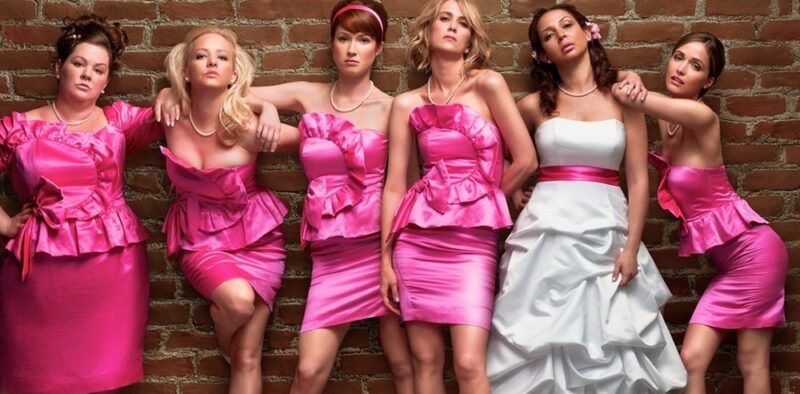
Fifteen years on, Bridesmaids doesn’t simply just hold up – it looms. What once arrived as a risky studio gamble now feels like a cultural reset, a film that didn’t merely succeed within its moment but permanently altered the parameters of what mainstream comedy could look like, who it could center, and how honestly it could speak about women’s interior lives without sanding off the mess.
When Bridesmaids was released in May 2011, the industry narrative around women in comedy was both exhausting and depressingly circular. Studio executives and gatekeepers clung to the idea that female-led comedies were “niche,” that women “weren’t funny enough” to open movies, and that audiences – especially male ones – wouldn’t show up unless a man was steering the chaos. This wasn’t subtle bias; it was an openly repeated talking point, reinforced by selective box office math and a refusal to invest at scale. Bridesmaids didn’t politely challenge that idea. It obliterated it, loudly, profanely, and with diarrhea in a wedding dress.
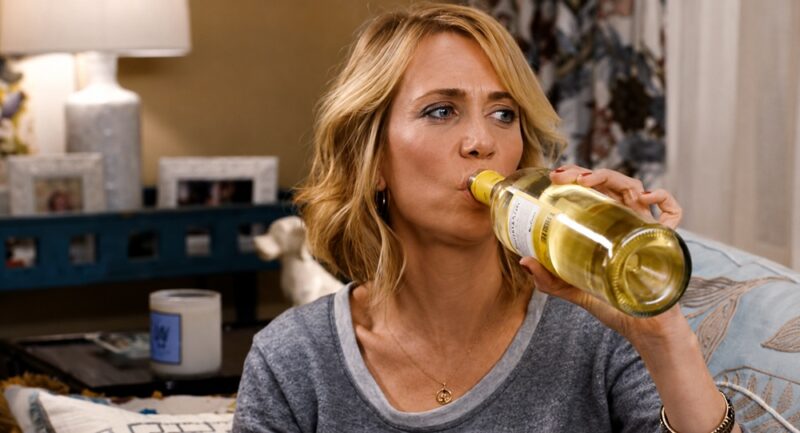
What made the film so seismic wasn’t simply that it was funny – though it undeniably was, with set pieces that instantly entered comedy canon – but that it was emotionally rigorous in ways studio comedies rarely allowed women to be. Kristen Wiig and Annie Mumolo’s screenplay isn’t interested in making Annie Walker (Wiig’s character) “likable” in the conventional sense. She’s jealous, self-sabotaging, insecure, passive-aggressive, and deeply stuck. Her pain isn’t softened into quirk or manic pixie resilience; it’s allowed to fester. Financial shame, professional failure, romantic humiliation, and the slow terror of watching your best friend outgrow you are treated not as punchlines, but as emotional engines that drive the comedy forward.
This was radical in 2011. Women in comedies had been permitted broadness before, but rarely interiority. The joke had often been that women could be silly despite being women; Bridesmaids insisted that the comedy came from the specifics of female experience – rivalry masked as politeness, social comparison, the pressure to perform competence and happiness while quietly unraveling. The infamous bridal shop sequence isn’t funny simply because it’s gross. It’s funny because it weaponizes the expectation that women must be composed, elegant, and grateful, then detonates that fantasy in the most public, humiliating way possible.
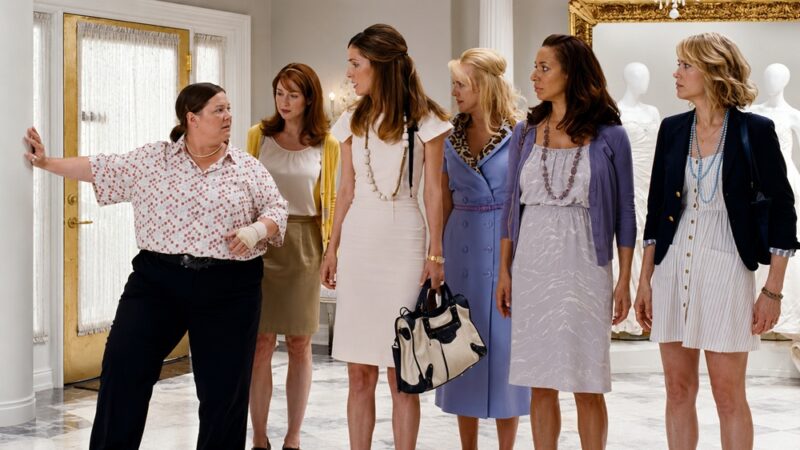
Melissa McCarthy’s Megan remains one of the great supporting performances of the decade, not just for its fearlessness but for its refusal to apologize. Megan is aggressive, sexual, physically dominant, emotionally perceptive, and utterly uninterested in being palatable. The fact that McCarthy was nominated for an Academy Award for a performance that includes shitting in a sink felt, at the time, like a glitch in the system – proof that something had shifted. In retrospect, it was a warning shot. Comedy, when done with precision and truth, could no longer be dismissed as lesser art simply because it was loud or female.
Paul Feig’s direction deserves renewed credit in the years since. Rather than forcing the film into the hyper-polished rhythm of studio comedy, he allows scenes to breathe, squirm, and escalate naturally. The improvisational energy never undermines the emotional spine. Crucially, Feig doesn’t treat the women as types; even the antagonistic Helen, played with exquisite control by recently minted Academy Award nominee Rose Byrne, is revealed to be lonely, unfulfilled, and trapped by the same expectations she weaponizes against Annie. The film’s ultimate generosity – letting its women reconcile, soften, and grow without humiliation – is part of why it endures.
The box office success of Bridesmaids should have ended the “women aren’t funny” conversation permanently. It didn’t, of course – myths like that rarely die cleanly – but it made the argument intellectually indefensible. Here was a female-led, R-rated studio comedy that outperformed expectations domestically and internationally, drew in older audiences, and connected across gender lines without compromising its voice. The idea that it was an “exception” quickly collapsed under the weight of what followed: Girls, Trainwreck, Broad City, Booksmart, Lady Bird (in its comic registers), and an entire generation of women writing themselves as complicated, flawed, and ferociously funny.
Fifteen years later, Bridesmaids feels less like a breakthrough and more like a line of demarcation. Before it, women in comedy were often treated as novelties or side dishes. After it, they were unavoidable. Its influence isn’t just visible in what films were greenlit, but in what audiences came to expect: comedy that could be vulgar and vulnerable, humiliating and humane, and unapologetically centered on women without explanation or excuse.
If Bridesmaids were released today, it might be framed as inevitable. In 2011, it was anything but. That’s what makes its legacy so durable. It didn’t ask for permission, didn’t soften its edges, and didn’t carry the burden of representation politely. It simply told the truth – loudly, messily, and hilariously – and trusted audiences to recognize themselves in it. That trust changed comedy forever.
