
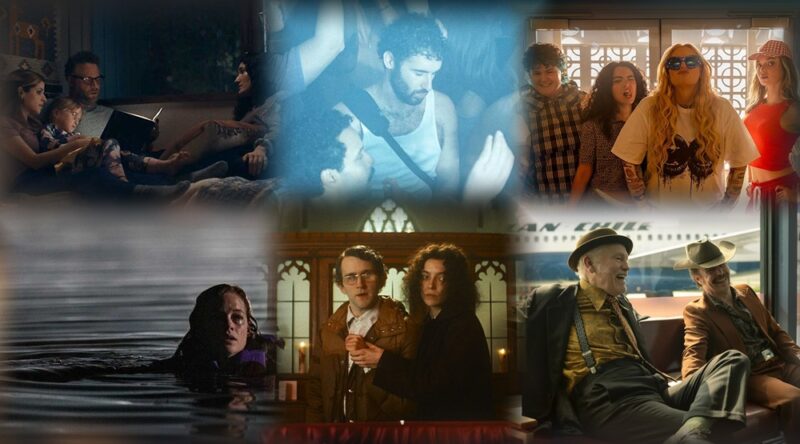
Every September, Toronto briefly becomes the centre of the cinematic universe, and in 2026 The AU Review will once again be on the ground for the Toronto International Film Festival, taking in as much as humanly possible across 11 days of premieres, discoveries, red carpets and those inevitable scheduling clashes that force you to choose between two films you’ve spent months waiting to see.
Running from September 10th to 20th, 2026, TIFF’s 51st edition has assembled the kind of sprawling program where anticipation can come from wildly different directions. There are major filmmakers returning with starry new projects, actors stepping behind the camera, true stories being reclaimed from familiar historical narratives, strange genre propositions, intimate documentaries and films whose premises are so wonderfully specific that seeing them becomes practically compulsory.
With The AU Review returning to Toronto for another year of festival coverage, we’ve been combing through the program and marking up the schedule. There will inevitably be surprises along the way – part of the pleasure of TIFF is falling for something you knew virtually nothing about 24 hours earlier – but these are the films currently sitting highest on our must-see list.
Being Heumann
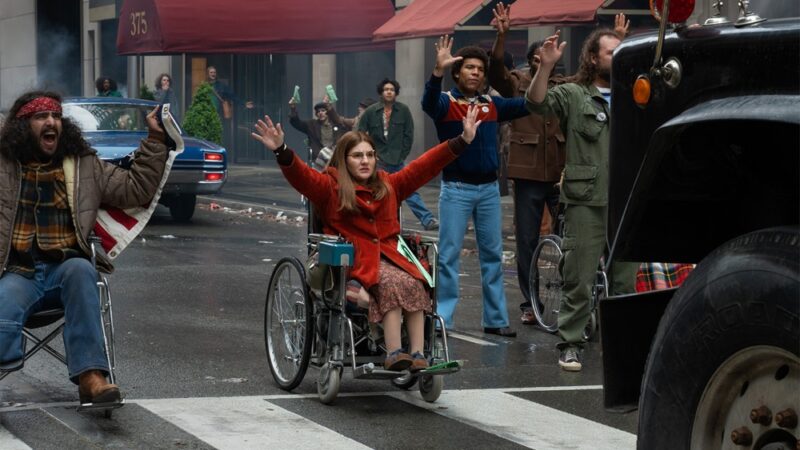
There could hardly be a more stirring way to open TIFF than Siân Heder’s Being Heumann, with the CODA filmmaker turning her attention to disability rights activist Judy Heumann and the extraordinary 1977 occupation that helped change American history.
Ruth Madeley stars as Heumann, who, after finding that those in power won’t take her calls, joins a coalition of disabled activists in taking over a federal building instead. What begins almost impulsively develops into the longest occupation of a federal building in US history, with hundreds refusing to leave until the government takes action.
There’s something immediately appealing about the film being positioned not as a solemn history lesson but as a rebellious, irreverent account of people who realised that politely waiting for change was getting them nowhere. Add Mark Ruffalo to the equation as the bureaucrat caught on the other side of their demands, and Being Heumann has all the ingredients for an opening-night film capable of being rousing without sanding away the anger that made its story necessary.
Tenzing
We know the image of Edmund Hillary standing atop Everest. Jennifer Peedom’s Tenzing promises to complicate the perspective from which that achievement has traditionally been remembered.
Genden Phuntsok plays Tenzing Norgay opposite Tom Hiddleston as Hillary in this dramatisation of the first successful ascent of Everest. Importantly, however, Peedom’s film centres the man whose relationship with the mountain was markedly different from the Western climbers arriving to conquer it.
For Tenzing, “Everest” is Chomolungma, the sacred mother goddess, and the film promises to interrogate the class, colonial and cultural tensions surrounding the expedition alongside the physical enormity of the climb itself. Caitríona Balfe, Thinley Lhamo and Willem Dafoe round out an impressive ensemble.
Peedom has spent so much of her filmmaking career exploring our relationship with extreme landscapes that putting her behind this particular story feels particularly exciting.
Onwards and Sideways
Some films announce themselves through scale. Others catch our attention because the smallest description suggests something profoundly human.
Onwards and Sideways follows Tony Evans, the deputy head of a primary school, and musician and composer Emma Dretzin, a single mother of two. They don’t know each other, but on the same morning both are diagnosed with Parkinson’s Disease.
What follows is the unexpected friendship that grows between them. Promising humour, music, dance and emotional candour alongside the challenges of living with a condition that remains widely misunderstood, this sounds like the type of documentary that could quietly become one of TIFF’s most affecting discoveries.
Bunker
Few premises feel quite as calibrated to contemporary anxiety as Bunker.
An architect (Javier Bardem) accepts a lucrative but morally questionable assignment to build a survivalist bunker for a tech billionaire (Paul Dano). His decision subsequently causes his wife (Penélope Cruz) to question their 17-year marriage.
The thriller may have a bunker at its centre, but the more intriguing construction sounds like the marriage surrounding it. What does preparing one extraordinarily wealthy individual to survive the end of civilisation say about the person willing to help him do it? And what happens when anxieties about the state of the world stop being abstract and begin altering the relationships closest to us?
Consider us intrigued.
Girl Group
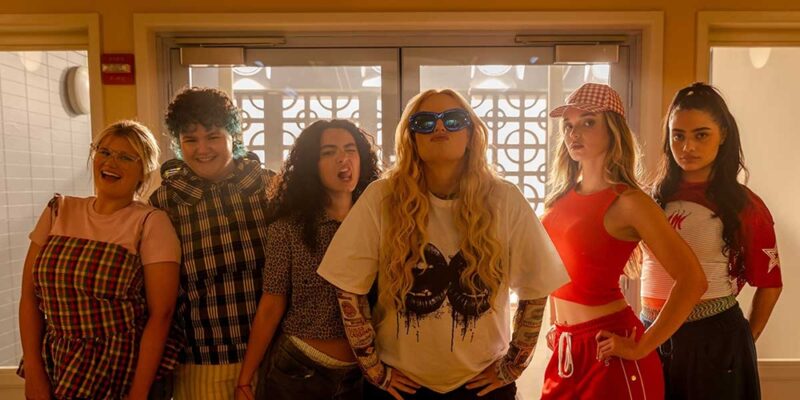
Rebel Wilson writing, directing and starring in a pop comedy with Jennifer Coolidge, Randall Park, Nicole Scherzinger, Judi Love and Sally Hawkins? Sometimes anticipation doesn’t need to be complicated.
Wilson plays Tassie Young, a former pop-group star whose attempt at solo success spectacularly implodes. Following a DUI, community service sees Tassie reluctantly mentoring a group of young girls dreaming of musical stardom themselves.
The setup is knowingly familiar, but Wilson appears to be embracing that familiarity rather than running from it. With a soundtrack mixing original material and established earworms, Girl Group sounds like it could deliver the kind of unapologetically entertaining festival experience that proves particularly welcome after several days of Very Important Cinema.
The Julia Set
A mathematics drama starring Chase Infiniti, Gillian Anderson, Christopher Briney, Nina Hoss and Jason Isaacs already has our attention.
The Julia Set centres on Julia Fischer (Infiniti), the youngest and most gifted student in her university mathematics program, though she has become equally skilled at disguising the extent of her intelligence. Recruited by teaching assistant Pascal Mandelbrot (Briney) for an elite preparation course ahead of the notoriously demanding Putnam Exam, Julia finds herself entering a world governed by brilliance, expectation and ambition.
A romance with Pascal develops, but intriguingly it is Julia’s relationship with his mother, Anne (Anderson), that appears positioned as the film’s emotional centre. Anne abandoned her own mathematical ambitions years earlier and recognises Julia’s tendency to make herself smaller.
A story about a gifted young woman learning not simply how to succeed, but how to give herself permission to occupy the space her talent demands? We’re listening.
The Face of Horror
And now for something significantly bloodier.
The Face of Horror heads to medieval England for the story of Eleanor, whose adulterous knight husband Edward ultimately sets in motion a tragedy that costs her both her beauty and her life.
Fortunately, death proves something of an inconvenience rather than an ending.
Eleanor returns as a ghost determined to exact bloody revenge on Edward and his new bride, with the film conceived as a gore-soaked tribute to classic Technicolor horror. Medieval melodrama, supernatural vengeance and lovingly artificial old-school horror aesthetics sounds like an irresistible combination.
Prima Facie
Prima Facie arrives with an inherently provocative dramatic premise: a brilliant British defence barrister has built her reputation navigating the gladiatorial world of the courtroom and defending men accused of sexual assault. When her own circumstances radically change, the legal structures she has mastered take on an entirely different meaning.
The tension between intellectual understanding of a system and the reality of experiencing that system from the other side gives the film considerable dramatic potential. At a festival where some of the most rewarding films inevitably inspire conversations that continue long after the credits, this certainly sounds like one of them.
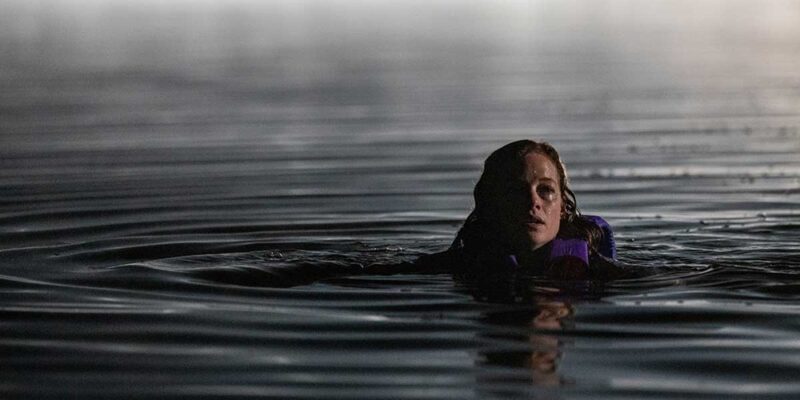
River
Sometimes you want TIFF to emotionally devastate you. Sometimes you want estranged siblings being hunted through the wilderness by a seemingly unstoppable killer.
River offers the latter – though perhaps some of the former, too.
Three siblings reunite following their father’s death and travel to a remote river to scatter his ashes. Their boat breaks down, there’s no mobile service, and before long they realise someone – or something – has emerged from the woods and is stalking them.
Family resentments being forcibly resolved through survival horror is a genre framework we’re more than happy to embrace.
The Stunt Driver
Jay Baruchel and Goon director Michael Dowse reuniting for the mostly-true story of a Canadian daredevil trying to jump a rocket-powered Lincoln Continental across a mile-wide stretch of the St. Lawrence River already sounds like one of TIFF’s potential crowd favourites.
Baruchel plays Ken Carter, the “Mad Canadian”, whose increasingly ambitious stunts ultimately culminated in a years-long attempt at that frankly ludicrous jump.
Ed Helms appears as Carter’s technician Dick Keller, Laurence Leboeuf plays his wife Gloria, and Ben Foster gets the potentially glorious assignment of portraying Evel Knievel.
The promise of Goon-like anarchic energy is enticing enough, but the suggestion that Baruchel finds genuine vulnerability underneath Carter’s bravado makes The Stunt Driver considerably more interesting than a straightforward daredevil comedy.
Always Lalisa
For millions of fans, Lisa needs little introduction. Always Lalisa, however, promises access to a particularly transformative period in the BLACKPINK star’s life.
Directed by Sue Kim, the 97-minute documentary follows Lalisa Manobal through a year that saw her asserting her independence as a solo artist, building LLOUD and expanding into acting.
Her landmark Coachella performance and The White Lotus acting debut provide obvious spectacle, but it’s the promised quieter material – particularly time spent back home in Thailand – that could make the documentary something more revealing than a polished chronicle of celebrity achievement.
At a festival that knows how to turn a music documentary premiere into an event, expect this one to generate considerable noise.
Bucking Fastard
Some TIFF descriptions leave you wondering what on earth you’re about to watch. Those are often the best ones.
Bucking Fastard centres on sisters Jean and Joan Holbrooke (real-life sisters Kate Mara and Rooney Mara), two women so intertwined that they speak in unison, share the same dreams, love the same man and even make the same slips of the tongue simultaneously.
Their relationship is viewed through the people and institutions attempting to understand them – courts, journalists, those who wish to help and those who wish to exploit them – while the film’s perspective apparently stretches to animals and even echoes within the earth itself.
We don’t entirely know what awaits us here. That’s precisely why we want to see it.
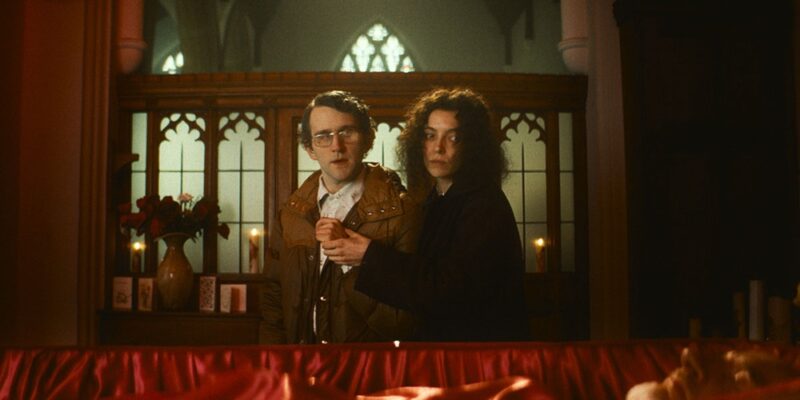
Stuffed
A musical about a taxidermist who dreams of stuffing a human being and the lonely man who volunteers to become her specimen.
Do we really need to say more?
Stuffed follows Araminta and Bernie as their morbid agreement becomes unexpectedly complicated when romance develops between them. The combination of musical storytelling, macabre production design, death and unlikely intimacy sounds like the sort of tonal balancing act that could either spectacularly combust or produce something utterly singular.
Either way, we need to know.
Your Mother Your Mother Your Mother
Mahershala Ali playing a devoutly religious hitman attempting to reconcile killing people with his faith and responsibilities as a father is already an extraordinary foundation.
From writer-director Bassam Tariq, Your Mother Your Mother Your Mother follows Latif (Ali), whose wife’s death sends him on a desperate journey across Houston to protect his children as both external forces and his own beliefs begin closing in around him.
Ali remains one of those performers whose involvement alone can elevate anticipation, but the contradictions embedded within Latif – violence and devotion, fatherhood and mortality, protection and destruction – suggest particularly rich material.
Wild Horse Nine
A new Martin McDonagh film is automatically an event. A Martin McDonagh film starring John Malkovich, Sam Rockwell, Steve Buscemi, Tom Waits and Parker Posey, set on Easter Island in the early 1970s and centred on two CIA agents interfering in global affairs? Clear the schedule.
Malkovich plays Chris, an ageing officer mentoring Rockwell’s brash Lee shortly before the Chilean coup that removed Salvador Allende from power. What initially resembles another assignment begins shifting as Chris reflects upon the consequences of his career, threatening both the mission and his relationship with his protégé.
McDonagh’s capacity for finding uncomfortable humour inside violence, guilt and deeply compromised men makes the material feel particularly suited to him. And Rockwell returning to McDonagh’s world after his Oscar-winning Three Billboards Outside Ebbing, Missouri performance only increases the appeal.
Club Kid
Jordan Firstman’s Club Kid arrives in Toronto after generating attention at Cannes, and its premise suggests a film that could move far beyond the familiar irresponsible-adult-forced-to-grow-up template.
Firstman writes, directs and stars as Peter Green, a New York queer club promoter whose existence revolves around parties, substances and avoiding responsibility. Then he discovers he has a 10-year-old son, Arlo (Reggie Absolom), who suddenly requires his care following the death of the boy’s mother.
What particularly piques our interest is the film’s treatment of Peter’s wider queer community, who don’t simply tolerate Arlo’s arrival but gradually incorporate him into their world. Cara Delevingne and Diego Calva feature in a film that promises to retain the energy of queer nightlife while finding unexpected tenderness within it.
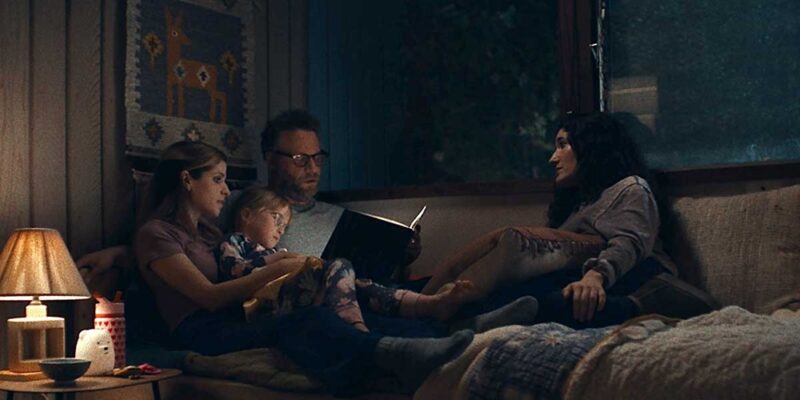
Babies
The question of whether or not to have children has fuelled innumerable dramas. Putting Seth Rogen and Anna Kendrick at the centre of that existential debate suggests Babies intends to find plenty of comedy there too.
Directed by Lauren Miller Rogen, the film casts Kendrick and Rogen as Annie and Aaron, 17 years into a happy relationship and still answering questions about children with a resolute “maybe”.
Then their newly separated friend Eliza (Kate Berlant) moves in with her young daughter, effectively allowing the couple to test-drive parenthood without the slightest possibility of returning the child when things become inconvenient.
With Issa Rae, Dan Stevens, Sharon Stone and David Strathairn filling out the ensemble, Babies sounds like an appealingly grown-up studio comedy about a question for which there is no universally correct answer.
The Debut
There is something inherently funny about people treating community theatre as if civilisation itself depends on whether the second act lands.
Jesse Eisenberg appears keenly aware of that potential with The Debut, his dark comedy starring Julianne Moore as Mona Friedman, a bored suburban housewife who discovers a renewed sense of purpose after unexpectedly landing a role in a local production.
Paul Giamatti plays the demanding director who recognises something in Mona and pushes her further, with Mona’s commitment gradually escalating into obsession.
Eisenberg’s eye for neurosis and status anxiety feels beautifully matched to a world where the stakes are simultaneously minuscule and, to the people involved, absolutely enormous.
Ink
Few filmmakers move with the restless energy of Danny Boyle, and Ink sounds like material capable of weaponising that energy.
Boyle turns to the early years of Rupert Murdoch’s The Sun, with Guy Pearce portraying Murdoch and Jack O’Connell playing editor Larry Lamb as they discover that outrage, provocation and titillation can transform a struggling newspaper into a circulation behemoth.
Claire Foy features as a woman attempting to carve out space for a modern female perspective within the prevailing boys’ club, while the broader story examines the creation of a tabloid blueprint whose consequences remain impossible to separate from contemporary media.
A fast-moving Danny Boyle drama about journalism, power, populism and the deliberate manufacture of attention feels disconcertingly timely.
Evil Genius
The “pizza bomber” case is one of those true-crime stories whose facts already sound like somebody pushed a screenplay several revisions beyond plausibility.
For her second feature as director, Courteney Cox tackles the bizarre 2003 case in Evil Genius, with David Harbour and Patricia Arquette playing Bill Rothstein and Marjorie Diehl-Armstrong.
A corpse in a freezer, a bank robbery, a pizza delivery driver with a bomb, drugs, murder and an extraordinarily dysfunctional relationship all factor into a story that promises to lean into both the horror and absurdity of what occurred.
With Michael Chernus, Garret Dillahunt and Danielle Macdonald joining Harbour and Arquette, and a tone likened to the Coen brothers at their blackest, Evil Genius could be one of the festival’s strangest crowd-pleasers.
Eleven days, far too many movies
And that’s before TIFF does what TIFF inevitably does: completely dismantles the carefully constructed watchlist.
For every Being Heumann, Tenzing or Wild Horse Nine we arrive in Toronto already desperate to see, history suggests there will be another film we wander into knowing almost nothing about and emerge from ready to tell everybody else at the festival that they need to rearrange their schedule immediately.
That’s ultimately the joy of covering a festival this expansive. TIFF can move from an Everest epic to a BLACKPINK documentary, from queer New York nightlife to medieval ghostly revenge, from Martin McDonagh’s CIA agents to Rebel Wilson assembling a girl group, sometimes within the space of a single day.
The 51st Toronto International Film Festival runs from September 10th to 20th, 2026, and The AU Review will once again be on the ground in Toronto, bringing you reviews, interviews and coverage from across the festival.
Sleep can wait until September 21st.
