

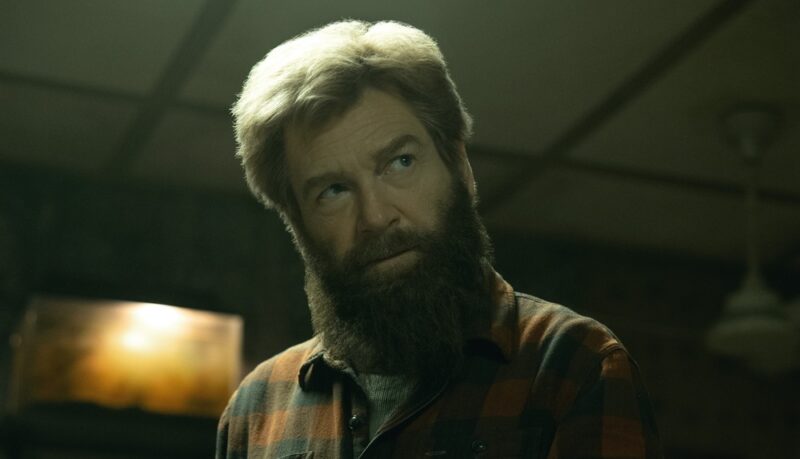
John Francis Daley and Jonathan Goldstein’s Mayday may wear the familiar uniform of an old-school 1980s buddy movie, but beneath the action, comedy and Cold War absurdity is a surprisingly tender story about two men questioning the lives they were taught to want.
Ryan Reynolds stars as Lieutenant Troy “Assassin” Kelly, a hotshot U.S. Navy pilot whose top-secret mission into Russian territory spectacularly implodes, leaving him stranded behind enemy lines. His unlikely salvation comes in the form of Nikolai “Nick” Ustinov (Kenneth Branagh), a former KGB agent whose fascination with American culture initially plays as one of the film’s great comic eccentricities. As Mayday gradually reveals, however, Nick’s obsession represents something much deeper: a longing for freedom, a growing disillusionment with the system he once served, and a desire to finally become the father his daughter deserves.
That blend of humour, spectacle and genuine heart has evidently connected with audiences. Following its September 4th premiere, Mayday topped Variety’s streaming movie chart for its first full week of release, with Luminate estimating 955.1 million minutes watched between September 4th and 10th – nearly double the viewing time of the No. 2 film. Nearly three weeks later, it remains the No. 1 movie worldwide on Apple TV according to FlixPatrol, having spent 20 consecutive days in the platform’s global Top 10.
To coincide with the film’s success, Kenneth Branagh discussed with Peter Gray during the Toronto International Film Festival the loneliness and guilt beneath Nick’s larger-than-life exterior, how his daughter forces him to confront the man he has been, and why the character’s journey to America becomes less about reaching a destination than discovering who he might be once he gets there. The actor also reflected on the pleasure of surrendering himself entirely to Daley and Goldstein’s vision, leaving his own directorial instincts behind and simply enjoying the chance to “let loose” in one of his most playful performances.
Before I get to Mayday, I’m just going to say, as a Michelle Pfeiffer fan, I want to thank you for bringing her back in 2017 in Murder on the Orient Express…
Oh, I loved that movie. Thank you.
And she ended up having that kind of role!
It was a thrill to work with her. Really a thrill. I remember when she was walking down that train carriage to have a scene with Johnny Depp. I remember saying to Haris Zambarloukos, our DP, “So, this is a movie star, and we must provide a movie star shot. It needs to be beautifully lit, and I’m going to be asking Miss Pfeiffer, in her wonderful gown and her beautiful charismatic presence, to just walk towards camera. We must serve her.” It was great. It felt like old Hollywood.
She’s so divine.
I’m with you.
But onto Mayday, what I really liked about this is that your character, Nick, is introduced as this almost fish-out-of-water, but gradually we discover his affection for American culture is really tied to this disassociation with the life he chose. When you first read this character, what do you think he was actually searching for?
I suppose, how to be happy. And how to allow his daughter to be happy. He’s really perplexed by a culture that, as distinct from Top Gun and all the glamour of that, all the power of that, all the freedom of that, (which) would seem to suggest that the American dream, and beautiful women, and big powerful machines was something that he didn’t receive in the same way. It’s a different system to which he was loyal and in which he became lethal. But the perplexity at which he greets his daughter’s very being is something that the state doesn’t approve of or permit is really what sends him into exile.
He then leans into the American dream, and the question of whether that can answer this loneliness and this disappointment, and do something about it, lies underneath this love action-comedy. It’s one of the reasons it’s layered in a way that these two writer-directors (John Francis Daley and Jonathan Goldstein) are very, very good at providing in their movies. There’s always depth and layering to things that are very squarely in their genre.
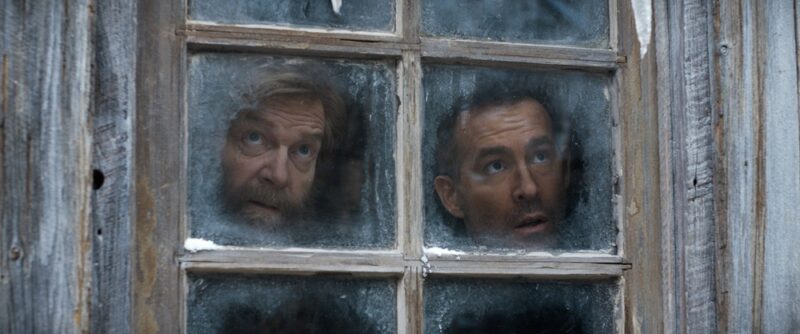
I really appreciated when your daughter tells you she’s a lesbian, and you say how you already knew. It forces him to confront the institution that he’d been serving. Did you see that moment primarily as Nick reconciling with his daughter? Or as Nick finally confronting the person he had been before left the KGB?
Well, I think it’s both, but actually it’s the latter most especially. I think this is a man who’s lived a lie, or a disappointment, who has served something that he now realizes is antithetical to the best part of who he is, which is his love for his daughter and his absolutely honest, open belief that she should be exactly who she is, in whatever form of life she wants, and do whatever she wants to do.
He’s got a very natural generosity as a parent that doesn’t require anything of her, other than perhaps allowing him to be in her life. But I think he carries a burden of guilt about not having squared up to that. In a way, he’s run away from it because he’s exiled himself in order to not be part of it. But now he has to seize it with both hands and declare himself as someone who is absolutely rejecting that.
Even then, it doesn’t mean he can somehow sweep her up and just take her back to America, because once again he’s going to have to respect her. He’s going to have to do what he wants the state to do, which is respect her right to do what she wishes, which may not be to follow Dad to America. So that’s also a big learning process, and a painful one, but it’s to do with the acquisition of honesty and owning who you are, and letting who you are emerge, evolve and change.
In that sense, maybe a period in the wilderness is exactly what he wants. Then he is visited by a stranger with knowledge and is therefore changed. They must go on an odyssey, and by the end of those trials and tribulations, perhaps, as T. S. Eliot says, “We shall not cease from exploration, and the end of all our exploring will be to return to the place from where we first began and know it for the first time.”
So Nick goes on a journey of self-discovery, partly illuminated by people who know him better than he does: his daughter and, bizarrely, it turns out, a strange American airman.
Well, speaking of evolving, across your career you’ve appeared in films as diverse as Shakespearean dramas to blockbuster movies. When you’re performing inside a film like Mayday, does the director in you ever become aware of the machinery? The stunts, the set pieces? Or do you deliberately shut that part of your brain off?
The latter. These two are directors and writers I absolutely admire and completely trust, as did Ryan (Reynolds). I believed that my job in this was just to absolutely show up, deliver what they wanted and listen to them. And they did speak up. They were not pushovers. They were not intimidated by Ryan or myself. They’d worked much longer on this than us. They had a plan, they had a vision, they believed in it, they had preparation, they had shots they wanted to do and beats in scenes they wanted to hear.
I was very happy to say, “If I’m struggling with what you want comedically here, you can literally tell me how to say it, and I will repeat that.” I expect I won’t do it exactly – don’t worry about me slavishly copying it. I’m sure some other spin will go on it. But I want to get what you want. I want to inhabit your vision. I want to serve that.
So that was one part of it. The other part was the thrill of checking out of all that other responsibility and understanding that you actually had a neck because your shoulders weren’t up like that for 12 weeks as you tried to direct a film. That was an absolute gift.
Nick spends the film trying to get to America, and by the end it feels as if neither him or Ryan’s character are the same person who wanted to make that journey in the first place. What do you think each of them is actually going home for?
That’s such an interesting question. I mean, Nick is discovering where his destination might be. The first thing is to fully acknowledge that the life he led was not the one he wanted to lead, and that his daughter must be fully freed by conspicuously letting her know that he is not allied with that world – that he is a different man. He is not a man who belongs to a regime that criticizes or restricts her capacity to be who she is. So that’s important.
But now, I think he’s a beautiful stranger in a strange land, and he would definitely like (Ryan’s character) to make that trip across America with him, because I think he can now really investigate and discover who he might be. Although, I suspect it would be hard for him to drop that lethal part of his character that has been involved in the kind of dark arts he’s known.
So I think Nick has had to shed skins, and he’s in a brave new world. He’s sort of slightly naked in his new American clothes. But, as we saw at the beginning of the film, there’s a strong bit of the idealist in him. There’s a terrific bit of the romantic in him, something of the poet, and a little bit of the reckless lunatic clown. Careering around these great states of America might be an interesting thing to see.
It really is so much fun to just watch you let loose and have fun and show off the comedic actor that you don’t always get to show you are.
I really appreciate that. The whole thing for me, I have to say, was a joy from start to finish.
Mayday is now available to stream on Apple TV.
