
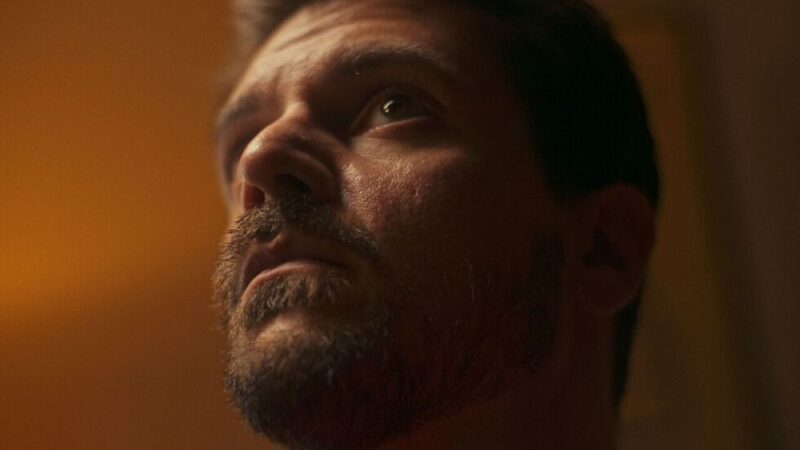
In an age where a single unread message can trigger a full-blown existential crisis, Drew van Steenbergen‘s Buckets taps into a painfully familiar modern phenomenon. The sharply observed short follows a man whose life begins to unravel after a late-night dating app match leaves him waiting for a follow-up text, spiralling through anxiety, self-doubt, and increasingly irrational behaviour over the next 48 hours. Drawing directly from his own experiences with dating apps, van Steenbergen turns personal embarrassment into dark comedy, crafting a film that is as funny as it is uncomfortably relatable.
A veteran editor making a return to directing, van Steenbergen doesn’t just tell the story – he puts himself at the centre of it, filming in his own home and even casting the real-life match who inspired the film’s emotional core. Blending the rhythmic editing influences of Fincher, the emotional chaos of PTA, and the raw honesty of Albert Brooks, Buckets transforms internal anxiety into something cinematic, hilarious, and surprisingly moving. Ahead of the film’s screening at this year’s Tribeca Film Festival, our Peter Gray spoke with van Steenbergen about dating-app addiction, turning personal flaws into art, and why sometimes the only way to break a destructive pattern is to put it on screen for everyone to see.
One of the things that really struck me here is that the “villain” isn’t really another person. It’s your imagination, essentially. Was there a point during making Buckets where you realised just how much of modern dating happens in our heads rather than reality?
For sure. I mean, the unfortunate thing is that I did all that, and it wasn’t just one instance. It was multiple instances of me being extremely addicted to dating apps and the kind of dopamine hit you get from going down those spirals. It wasn’t even necessarily about who was picking you – as long as you were being picked.
That’s the hit I was getting. Even a brief interaction meant they were interested, and at a certain point, that was enough. With dating apps, people are essentially pitching the elevator version of their best selves – their hottest photos, what they think is their funniest or most charming trait. So you’re building up a version of them on top of the version they’re already selling.
Then, if there’s even an inkling that they’re not as interested, it’s like, “Whoa, whoa, whoa.” From my experience, I’d rather it be on my terms. I’d rather be the one saying, “I’m not that interested.” But if I got even the slightest hint that they weren’t interested, I’d start chasing clues or information about why, trying to make myself feel better, instead of just accepting that they weren’t my person or that maybe they were simply busy for a couple of days.
You just get really stuck in the spiral of getting that hit, and I got to a point where I knew I needed to stop doing this. I thought by filming it and embarrassing myself publicly it would make me stop doing it.
Was there a certain catharsis in that?
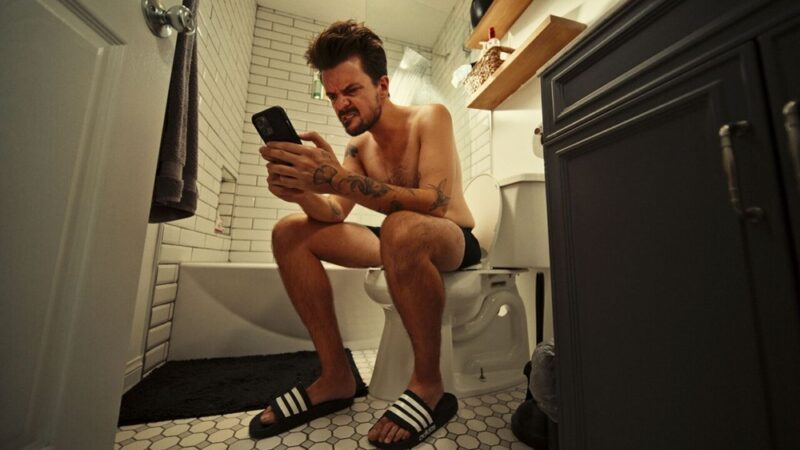
I mean, I think even filming it was helpful because, even though it was a pretty small crew, I still had a crew in my house. It was me in all the spaces where I was doing everything – my kitchen, my bed, my office down here – and it’s just me in my underwear, but then there are six camera and lighting guys standing there.
So I think going through the whole process was an experience in itself. I kind of dissociated a little bit because I was also juggling multiple roles at the same time. But in the post-production process, I needed about two months of not looking at myself because, one, I was constantly watching footage of myself, and two, it was kind of tough. It was a little difficult to revisit all of that.
Where did the question of the bucket hat start? Why that question to kick off your chat?
I wish I knew, Peter (laughs). Honestly, a lot of the time I was on dating apps was when I was bored. It’s funny now because I don’t use them at all. Having made the short film and now being in a relationship, I don’t really look at them anymore.
The way I talk about it now almost sounds like I’m describing kicking a habit. It was something I used when I was bored, usually at night when I was home alone. I’d just find myself on the apps.
As for the bucket hat, I think it started because I was debating getting one. It was one of those summer trends where suddenly everyone seemed to have one – those fuzzy bucket hats, almost like an old-school LL Cool J look making a comeback. I was probably sitting at home on an edible, wondering, “Can I pull this off?”
The unfortunate thing was that it worked. It started conversations a couple of times, so then I thought, “Well, I’ll just use this every time.” It was so stupid and silly that it became a great conversation starter.
I remember an episode of the TV show Master of None where one of the characters had an opening line like, “Hey, I’m at Whole Foods. Do you need anything?” It’s the same kind of idea. Whether it’s that or the bucket hat thing, it’s charming, silly, and a little ridiculous, and then once the conversation starts, you can take it wherever you want.
And I also knew from talking to friends of mine – women friends, co-workers, and other people on the apps – that a lot of people were doing the bare minimum. Their opening message was just, “Hey.” So having something absurd kind of broke through that. It acted as an icebreaker and helped initiate a conversation. But then there was the repeat use of it, because eventually it became a way of not trying at all.
It’s funny because dating apps are designed for you to look at people’s photos and read their prompts, but I wasn’t even doing that anymore. I wasn’t paying attention to what they were wearing, where they were, or what they had written about their favourite TV shows. Instead, I was just sending the same message: “Hey, what do you think – could I pull off a bucket hat?”
And because it was basically copy-and-paste, it started to dehumanise the whole experience a little bit. It turned something that should be human into a task, almost like working through a checklist. It became, “I’m going to send ‘Do I look like I could pull off a bucket hat?’ to twelve people tonight and see what happens.”
At that point, it stops being about quality and starts becoming a numbers game.
I mean, there could now be a whole subsect of men on dating apps who are going to use the bucket hat line. They’ll look at you and think, “Hey, he got a relationship and a movie out of it.”
(Laughs) Yeah, that’s the lesson I want out of this.
You’ve spoken about how a match can become less about genuine connection and more about seeking approval. Do you think dating apps have changed the way of what we’re actually looking for? Or does it just expose needs that were always there?
I think it’s a little bit of both. By nature, I’m probably someone who’s constantly seeking approval to some degree. I think to be in this industry, you want to be seen and chosen as someone who’s good at what they do. And I think that carries over into relationships too, where you want someone to see you and love you for who you are. So you’re looking for that approval or connection from a partner, romantic or otherwise.
I also think it’s something a lot of people can relate to. In conversations with my producer, Rachel (Goldfinger), when we were first discussing ideas for a short film, I’d bring up all these other concepts that weren’t fully formed, but somehow we’d always end up spending the last hour talking about dating apps. They’re just so ubiquitous, especially in larger cities. I can only really speak from my experience in Los Angeles, but it feels like a huge part of modern dating culture.
The thing is, it’s become so gamified. It’s like moving through different levels: initiating a conversation, getting a first date, going on the first date, then trying to figure out whether there’s going to be a second. Dating is already awkward by nature because you’re trying to learn who another person is, but dating apps add this extra layer where, if there’s one or two things you don’t like about someone, there’s always that voice in the back of your head saying, “Well, there are millions of other people on this app.”
Because of that, I think people are sometimes less willing to give someone time. Instead of letting a relationship grow and seeing each other in different contexts, it becomes, “Well, we went on two dates and they said this one thing I didn’t like,” or “They’re not interested in this one thing I’m interested in.” You’re constantly searching for this perfect person, as if they exist, because you’re paying $50 a month for dating apps and convincing yourself that eventually you’ll find them.
And to be fair, I know plenty of people who’ve met their partners through dating apps. Some of my closest friends are married to people they met that way. But I think they approached it with a healthier mindset. A lot of it comes down to intention. If you’re genuinely looking for a relationship, that’s one thing. But from my own experience, and from what I’ve seen among people I’ve met in LA, dating can become very commodified.
You start thinking in transactional terms. You want a photo with a certain person, or you’re on Raya because there are famous people on there. Then you go on a date with one of those people and realise they’re just another person. We’re all caught up in this strange new industry that’s emerged around dating.
Even the mechanics of the apps reinforce that. On Hinge, for example, you can pay extra to send a rose. You only get a certain number of likes, but if you really want someone’s attention, you can spend money so your profile gets pushed to the front of the queue. Usually it’s directed toward the people the algorithm has already identified as the most desirable. The app effectively says, “We know who you find attractive, and if you want a better chance with them, that’ll cost you another five dollars.”
It’s such a strange barrier to entry. Fifteen years ago, you might have gone to a bar, struck up a conversation, and relied on your confidence and personality. Now it’s like, “I’ll spend six dollars on a digital rose and send a ‘hey’ to someone.” That’s become a normal part of how people try to connect.
Going from dating craft to the craft of the film, with the editing, sound design and score, they’re used as almost psychological weapons in a way. Were there particular films or filmmakers that you looked to when trying to translate anxiety into something cinematic?
Yeah, for sure. There were a few different films that I looked to and kind of combined into an amalgamation of influences.
I’d always heard of Albert Brooks but hadn’t really seen many of his films. Then I watched Modern Romance, which I’ve now seen countless times. The editing isn’t particularly flashy because it relies on longer takes, but it’s about this very arrogant film editor going through a breakup. There’s a sequence where he’s on Quaaludes and making a bunch of phone calls, and I loved the radical honesty of it. That became a big touchstone for me.
From a craft and editing perspective, The Social Network was a huge influence. Editing is my primary background, and when I was younger, I used to download films by David Fincher and break down the shots because his montages are so precise. The framing, the duration of each shot, the rhythm of the cuts – it’s incredibly musical. He can communicate so much information in just a couple of minutes.
The opening sequence of The Social Network, where FaceMash spreads across campus, was a big reference point. I loved the rhythm of that montage and the way information moves through it.
Then there was Punch-Drunk Love, which we referenced a lot, particularly musically. It’s a lighter film in some ways, but Jon Brion’s score constantly mirrors Adam Sandler’s anxiety. One of the things I was trying to do with this film was externalise internal feelings, and Punch-Drunk Love does that brilliantly. The music feels like Barry (Adam Sandler’s character) is trying to hold himself together. You have these delicate piano melodies, but then sudden crashes and bursts of sound that reflect what’s happening inside him emotionally.
The jazz score came from a similar idea. Jazz can feel sophisticated and classy, but it’s also capable of expressing tension and instability. One of my friends is a jazz musician and had never composed a film score before. We spent a lot of time sharing music, watching Punch-Drunk Love, and discussing ideas. He started creating recurring motifs that evolve throughout the film. The same themes keep returning, but they gradually disintegrate as the story progresses, mirroring how the visuals start to unravel. More instruments get added, textures become messier, and things begin to break apart sonically.
The rhythm of that music was always tied closely to the editing.
There was also a moment near the end of Lady Bird that really stuck with me. It’s only a couple of minutes long, but it’s this sequence of Lady Bird in college, getting drunk, arguing with someone, passing out, being put into an ambulance, and being wheeled through a hospital. It’s maybe six or seven shots, and in each one she’s framed dead centre. It’s not really about plot at that point – it’s all emotion. I loved how much feeling that sequence conveys through such simple visual storytelling, and that was definitely something I carried with me while making this film.
As you spoke about being an editor, you’re obviously used to shaping other people’s stories. Was directing your own spiral harder because you knew exactly where every cut and beat could expose you?
I guess I knew it was going to be vulnerable. Casting myself as the problem isn’t exactly an easy thing to do. Originally, I thought I was going to get someone else to play the role, but then I realised it felt both scary and a little stupid to do it myself, which made me think I probably should do it.
When I first moved to LA, I’d made some shorts and been given opportunities to direct. I was attached to a bunch of TV projects, pilots, and other larger things that ultimately got cancelled, and it really discouraged me. There was a period where I thought, “Maybe I’m not good at this,” or “Maybe I just don’t know how to navigate this system.”
So I went back to editing for other people and gradually rebuilt my confidence and interest in directing. When I decided to make something again, I wanted it to be a project where I had the most control possible. To do that, I knew I needed to put myself in those situations.
I also knew the best approach was to keep the film small and play to my strengths, which is editing. Having the shots planned out ahead of time was helpful, and having collaborators like my producer Rachel and our DP, Ziggy (Jaz van Koeverden), made a huge difference. We had this small team that was genuinely invested in pushing the project forward.
I relied on them a lot throughout the process. Sometimes I’d ask, “Did that feel authentic enough?” Other times it was, “Did that feel embarrassing enough?” Because that was often the barometer. I’d be checking with them as viewers and asking if I needed to push things further.
I remember at one point during pre-production we were discussing wardrobe, and I texted my AD, who’s a friend of mine, and said, “I think I’m just going to do most of this in my underwear because that’s honestly what I do at home.” He replied, “Great. Well, I guess we’ll have to ask everyone tomorrow morning if they’re okay with that.”
Every day we’d line up the shots, the crew would pre-light everything, and I’d be standing there fully dressed. Then someone would say, “Okay, we’re ready,” and I’d have to take off my shorts and get into position.
The first time felt awkward, but after doing it enough, it became part of the rhythm of the shoot. By the third day, I was completely numb to it. It was just, “Okay, here we go. Let’s do another one.”
One of the little details I loved is that Isabella Jean Taylor is a part of the movie, someone you actually matched with. During the process do you know if she learned anything about you that perhaps she didn’t know when you first matched?
Ah, that’s a great question. I should probably ask her that. We did eventually go out. We went on a couple of dates, and I think it was one of those situations where we both knew we weren’t really a match for each other. At least speaking for myself, I don’t think I had the self-awareness at the time to fully admit that. Deep down, I knew we weren’t a fit, but she was much more vocal and honest about it than I was.
And that immediately put me on guard. It goes back to what I was talking about earlier – I wanted to be the one making the decision that we weren’t a match. So when she started expressing that, I found myself wanting more information, looking for clues, trying to understand and navigate the situation.
I think it was somewhere between our first and second date when I started spiralling a little. She wasn’t responding as quickly as she had before, and instead of taking that at face value, I thought, “I need to learn more about this person.” That just made me lean into it even harder. So if anything, she might watch the film and think, “Wow, I dodged a bullet.” I honestly don’t know.
What’s funny is that about a year later, when I was putting the project together, I texted her and pitched the idea. We recorded all of the voiceover before shooting so I could react to it on set, and we ended up spending a whole day together recording different versions, alternate takes, and improvisations. It became this strange, funny little full-circle experience.
Now she’s shared the film with her parents, which is wild to think about. But we’re both dating other people now, so it all feels very healthy and distant enough to laugh about. At the same time, it felt a little scary to involve the actual person I had done this to. Obviously, those aren’t her real messages – everything was rewritten – but having her involved added another layer of authenticity. I’m not a trained actor, whereas she has acting and stand-up experience, so I also thought having her there would help ground me and make the dynamic feel more natural.
But yeah, now that you mention it, I probably should ask her: “Have you shown this to your boyfriend yet?”
The Drew in the film and Drew the person are two different people. If that version in Buckets could watch the finished version of this, do you think he’d feel seen? Or do you think he’d spend another 48 hours wondering what people think of him?
I would hope it would act as a wake-up call. I don’t think that kind of change happens overnight because it certainly didn’t for me. It was more of a gradual realisation that this doesn’t feel good and that I should probably stop repeating these patterns.
Even though the character is a fictionalised version of me, I hope he’s not too far removed from who I actually was. There are obviously exaggerated elements for the sake of the film – I haven’t done a bunch of drugs in a friend’s bathroom – but it looks good on camera and serves the story. The emotional reality, though, is very genuine. I think seeing yourself at your lowest moment can be a powerful thing. It becomes almost like a therapeutic exercise. You look at it and think, “Okay, this is the wake-up call.”
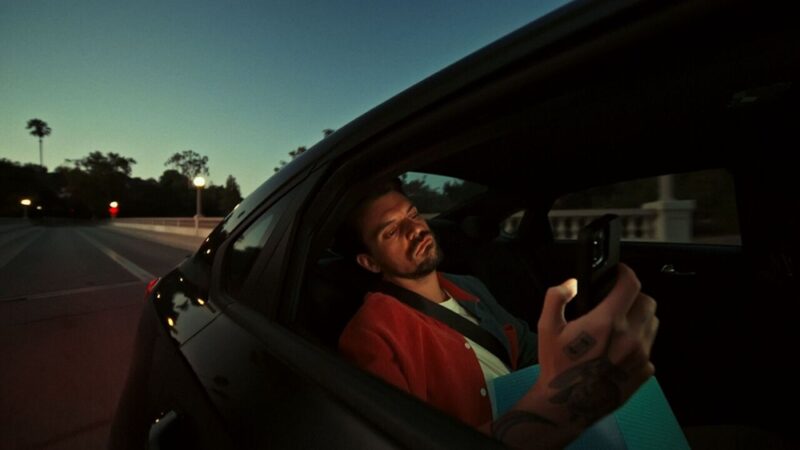
So much of anxiety, whether it’s related to dating, work, or anything else, is internal. Having gone through it myself and having seen it in other people, I know that when someone is struggling with anxiety, they’re often just sitting quietly in a car or standing in line at a grocery store. It’s not necessarily visible to the outside world. It all exists internally.
That’s why I think having those habits externalised and reflected back at you can be so powerful. It forces you to step outside yourself and see what’s actually happening. It creates a moment where you can finally click out of the pattern. I hope the character would take a break from dating apps. That’s what I ended up doing once I started writing the film. I reached a point where I thought, “I need to stop this.”
For me, the only way to break a pattern was to remove the option entirely. Delete the apps. Get rid of the temptation. It’s the same idea as throwing away a pack of cigarettes. If it’s still there, you’re likely to keep reaching for it. Otherwise, you’re just repeating the same behaviour over and over again and expecting a different outcome. At a certain point, you have to interrupt the cycle if you want anything to change.
Buckets is screening as part of this year’s Tribeca Film Festival, running between June 3rd and 14th, 2026. For more information on the festival, head to the official site here.
