
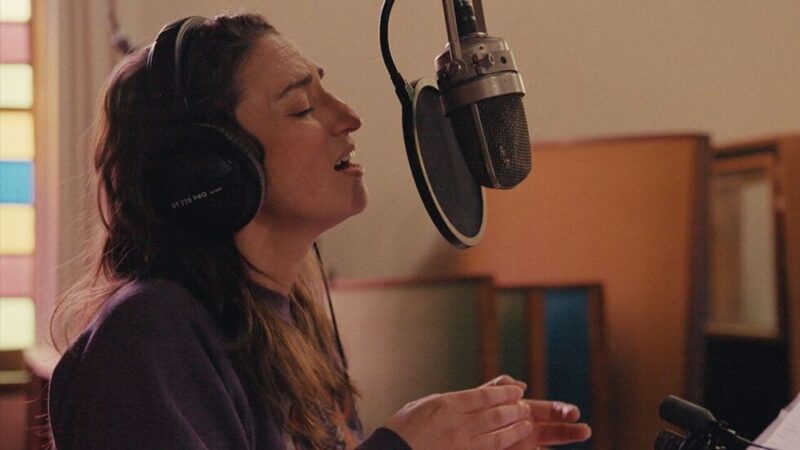
Seven years after her last studio album, Sara Bareilles returns to the recording studio surrounded by the friends and collaborators she trusts most. What begins as the creation of a new record soon reveals itself as something far more profound. In Sara Bareilles: Good Grief, director Josh Alexander captures an artist confronting loss in real time, transforming heartbreak into music while surrounded by a community willing to listen, support and bear witness.
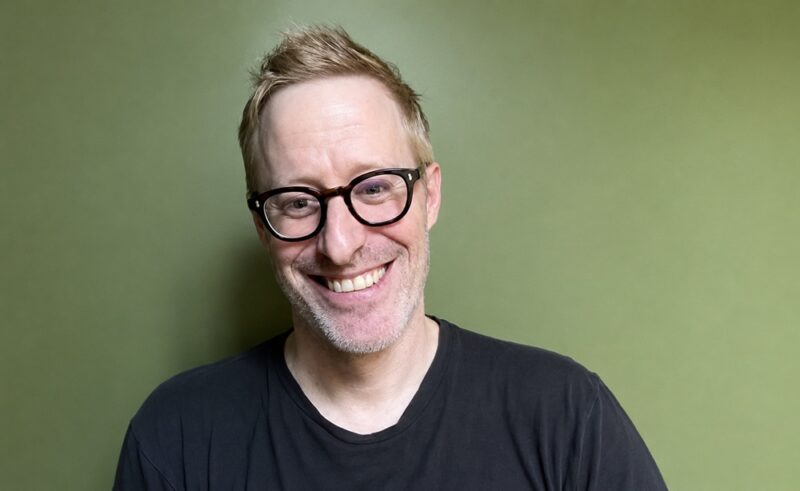
The result is an intimate, deeply moving portrait that feels less like a documentary about making an album and more like a meditation on grief, friendship and the role art plays in helping us make sense of our lives. Speaking with our Peter Gray ahead of the film’s premiere at this year’s Tribeca Film Festival, Alexander reflects on recognising that he was documenting far more than a recording session, why grief needs to be witnessed, and how Bareilles’ extraordinary openness offers audiences permission to confront their own emotions and find healing on the other side.
What I love about this film is that it never feels like it’s documenting grief from the outside. It feels like grief slowly revealing itself in the room. Was there a moment during filming when you realised this isn’t going to be a documentary about an album, but it’s going to be a documentary about loss?
So, Sarah and her husband, Joe (Tippett), are friends of my wife, Aya (Cash), and I. We met them in 2021. We have houses near each other in the Hudson Valley. I knew Joe from acting at Williamstown Theatre Festival, like 2008, but they hadn’t connected in a long time. We were moving when they were moving up. They ended up buying all of our furniture from our old house. We brought it over in a truck. I’d been a fan of Sara from years ago, so I was a little starstruck. But we met and had this wonderful conversation. This is in 2021. We became fast friends.
Over the last four or five years, we had a lot of long dinner conversations, walks, and talks about life and our relationships, her relationships, and what was going on in her life. I knew going into (this film) what a tender and vulnerable space she was in, and I knew that she was recording an entire album of songs about loss and grief. I hadn’t heard any of them, but it was very clear to me that it had taken her years to find the bravery to go make an album of songs about loss and grief, and to figure out how to do it – meaning who she could invite in that she would feel safe enough to have around to show herself in that way.
It was clear to me that I had to also bring a crew in that would also be safe and would show up in the same way. I knew the music was going to be amazing, but you never really know what else is going to happen. Will there be enough story? What will unfold? But the first scene we shot was the scene where she comes in and sees Misty (Boyce) and Butterfly (Boucher) for the first time in years, and they end up in this conversation about struggling with infertility, weeping. I turned to my DP right after that, and I said, “Do you think this is what this is going to be like?” And Jenna (Rosher) looked at me and said, “I think so.” That’s what it was.
Pretty quickly it became clear. And what’s so beautiful about Sara is that she’s hilarious. She’s so funny. And on the other side of all that pain and loss and grief is this joy, this freedom. It became very clear that as we got deeper and deeper, she got freer and more joyful, and it was at that point that we knew we were glad to be there. We feel so lucky. And how do you stay out of the way? How do you be present and listen and make sure you’re paying attention? Because the big thing the film taught me, and I think Sara taught me a bit through it, is that grief has to be witnessed.
It can’t be experienced alone. That part of the process of metabolizing it is for others to see it in you. She seemed to know that was going to happen. I haven’t asked her, but I she had some intuition about what needed to happen, and that she needed to be witnessed and to share it. I don’t know why she chose me. But I’m very glad that she did.
We’re very grateful that she chose you as well. Talking about that scene where she plays “Ladies in a Line”, and Butterfly has that moment where she completely breaks down because, as she says, she listened to it the first time and was thinking of it in a more musical sense, and then she listened to the lyrics. It’s one of those moments that really encapsulates the temperament of the film, because it’s this incredibly beautiful, vulnerable song, and then they have that conversation where Sara laughs about that there aren’t enough songs about infertility.
One of the things I found quite devastating is that Sara has that fear about time not just dulling grief, but eroding memory as well. She worries how she’s going to lose the memory of her friend. She talks about how unique it is to find someone, but then to lose someone. Do you think part of what you were doing as a filmmaker was creating an act of preservation for her?
I haven’t thought about it in that way, but there’s no question that is is. (Sara) said something really interesting. She didn’t see the film. She saw two scenes when I started editing early on. I could feel her breathe a sigh of relief. I didn’t show her anything until I was at a final cut of the movie. She said to me, after watching it, that it feels like the film is a translation book for the music. It’s like a guide. So I do think what you’re saying is true. There is a kind of preserving this alchemy of this moment.
I didn’t know she was shooting those little iPhone videos of herself direct to camera. So the last day of shooting, she said, “Hey, I’m sending something to your Dropbox. I recorded a couple of things…you’ll see.” They start and end the movie, and it’s extraordinary. She had some really deep intuition or discernment in herself that she needed this to happen, and she needed it to be seen and recorded and shared. It’s all over her music and her lyrics. Everyone loves her for her rawness and the honesty. Even in her biggest pop songs, like “Love Song.” She’s saying “I’m not going to write you a love song just because you asked for one.” It’s always been there, but I don’t know if anyone’s ever seen her this raw and this vulnerable.
But she knew that she needed to go through this. It’s a way to hold on. And the finished songs don’t sound like (what we hear in the film). The film’s going to come out, and these finished songs are extraordinary. But the first time ever hearing them, or ever being played, is only going to be in this film. The first time she plays the song “Forever,” she’d never played that for anyone. It’s incredible. That moment where she’s working through it live…very special.
Watching the film, it’s not that it’s less about Sara, but friendship is obviously such a big through-line, and it’s about people showing up for one another. There’s attention and patience and listening. Was that something you discovered in the edit? That the real story might be the community surrounding the artist rather than the artist herself?
I think that Sara had always set out that she wanted to experiment with what happens when you make a record where there’s a more collective decision making (process). It was always part of what she was doing with this project. She was very intentional about who she brought, and she knew it would a group of people showing up for the music, but also about showing up for the relationships. The best example I can give is that one of the best sound mixers ever – Tom Paul – mixed this film. This sound mix took four times the normal length of a sound mix for a doc. Literally, four times. One of the things that you’re doing in a sound mix is when you’re doing dialogue editing you’re cleaning up everyone’s tracks. You’re highlighting one character when they’re speaking, you’re quietening the noise of other people, so you get the clearest audio. What became very clear when we were doing the sound mixing was that everyone was actively listening. Meaning that when someone was struggling, you’d hear lots of, “Hmm-mm” and “Ah,” and that needed to be in the film.
It’s a film about listening. It’s a film about what it means to show up and listen. Not only to oneself and to one’s grief, but to others. To show up when you make music. You don’t see any phones in this movie. It became clear very quickly just watching what was happening, is that this is a movie about a whole group of people showing up together. It’s like summer camp. You show up, you fall in love, you have your first kiss, you learn to canoe, and then by the end of camp you’re all at the busses, crying and hugging. That’s what it felt like.
This isn’t just Sara’s story. It’s all their stories. And they’re all the most extraordinary musicians. Each of them are bringing their own life. Butterfly with what she’s struggling through. Misty with what it means to be a mother, losing yourself as an artist. Solomon (Dorsey) with his struggles with relationships (and) his family. You’re really getting these pieces of each of their lives. The moment when Charley (Drayton) comes in towards the end of the film, sensing Sara needed to have a moment of breath and space around this song that she’s just shared. How could you not include all of them and see that the film is about community?
I feel like artists often are told to turn their pain into art, but I feel like this film really shows how messy and costly that process can be. Did making this film change the way you think about the romantic notion of “suffering for your art,” so to speak?
You know, it’s a great question. In Buddhism there’s this idea of the second arrow, which is that there’s this thing that happens that can be quite painful. Whether it’s disease or heartbreak or a loss in one’s life, that’s the first arrow. Then there’s the second arrow, which is what we do with what’s happening and how we perseverate around it. The stories we tell ourselves about that thing. And we can start shooting ourselves with a second arrow, a third arrow, a fourth arrow, and that’s really where all the suffering is. I think that what I take from the film, and the bravery of what (Sara’s) doing, is showing that when you actually open up to grief and loss, on the other side of it is the opposite of suffering. It’s total joy. It’s freedom. It’s release. For me, what I see in the film is that.
There’s a rhythm to the film. Each day there’s a deepening. There’s a conversation that ends up happening, and then you see the song that comes out of that conversation. The song is a result of the release. The song isn’t suffering. Being able to move through the suffering in conversation and in community is what allows the art to happen. Maybe it’s when one truly opens oneself up to pain, loss, grief…the result isn’t suffering. The result is release and joy and great art-making. They’re all hilarious and they’re all very in touch with their inner child. Like, a child can be bawling cause they’ve scraped their knee and then two minutes later they’re licking a popsicle and having the time of their life. You can feel the movement between pain and total joy.
Sara’s also a theatre nerd, and you can feel that stuff too. Just that joy of getting to play the music. It’s the opposite of suffering in a really interesting way.
And I know that you’ve cited films like Don’t Look Back and Company as influences. What fascinates me about those films is that they’re really about watching people think. Were consciously trying to capture creativity as it happens rather than explain creativity after the fact?
Absolutely. I love music documentaries. I think that there’s definitely been a movement in the last decade or two where everything is getting put into the bio-package. Even if it’s a music documentary, or sports, or even true crime, they’ve all become this kind of codified, celebrity-bio-doc thing. There’s beautiful ones, but often you’re seeing the form less than an artistic gesture. What I love about those old music documentaries – whether it’s Don’t Look Back or The Last Waltz or Amazing Grace, the Aretha Franklin doc – I saw these incredible music documentaries that are all vérité-direct cinema that were about performance and tours. I’ve never seen that style of film about a recording process of a band. Most of the time, and I think this happens because a lot of what happens in recording studios is that the label is shooting (behind the scenes) to use for videos. They’re not recording documentary sound, so what they end up having is a lot of B-roll footage that they can cut against the finished song.
That’s not going to feel alive. That’s going to feel like an amusement video. We recorded 19 tracks of continuous audio, 12 hours a day, for every day of the six days with one of the great production sound recordists in the documentary space. I wanted an audience to feel and to hear what was happening there. Not something that was mixed later, perfectly finished, and mastered. I wanted the lived experience of what they heard when they were playing the songs and what it sounded like in each of the spaces. I had a sense of the approach that I would take and what I wanted to feel. I didn’t know it would end up being such a deep and rich evocation and exploration of what it is to make music.
We don’t live in a culture that tells us to take time with anything anymore. What does it mean to be able to have a listening party again? To buy an album and listen all the way through? I even struggle if I’m watching film at home to not go to the bathroom or pick up my phone. That’s why it’s religious and devotional to go to a movie theatre. When I’m in a movie theatre, in that space, with a community watching, I don’t pick up my phone. I don’t go to the bathroom. I’m subsumed in a story. That’s where empathy happens. That’s where growth happens. That’s where we’re challenged with our edges.
I had strong inclinations about what I wanted to do, but you never know what’s going to happen. You never know what you’ll capture, but it was very clear to all of us as that week unfolded that something very special was being captured. In the post (production) process how do we do no harm? How do we look at this footage and not try to put anything onto it that will start to make something that is so raw and real feel inauthentic. So that really guided us.
It’s such a beautiful film, and I found my way into it very quickly. COVID changed so much about how we connect with each other, and watching these musicians finally come back together in a room felt incredibly moving. That period brought both wonderful and terrible things into people’s lives, and I know for me, art was something that helped me through a lot of difficult moments. While music isn’t my creative outlet, I completely understood that idea of pouring your emotions into a piece of art and finding something healing in the process. The film is a powerful reminder of just how important creativity is, and why art feels more necessary than ever.
For me, there’s a difference between art and content. I watch a lot of content, and some of it can be great, but art serves a different purpose. There’s a moment in the film where Sara is outside in her bathrobe after doing her morning pages, talking about how the process is stirring up grief. Then she says, “That was the point.” The whole purpose of that week was to bring the grief to the surface and give it somewhere to go.
That really resonated with me. Art is how we process things. It’s how cultures and societies make meaning of our experiences. The kind of music and storytelling this film embraces isn’t particularly in vogue right now. We live in a culture that often doesn’t make room for grief, slowness, or reflection. Yet we see the consequences when people and societies don’t take the time to sit with loss and work through it.
One of the things I take away from Sara’s example is her bravery. While making the film, situations would come up in my own life – a difficult conversation with a friend or colleague – that I might normally avoid. Instead, I found myself asking, “What would Sara do?” I’d be honest about what I was feeling, and more often than not, the issue would resolve itself. Otherwise, I could have spent days replaying it in my head and making it worse.
What Sara offers through this project is a kind of permission structure – for herself and for everyone watching. Permission to feel things, to confront them, and to move through them. That’s a beautiful gift, and I think it’s something we can all learn from.
When she goes on tour with this album, maybe there should be “WWSBD? – What Would Sara Bareilles Do?” shirts printed at the ready…
(Laughs) Oh, perfect.
Sara Bareilles: Good Grief is screening as part of this year’s Tribeca Film Festival, running between June 3rd and 14th, 2026. For more information on the festival, head to the official site here.
