

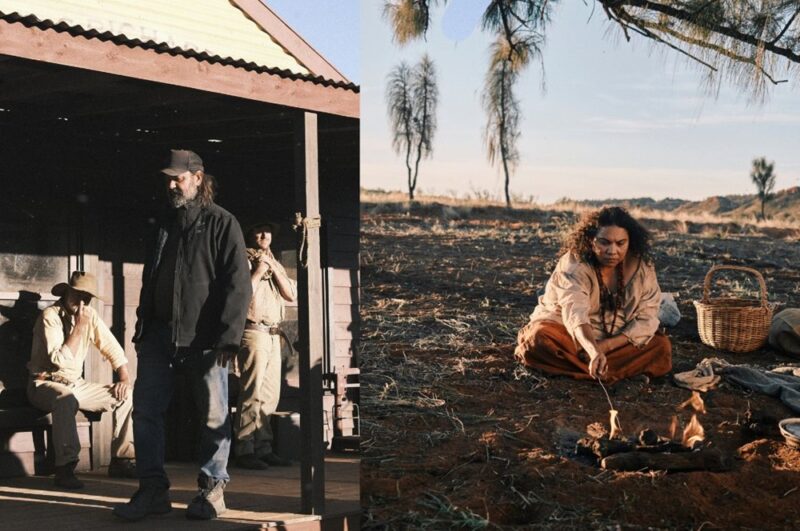
At the Queensland premiere of Wolfram during the Gold Coast Film Festival, the conversation around Warwick Thornton’s latest felt as expansive and layered as the film itself. Set against the colonial frontier of the 1930s, Wolfram follows a fragile outback community upended by the arrival of two violent outsiders, triggering a chain of events that sees three Aboriginal children risk everything to escape and find their way home. It’s a story of brutality, certainly – but also one of endurance, connection, and something Thornton wasn’t initially sure he wanted to explore again: hope.
For Thornton, whose Sweet Country remains one of the defining Australian films of the last decade, returning to this world wasn’t an easy decision. In fact, he admits he resisted it at first.
“I didn’t want to make it,” he says plainly. “I thought, are we cashing in? The last film was successful, it travelled, it won awards… and it was so brutal. I didn’t want to go down that path again.”
What changed was the script.
“Then I read it, and it had light. It had hope. And I realised – this has a reason to be. It’s not a cash-in. It’s the cure.” That idea of Wolfram as a kind of counterpoint – or even antidote – to Sweet Country runs through everything Thornton says about the film. Where the earlier story was, in his words, “a bruise film” with no release from its historical weight, this one opens itself to something more expansive.
“This one is nurturing. It’s about looking at all sides of history – not just Black and white, but male and female. That’s what makes it special.”
That broader perspective is embodied in Pansy, played with quiet, aching resolve by Deborah Mailman. A mother searching for children taken from her, Pansy carries the emotional core of the film – even when she’s barely speaking.
“For me, it’s the not knowing,” Mailman explains. “She doesn’t know if her kids are alive. She’s barely alive herself. But she keeps going. Those moments where she leaves the beads, the hair… it’s like breadcrumbs. Just to say, ‘I’m still here. I’m still looking for you.’”
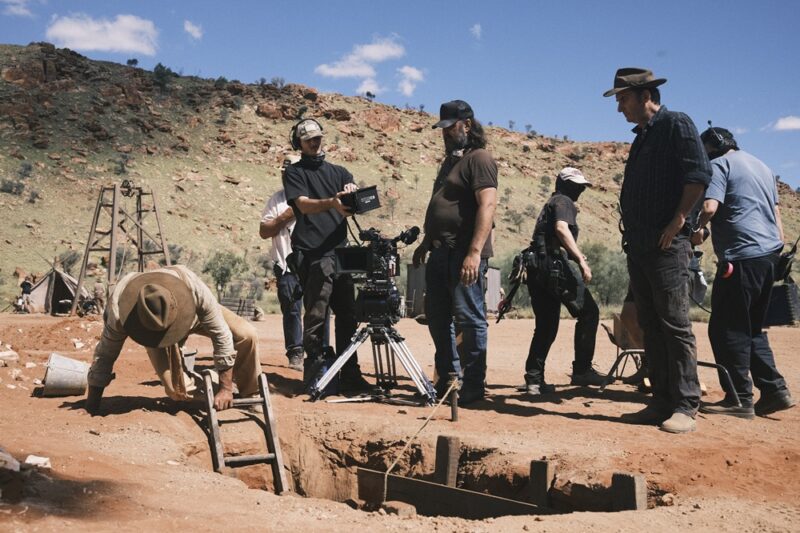
Thornton is quick to acknowledge that Pansy’s story pushed him into unfamiliar territory as a filmmaker.
“That’s stuff I didn’t understand,” he says. “I’m a male director. That feeling of ‘I’m a bad mother because I can’t protect my children’ – that’s hardcore. That’s where Deb had to take control. And that’s powerful cinema.”
The film’s shifting perspective – from the male-dominated brutality of Sweet Country to something more feminine, more searching – also contributes to a wider narrative Thornton and Mailman both see emerging across these works.
“I think together, they offer a bigger picture,” Mailman reflects. “More perspectives. More truth.”
Truth is a word Thornton returns to often, and not lightly. For him, storytelling – particularly as an Indigenous filmmaker – comes with a responsibility that outweighs commercial considerations.
“When we get access to make films, we have to tell the truth,” he says. “We can’t Disney it. We can’t soften the endings of things that are meant to be true. It’s not the smartest way to make money – but it’s the right way to tell these stories.”
And yet, Wolfram also expands that truth beyond a singular cultural lens. One of its most striking elements is its acknowledgement of shared histories – particularly between Aboriginal and migrant communities.
“That’s really important,” Mailman says. “Those relationships existed. Aboriginal and Chinese communities, Aboriginal and Japanese, Afghan… people came together, helped each other, built connections. Those stories are all over this country.”
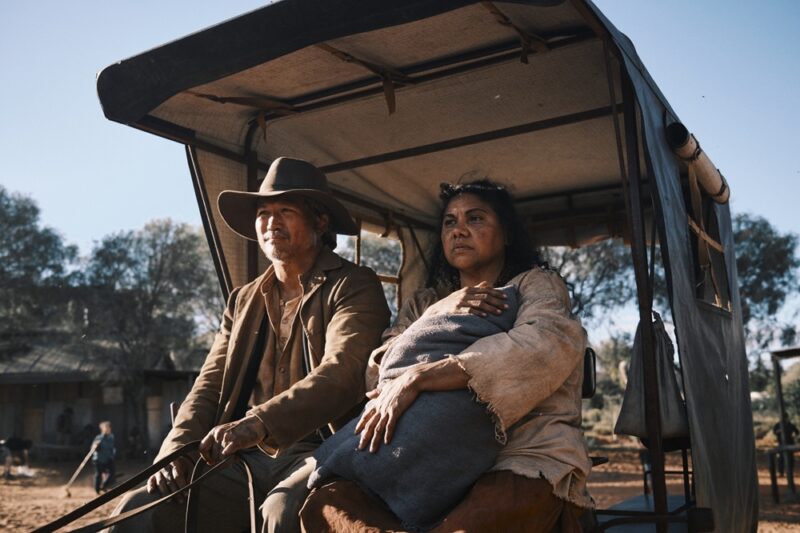
It’s a reminder that survival on the frontier wasn’t just about conflict – it was also about solidarity.
That sense of storytelling as something collective, something inherited and evolving, feels especially resonant in the context of a film festival. Thornton traces much of his own cinematic education not to theatres, but to something far more personal: the video store.
“Blockbuster was where I chose my path,” he says, smiling. “You’d walk in and decide – do I want horror? A western? A big adventure? That was where I learned cinema. You could watch a film from 40 years ago. The cinema only showed what was new, but video stores gave you everything.”
It’s a formative experience that clearly still shapes his approach to filmmaking – one grounded in curiosity, accessibility, and a deep love of the medium.
For Mailman, the evolution of storytelling into filmmaking feels like a natural extension of something much older.
“We’re the beneficiaries,” she says. “Of generations before us who fought hard so we could be here, telling stories the way we want to tell them.”
That lineage is embedded in Wolfram – not just in its narrative, but in its very existence. A film that honours the past while reshaping how it’s told, it stands as both continuation and correction. If Sweet Country was a wound laid bare, Wolfram offers something quieter, but no less powerful: the possibility of healing.
Wolfram is screening in Australian theatres from April 30th, 2026.
*Images provided.
Related Posts:
- Film Review: Wolfram; a visually arresting addition to Warwick…
- Matt Corby and Tenzin Choegyal discuss their meditative and healing…
- Interview: Josh Alexander on the healing power of art in Sara Bareilles:…
- Track by Track: The Velvet Club unpack heartbreak, healing and nostalgia…
- Interview: Lily-Rose Depp and Nicholas Hoult on exploring fear and…
- Interview: Director Stefan Hunt and choreographer Vanessa Marian on…
