

For 80 years, the Sydney to Hobart Yacht Race has occupied a rare place in Australian cultural life – a spectacle of endurance that unfolds each summer as the nation watches the fleet charge south into the Bass Strait, one of the most volatile stretches of water on earth. It is a race built on bravado and beauty. It is also a race marked by loss.
This year Match Point Films will release True South, a landmark documentary arriving 25 years after the race’s darkest chapter. In 1998, a violent East Coast Low generated 90-foot seas and claimed six lives, including John Dean – father, friend, and a figure beloved across two families bound tightly by the ocean.
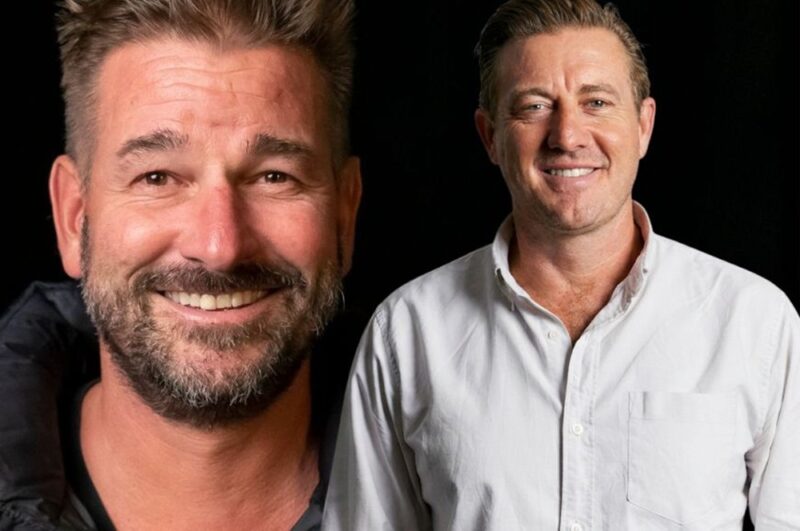
Directed by Dave Klaiber and created and produced by Will Alexander – a lifelong friend of the Winning and Dean families – True South moves beyond spectacle to something far more intimate. At its heart is the extraordinary decision of Herman Winning and brothers Nathan and Peter Dean to return to the race that changed their lives forever. What unfolds is not just a story of elite competition, but of grief, silence, masculinity and the complicated courage required to face the sea – and each other – again.
Narrated by Sigrid Thornton AO, with an original score by Elena Kats-Chernin AO, the film marks the first release for Match Point Films – and signals a documentary less concerned with victory than with vulnerability.
In conversation with our Peter Gray, Klaiber and Alexander reflect on trust, responsibility, and the delicate process of telling a story that was never simply about sailing, but about surviving what comes after.
The Sydney to Hobart occupies this almost mythic space in Australian culture. Do you think we romanticise risk?
Will Alexander: 100%. It’s one of the most dangerous stretches of water in the world. There’s no prize money. We all know what happened in ’98. Yet every year more than 100 boats line up. It’s expensive, it’s gruelling, and the risk is real. So what drives that? There’s ego, sure. Bragging rights. But it’s 80 years old for a reason. There’s something in the DNA here – we’re an island nation. That waterman spirit. Dave paddles into waves I wouldn’t go near. There’s something in the water down here.
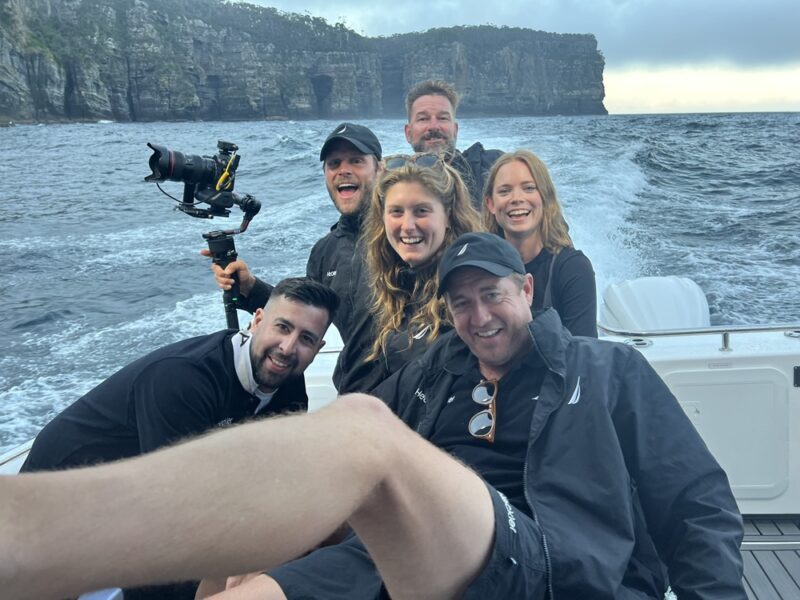
Dave Klaiber: It’s iconic. And when we started the film, I was determined to shoot sailing differently – not from another boat at a distance, but right in it. We had unprecedented access. Fraser, one of our camera crew, became part of the race team. That allowed us to capture angles and intimacy you haven’t really seen before. We wanted the audience to feel the myth, but from inside it.
The film isn’t just about surviving the sea – it’s about surviving silence. These are men raised to be stoic. Were you directing around what wasn’t being said?
Dave Klaiber: Absolutely. What began as documenting the world’s fastest yacht became something much deeper – about family, loss, and mental health. We were sitting with men who don’t talk about feelings. Earning their trust, gently chipping away at that stoicism, that was the job. And when they opened up, it changed everything. On the surface it’s blokes racing a boat. Underneath, it’s something far more vulnerable.
You weren’t just making a film – you were safeguarding your friends’ stories. When did you feel that weight?
Will Alexander: In the edit. We kept interviewing for a year because they wouldn’t always go there. Some are media-trained – you’d get the polished answer. But we needed the honest one. That meant pushing them, sometimes uncomfortably. It’s hard when they’re your mates. And then the edit was brutal. We shot so much, and I was emotionally attached to all of it. It felt like throwing children overboard. I needed sounding boards because I was too close. But we got to the truth in the end.
Did their friendship survive because of the tragedy, or in spite of it?
Dave Klaiber: Both. Everyone processed ’98 differently. It defined them, and it still does. For Nathan especially, this film has given him a sense of closure. That alone makes it worthwhile.
Will Alexander: Nathan hadn’t stepped on a yacht since his dad died. He works on the water, but refused to sail. Coming back – on this campaign, with his brother and his dad’s best mate – was enormous. He used to say, “Why would anyone care about my story?” After the premiere he said, “I finally understand what Mum meant, that our story became part of Australian history.” For a tough, rugby-playing bloke to say that…that’s everything.
What surprised you about male friendship?
Dave Klaiber: Their vulnerability. Sailors are tough – you don’t show weakness. But here they were, opening up for each other and for camera. It added a power to the film that feels unexpected.
Will Alexander: When Nathan showed up, the story shifted. Suddenly it wasn’t about the boat – it was about these men and their history. Every day became: how do we get closer to the truth? And there was a bond formed between race crew and film crew that I’ve never experienced before. We became family.
Dave Klaiber: I speak to Nathan weekly now. He’s a brother.
The ocean is cinematic spectacle, but the film feels intimate rather than epic. Was that a conscious resistance?
Dave Klaiber: At first, we were chasing spectacle – cameras everywhere, big cinematic moments. But quickly it became about balancing that scale with softness. This was about redemption and closure as much as competition. Finding that balance in post was the real challenge.
And you have Sigrid Thornton narrating here. Why was her voice the right compass?
Will Alexander: We wanted authority, wisdom, and a feminine counterpoint to a blokey story. She’s an icon. She came in prepared, understood it instantly, and the first read is what’s in the film. We experimented for two days, but she knew she had it.
Dave Klaiber: When someone at that level arrives that prepared, you see what mastery looks like.
After making True South, is there something that scares you less?
Will Alexander: It’s our first film – everything was scary. Every distributor said no. “Rich white guys sailing.” Fair enough, they couldn’t see the deeper story. Until one did. We premiered in pouring rain. I thought three and a half years were washing away. Fifteen hundred people showed up. Now it’s had a national release and a Netflix deal. Blind faith got it there. You just can’t lose it.
Dave Klaiber: It took bravado and belief. But becoming part of these men’s lives – that’s what makes it special. And it’s led me into working more in men’s mental health. If the film opens that conversation, that’s huge.
As someone who champions cinema – and who’s dealt with mental health ups and downs – seeing men like this open up feels universal. It reminds you we’re all navigating something. The fact this story is out in cinemas matters. Congratulations.
Will Alexander: Thank you, Pete. I really appreciate it.
Dave Klaiber: Thanks, Pete. Beautifully said. It’s been a real pleasure.
True South is screening in Australian theatres from March 5th, 2026. For cinema locations head to the film’s official site here.
