

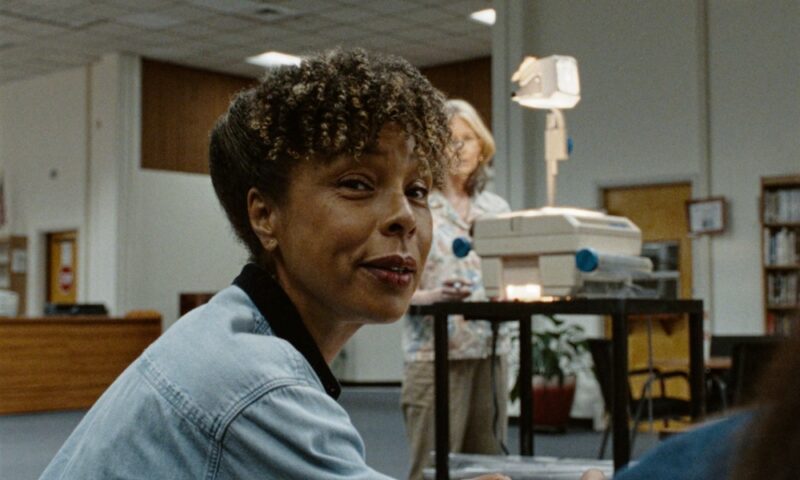
Grief rarely follows a predictable path, and sometimes the people who offer us the greatest comfort are also those who remind us most painfully of what we’ve lost. In Mouse, the intimate and emotionally resonant coming-of-age drama from filmmakers Kelly O’Sullivan and Alex Thompson, the complexities of loss, friendship and identity unfold against the backdrop of small-town Arkansas in 2002. As teenager Minnie (Katherine Mallen-Kupferer) struggles to navigate the sudden upheaval of her closest friendship with Callie, she finds herself drawn into an increasingly complicated relationship with Callie’s mother, Helen (Sophie Okonedo), a woman whose own grief has left her searching for meaning in a life once entirely devoted to her daughter. What develops between them is a tender yet uneasy connection, where affection and emotional dependence become increasingly difficult to distinguish.
For Academy Award nominee Sophie Okonedo, Helen’s journey is one defined by the unpredictable nature of grief and the uncomfortable contradictions that emerge when love and loss become inseparable. Speaking with our Peter Gray, the acclaimed actress reflected on the constantly shifting emotional dynamics between Helen and Minnie, the significance of music as a means of expressing what words cannot, and the devastating loss of identity that can accompany the death of a child. She also considered why Mouse extends beyond its exploration of grief to examine the fragile transition into adulthood, the complexities of friendship, and the ways our relationships shape our understanding of who we are.
Something I found really quite heartbreaking is that Minnie becomes both a connection to the daughter Helen lost and this reminder of that absence. Do you think Helen is learning to love Minnie for who she is, or is part of her still desperately trying to hold on to Callie through her?
I think it flips around all the time. It’s a good question. I think it’s a different thing every moment. It feels like it changes daily. I suppose grief is such a messy, non-linear thing to happen. It feels like that some days she almost sees her daughter (through Minnie), and other days she’s rejecting of that. She’s a friend, and other days it’s a way to move through. That’s the quality of Kelly’s (O’Sullivan) writing. I felt that it constantly changed, and sometimes within the same scene you’d be changing how you felt about the relationship, how I felt about the relationship, and feeling this was a good relationship to have, and then thinking, “No, I must get her out of my house. This is very bad.”
And one of the things that’s mentioned but not explicitly explored is that Helen has this very significant relationship to music. I was really struck by how music becomes this language between Helen and Minnie, particularly because it’s something Helen once shared with Callie. When words become inadequate, do you think music allows Helen to express something she otherwise couldn’t? Or does sharing that part of herself with Minnie make the loss even more complicated?
Yes, I think that’s right. We express ourselves and allow ourselves to live through so many different things, and words are just a small part of that. There are so many other ways that we can do that. I think music is really integral to (Helen) processing what happened. Particularly, she plays that same piece again and again, and it’s a way of her processing what’s going on. Whether it’s before the event or during the grief, that’s a way of processing. It helps her. I think playing helps her to process what’s happening for her.
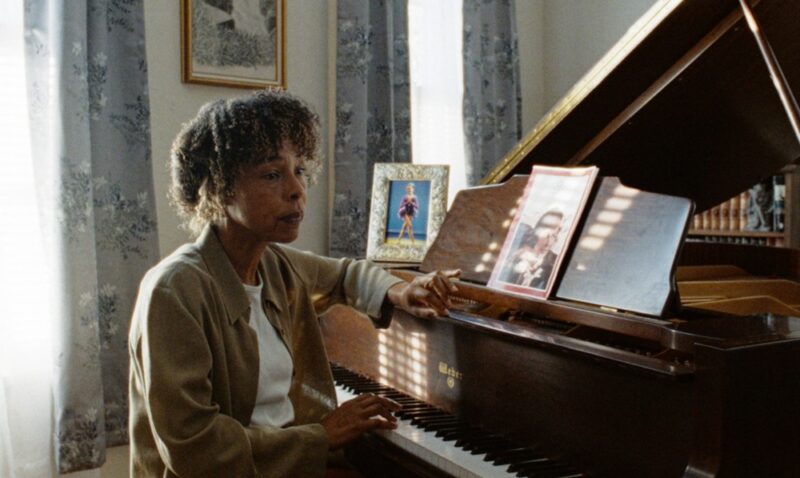
Motherhood almost becomes Helen’s entire identity because she’s devoted so much of her life to being Callie’s mother. I wondered whether when she loses her, she’s also losing the very identity she’s built for herself. Is part of Helen’s journey about discovering who she is when she can no longer be the person that she spent so many years being?
The worst thing that can happen is the loss of a child. There’s nothing (worse) I can think of. You don’t want your child to go before you. It was so hard to even process all the other stuff that comes around that. All the other things about her identity, what her life was before her child. But no matter where Callie was placed in her life, it was always going to completely blow (Helen’s) life apart. But she had made a life that was all about her child. That’s true.
Her life is completely centered around her only child, and that’s the decision she made many years before that. She didn’t go down the career path she thought she was going on, and she settled down and moved to a foreign country. Her daughter was born, and she settled down and become domesticized, I suppose.
And just before letting you go, what moved me about this film is that it seems less interested in how we get over losing someone and in how that loss changes the way that we love the people who remain. Having inhabited Helen, do you think grief ultimately makes us more capable of loving or more frightened of it?
I think it would be depending on the individual. I don’t think you could generalize about that at all. I think the film isn’t just about grief though. It’s about a lot of things. It’s about that time in a young person’s life when they are going into adulthood. I think it’s about friendship, about identity. It’s so many things.
Mouse is screening in select theatres in the United States from November 6th, 2026, before expanding wider on November 20th. An Australian release date is yet to be announced.
