

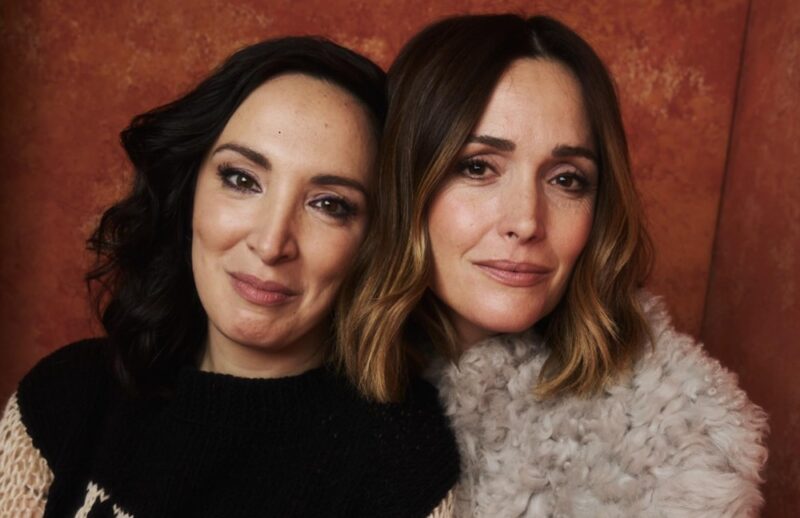
With her life crashing down around her, Linda (Rose Byrne) attempts to navigate her child’s mysterious illness, her absent husband, a missing person, and an increasingly hostile relationship with her therapist.
Such is the logline for If I Had Legs I’d Kick You, Mary Bronstein‘s confronting, darkly comedic meditation on motherhood that has been winning rave reviews since premiering at the Sundance Film Festival at the beginning of the year.
As the film arrives in Australian theatres (you can read our review here), Peter Gray spoke with the writer/director about transforming her own personal story into a cinematic feature, embracing the divisive, flawed nature of her lead character, and why it’s okay to laugh at the unfolding tragedy.
I know you’ve said that with this film, the tiny seed for this story came from a deeply personal and very real chapter of your life. How did you navigate that line between transforming something so intimate into fiction, but keeping it emotionally true at the same time?
Yeah, that’s a really good question. It’s a hattrick that I hope I pulled off, but basically the way that I did it was, I knew that the straight-up version of this story is a movie I’ve seen before. I decided what I wanted to do was make this entirely expressive, entirely subjectively in this woman’s point of view, and use surrealist and expressive language and ideas to capture, not exactly what is happening literally, but how it is feeling. I leaned into that, and from there it abstracts out so, as you said, it’s not my autobiography, but it becomes a way to express feelings that only you can express through the language of film, not any other medium.
You’ve described the character of Linda as not particularly kind. Is there a balanced view for you in showing her flaws, without tipping into judgement? Obviously you want the audience to remain emotionally tended to her. Was that difficult to show her not at her best, but keep people on her side?
For the movie to work, you don’t have to be on her side. I don’t believe all the time, but you have to be invested and care enough about her that you’re going to ride through that. There’s going to be viewers with certain things she does, they can’t hang with that. That’s a step too far. And there’ll be other viewers that won’t feel that way. And there’s viewers that will feel compassion for her. They’ll see it through that lens. It’s also the type of movie I was trying to make where I’m leaving you with maybe more questions than answers. But I trust the audience is smart and engaged, and is going to work with me. I did my work, it’s on the screen, and then the audience has their work. Work is a weird word, but we’re working together.
I wanted to make a movie where there’s no wrong answer, because it’s subjective. It’s the experience of the viewer. But that’s true for anything, which we don’t like to admit. I’m leaning into that. There’s going to be people who this movie is not for. And that doesn’t bother me. That’s okay. It might be for them in a couple of years. It might never be for them. There are other filmmakers who are staunchly in that tradition, David Lynch, for one, where it’s like, “I know what I meant, but who cares?” I want it to be what you think.
I don’t go to every movie and like it. It could be a wild concept, and it’s a problem, but it’s a wild concept to me to make a piece of art and put it out into the world where the art betrays the fact that you don’t trust the audience. When you patronize or spoon feed this art because you didn’t trust me, there’s no room for that. I remember (director Michael) Haneke, and we make very different movies, except for maybe Funny Games, but someone asked him if it bothers him if he sees someone walk out of his movie? And he said, “No, because it just means it wasn’t for them at this time.”
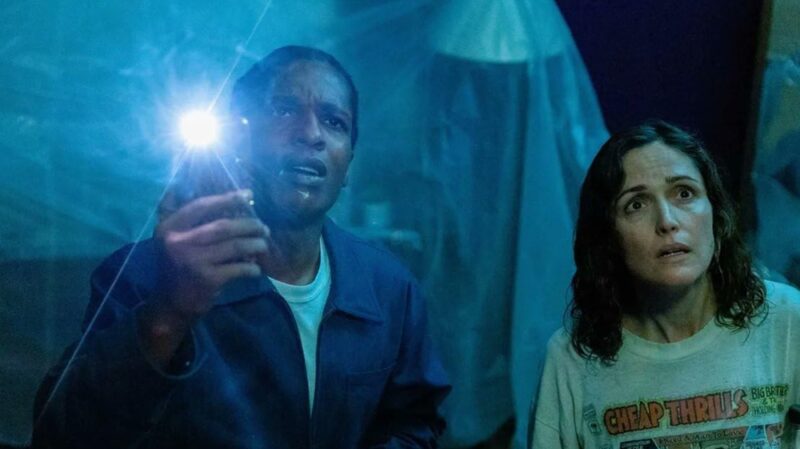
That really is one of the great things about movies, how some are made to very much force your own conclusion on what took place. And here, you’re shifting between funny, claustrophobic, surreal. It’s anxiety inducing. Was there a key to keeping the tonal shits so that it never felt disjointed? It felt very much like it was reflecting her mental state.
Yeah, I started thinking of it at a certain point, when I was refining the script, on an almost mathematical level, and this movie is going to take you places that are very dark and uncomfortable and scary and existential, right? If I’m going to do that, the way I was thinking of it was the movie is a machine, and it’s chugging along. But if I don’t release a little steam, it’s going to explode. It cannot sustain itself, and the little releases, to me, are the humour. It’s all gallows humour, but it’s behavioral. It’s humour about interacting. It was very much purposeful and calculated on that level. On another level, it was a coping mechanism to use humour, because you’re either going to laugh or cry. At the darkest moments of my life, there’s always a joke. Sometimes it’s incredibly inappropriate, but you need that laugh.
There were definitely moments throughout the film that I almost had to question if I was correct in laughing. The scene with the hamster, and then the motel receptionist’s whole demeanour…
Oh, my God, yes. Ivy Wolk is such a treasure. That was my idea too, because what’s more terrifying to an adult than a teenage girl? That’s terrifying to women, and men! Like, there’s no good that can come (from that). You just know they’re going to make fun of you. It may be to your face or after you leave, but it’s just a fact. I can say this because I have a 15-year-old daughter, but if I see a pack of teenage girls coming down the street, I will cross the street to the other side. It’s not the terror of thinking they’re going to do something, it’s that they’re going to make fun of me.
And this question might be a big one to end on, but the title feels almost like a threat from a very powerless place. If Rose Byrne’s character could grow legs emotionally by the end of the film, who do you think she would actually kick first, and why?
Oh, interesting question. I think she’d kick herself in the ass. That’s what she needs. She needs herself to do it, to get it the fuck together.
Well that is the beauty of the final line in her wanting to say she wants to do better.
It’s important that she’s the one who says it.
If I Had Legs I’d Kick You is now screening in Australian theatres.
