

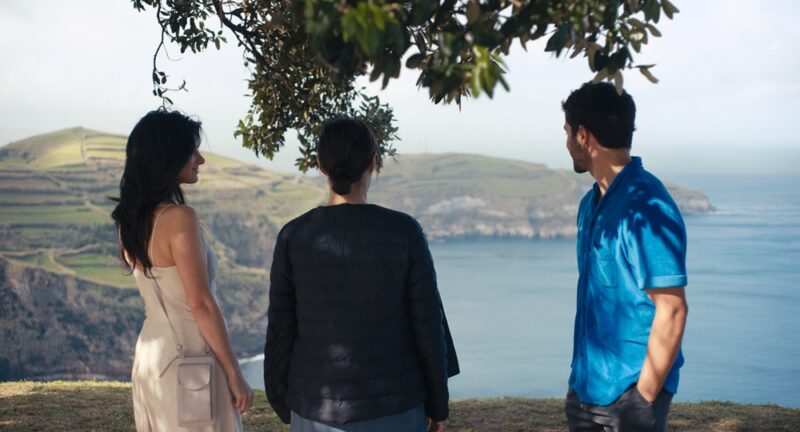
Grief is rarely a straight line, and neither is Honeyjoon. Equal parts heartfelt, hilarious and unexpectedly romantic, the film follows June and her Persian-British mother, Lela, as they journey to the breathtaking Azores Islands to mark the anniversary of a devastating loss. What begins as an act of remembrance soon becomes something far messier, funnier and more life-affirming, as a charmingly philosophical surfer encourages both women to embrace the unpredictable currents of love, loss and human connection.
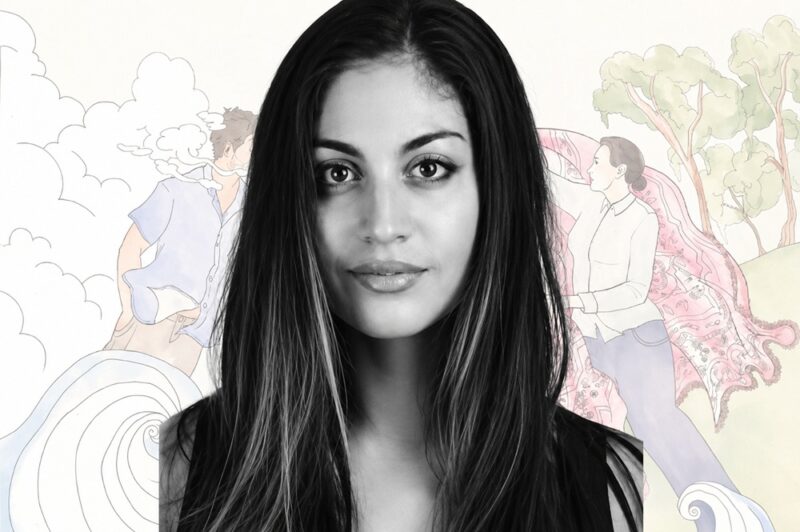
Ahead of the film’s release, Peter Gray spoke with writer-director Lilian T. Mehrel about transforming personal grief into dark comedy, the “inside joke” of being human, why healing and pleasure are more connected than we often admit, and how Honeyjoon invites audiences to surf life’s light and dark waves in equal measure.
As someone who lost my father very young, this film connected with me immediately. Regardless of when it happens, that loss stays with you. So before anything else, congratulations on the film.
First of all, I’m sorry for what you’ve been through, and thank you for sharing that with me. It’s funny, but I almost feel like people who live with that kind of loss are part of the same club. The moment someone tells me they’ve had that experience, I feel an instant connection. It makes me feel like I made this film for us. Moments like this are exactly why I wanted to tell this story, so thank you.
In your director’s statement, you describe filmmaking as being an orchestra conductor of emotion. Looking back on Honeyjoon, what emotional journey did you most want audiences to experience? Were there moments where you found yourself adjusting the film almost like a composer refining a piece of music?
I love that question. From the very beginning, what excites me most as a filmmaker is that precarious line between laughter and tears. Those moments where you’re not quite sure which way an audience is going to go. Dark humour lives in that space, and I think my stories naturally gravitate toward it.
This film was inspired by real grief and a real trip to the Azores. When I arrived there, I was struck by how beautiful it was, but also how much darkness existed beneath that beauty. It’s a volcanic island with black sand beaches, dramatic black rock formations and powerful waves. It felt like a place where life and death existed side by side.
Comedy, to me, comes from contrast. The idea of grieving in a place that looks like the perfect honeymoon destination immediately felt like a film I needed to make. Throughout the process, I was constantly thinking about tension and release. How do I bring an audience to an emotional edge and then let them release that emotion through laughter, tears or even surprise?
One of the best examples of that for me was the bedroom texting scene. That hard cut reveal followed by the sound effect from the bed got one of the biggest laughs.
Exactly. By that point in the film, we’ve been sitting with a lot of emotional heaviness, and the audience is desperate for some relief. I’ve screened the film for hundreds of audiences now, all over the world, and that moment lands every time.
I think it’s because we all need those reprieves. Personally, I’m interested in acknowledging the darker parts of life without turning away from them, but I’m also always searching for the glimmers of light. That’s why you’ll notice recurring images of dark water with light reflecting across the surface. It became an early visual expression of what the film is really about.
One thing that fascinated me is that the film is as much about pleasure as it is about grief. Were you interested in the idea that healing isn’t about moving on from loss, but learning how to enjoy being alive while carrying it?
Yes, absolutely. That’s exactly it. I often describe Honeyjoon as a film about grief, and then I immediately add that it’s also funny and sexy. But really, it’s a film about being alive. It’s about people trying to figure out how to keep living after losing someone they love.
I think of June and Lela as two halves of a yin-yang. June believes pleasure is the antidote to grief. She’s chasing it in every form – flirting, attraction, adventure, distraction. But is that true pleasure? Is it enough? Without getting too spoilery, she eventually has to confront the emotions she’s been avoiding. Sometimes the release you’re looking for isn’t found through escape. Sometimes it’s found through finally allowing yourself to feel.
For me personally, one of the things that inspired this film was recognising how precious it is simply to be alive. Even when life is painful, there is beauty in the fact that we’re here at all. Sometimes happiness exists in those small moments and small pleasures, and learning to notice them can be its own kind of healing.
Were you interested in the way grief can reveal the distance between people just as much as it reveals their connection?
Definitely. Grief can be incredibly isolating. You can lose the same person as someone else, love them just as deeply, and still experience that loss in completely different ways. That loneliness is a huge part of what grief feels like to me. It’s reflected in the way June and Lela feel disconnected from each other, but also in the way they’re surrounded by honeymooners who seem to exist in an entirely different world.
One of my favourite moments in the film is the procession that moves through town. It was inspired by a real experience. Every face in that crowd carries its own story of love and loss. Even though none of those people know each other, they’re connected by something deeply human. That’s also what João represents. Unexpected connection. The reminder that even when you feel alone, you’re not. That’s true in life, and it’s true when you’re sitting in a cinema surrounded by strangers experiencing the same emotions you are.
I loved that moment after the procession when June asks whether it was mourning or celebration and the answer is essentially, “both.” It felt very true to life. When writing the mother-daughter relationship, what did it teach you about the imperfect ways people express love?
Before I answer that, something you said really struck me. The idea that after someone dies, we learn new stories about them. I find that so moving. Both June and Lela loved the same man, but they carry different versions of him. June remembers a father who embraced life and spoke about the beauty of this island. Lela remembers a man who carried deep pain but rarely spoke about it.
June wants to embody the version of her father that feels full of life. That’s her roadmap for surviving grief. But as the film progresses, she begins to realise that his story was more complicated than that. There was darkness there too. I think that’s true for all of us. The people we love contain multitudes. We honour them not by simplifying them, but by embracing the full complexity of who they were.
What you just said reminded me of my own experience. My father died when I was very young, so most of what I know about him comes from stories other people have told me. My mum later put together a book about our family history and wrote about what that period was like for her. Reading it felt like I was learning about him, but also watching her process that grief all over again. It made me realise how differently people can carry the same loss.
I love that. You may have just given me a new way of understanding my own film.
I know that you’ve spoken about the inside joke of being human, and that’s such an amazing phrase. What do you think are the funniest things about being human that we don’t often acknowledge on screen enough?
I love that question, especially in the context of everything we’ve been talking about. I think some of the funniest moments in life are the ones that reveal our most vulnerable instincts. Even something as simple as trying to flirt can be hilarious because it’s so exposing. Trying is such a human thing. It’s often pathetic, sometimes embarrassing, and yet there’s something really beautiful about it.
That’s why I have so much affection for June. We watch her trying so hard to have a good time, trying to feel alive, trying to outrun her grief. There’s something both funny and heartbreaking about that desperation because we’ve all been there. I also think some of the funniest things about being human are the simplest. Every one of us has a body, and bodies do ridiculous things. Those are very basic jokes, but they’re universal. Honestly, I never imagined I’d be putting that kind of humour into my first feature film, but it turns out we all connect to those moments because they’re part of the shared experience of being alive.
That’s really what I mean when I talk about the “inside joke of being human.” We all know what it feels like to be awkward, insecure, hopeful, embarrassed, jealous or afraid. When we’re honest about those feelings, people recognise themselves in them and they connect. Even the petty moments matter. If someone is telling you a tragic story and your first thought is, “Do you really think she looks younger than me?” that’s funny because it’s imperfect and human. Those are the moments I love putting into films because they remind us that people are messy, contradictory and wonderfully flawed.
There’s so much humour in this, but there is that darker aspect. Do you think humour gets us closer to the emotional truth than drama?
I don’t want to pick sides and start a World Cup between comedy and drama, because I think both can be incredibly powerful. But comedy has a unique ability to disarm people. It catches you off guard and creates a physical reaction.
I’ve spent a lot of time thinking about what actually makes audiences laugh. One thing I’m proud of as a filmmaker is that I can often feel when a laugh is coming. I know how to build tension and when to release it. But why does it work? For me, laughter often comes from recognition. It’s the feeling of being seen. There’s something almost shocking about watching a stranger put a thought on screen that you’ve secretly had yourself. You sit there wondering, “How does this person know me?” I think that’s a big part of it. But I also think comedy can reveal emotional truths in unexpected ways.
For example, there’s a moment early in the film when June and Lela get into the tour guide’s car. June has just begged her mother not to bring up politics or any heavy topics, and the very first thing Lela does is start talking about them. Audiences laugh so hard during that scene, even though what she’s discussing is actually quite serious and painful. That’s one of my favourite examples of dark comedy because people aren’t laughing at the tragedy. They’re laughing at the very human experience of being trapped in a situation where someone is doing the exact thing you desperately hoped they wouldn’t do. We’ve all been there in one form or another, and that’s what makes it funny.
Going off human behaviour, we obviously have the beautiful João in the film. As a gay man, I very much appreciated his presence. And this could be me overthinking or looking too much into it, but he feels like a very philosophical presence. Did he represent something specific to you?
You can’t overthink João . You’re spot on – he is philosophical. I think there’s something inherently meditative about his life. Every day he visits the same places, but those landscapes are constantly being filled with new people and new stories. It’s a very accepting relationship with impermanence. People arrive, people leave. Then new people arrive and leave again. It’s like waves coming and going.
That’s reflected in his own life, too. He’s someone who understands what it means for people to leave. He carries his own version of a long goodbye, so he’s dealing with some deep things beneath the surface. I don’t know about you, but I feel like going through difficult experiences has made me wiser. Hardship teaches you more about life, about yourself, and about what other people might be carrying. It makes you pay closer attention.
I think João recognises that there’s something happening beneath the surface with June and Lela. He sees it almost immediately, but he’s patient enough not to force it. He simply creates space for it to emerge in its own time.
What I love about their relationship is that it reminds me of those unexpected connections we sometimes make in life. On the surface, you might feel like you have very little in common with someone, but then you end up sharing something incredibly personal and meaningful. Those moments can be surprisingly profound, and that’s very much what João represents in the film.
As you mentioned riding the wave, there’s that idea of riding the wave that won’t last. Do you think that’s ultimately the film’s perspective on happiness?
I always try not to pin things down too definitively because I want audiences to bring their own experiences to the film and feel what they feel. But I do think Honeyjoon is fundamentally about acknowledging both sides of life – the dark and the light. Sometimes you’ll cry, and sometimes you’ll laugh.
And, of course, it’s also about embracing João’s hot, deep-surfer wisdom (laughs). One of the things that amused me while writing him was that almost everything he says sounds like a surfer metaphor. At the same time, I genuinely believe what he’s saying. It’s both meaningful and a little funny, which is very much the tone of the film. The idea that life comes in waves is simple, but I think there’s truth in it. Happiness, grief, connection – they all arrive and recede. João talks about finding meaning in the small moments, and that’s something I personally hold onto as well.
I can’t make sweeping declarations about whether life is good or bad. Generally, I think it’s good, but it can feel very difficult at times. What I’m looking for are the glimmers – the unexpected moments of connection, the brief flashes of joy, the things that suddenly make everything feel a little brighter. For me, those moments are like light reflecting on the water. They don’t erase the darkness, but they remind you it’s not the whole picture.
I found the surfing and ocean imagery to be a really beautiful metaphor throughout the film. The ocean is both beautiful and unpredictable, and grief often feels the same way – you’re surrounded by forces much larger than yourself and can only learn to navigate them. That made me think about something you’ve spoken about before: the idea that your themes stop being theoretical and become something audiences actually feel in their bodies. As a filmmaker, how do you create that kind of embodied experience rather than simply an intellectual one?
I love that question. Honestly, I think it’s one of the reasons I became a filmmaker in the first place. Cinema is the art of emotion. It’s not just something you understand intellectually – it’s something you feel in your body, your heart and your subconscious. Sound, music, imagery, performance – they’re all working together to create an emotional response.
To me, filmmaking is a kind of beautiful, imperfect science. You combine all these different elements and hope for a certain reaction, but the final piece of the equation is always the audience. The alchemy happens between the film and the viewer, and that experience is going to be different for everyone because it’s shaped by their own memories, emotions and life experiences.
I always describe my work as having a kind of holy trifecta: dark comedy, layered emotion and cinematic beauty. I’ve never understood why comedy can’t also be visually poetic or emotionally complex. For me, it’s all about creating a feeling that audiences can’t necessarily explain but can deeply experience. With Honeyjoon, I wanted the themes to exist beyond the story itself. The audience isn’t just watching characters navigate the light and dark waves of life – they’re experiencing those shifts too. They’ll laugh, they’ll feel emotional, and ideally they’ll move through those same currents alongside the characters.
I’m very much a believer in form following function. Everything should belong to the same world. The themes should live in the story, the characters, the visuals, the rhythm of the film and the audience’s emotional experience. The ideas of light and darkness are woven throughout Honeyjoon, and my hope is that viewers leave not necessarily with a single message, but with a feeling—an emotional understanding of the film’s central idea that life is always a balance of both.
Looking at that, and this could be a difficult question to answer, but was there a particular image or a moment during filming where you thought, “This is exactly what I want the film to feel like”?
Ooh. The moment that comes to mind actually wasn’t something we filmed – it happened behind the scenes. On the island, there’s a real ocean pool that’s both hot and cold. Beneath the water is a natural hot spring, so when the tide is low you can feel the warm water, but every so often a cold wave rolls in from the ocean. It felt like the perfect embodiment of the film’s themes – the coexistence of opposing things, that constant duality.
We became determined to visit it before the shoot ended, but you can only access it when the tide is low. We were running out of time – we only had a 20-day shoot – so our opportunity ended up being at night. The entire cast and crew went out there in complete darkness. There was this rocky cliff, waves crashing around us, and a little ladder disappearing into the blackness below. You couldn’t really see where you were going. You just had to trust that there was something magical waiting for you at the bottom.
I remember standing there looking into that darkness and thinking, “This is indie filmmaking.” It’s a little dangerous, a little uncertain, and you’re taking a leap without knowing exactly what the outcome will be. You do all this work and then eventually you put the film in front of an audience, and that’s the final test. Do they laugh? Do they feel something?
I climbed down that ladder thinking, “Of course I’m doing this,” and honestly it felt very similar to the first time I screened the film. When I felt that first wave of audience laughter, emotion and connection, it was electric. Since then, we’ve played more than 40 festivals and screened the film for hundreds and hundreds of people, and I still get that same feeling every time. It’s never stopped being magical.
Honeyjoon is opening in New York on June 10th, 2026 at the IFC Center, before opening in Los Angeles on June 12th (Laemmle Royal), June 19th (Laemmle Town Center) and June 26th (Laemmle Glendale), followed by Chicago at the Gene Siskel Film Center on June 19th.
