
Kangaroo is a heart-warming family comedy about ex TV personality Chris Masterman, who becomes stranded in an Outback town outside Alice Springs. There, he teams up with 12-year-old Indigenous girl Charlie. The pair form an unlikely friendship and work together to rescue and rehabilitate orphaned joeys in the remote but stunning Outback community – an endeavour that proves to be life-changing for them both.
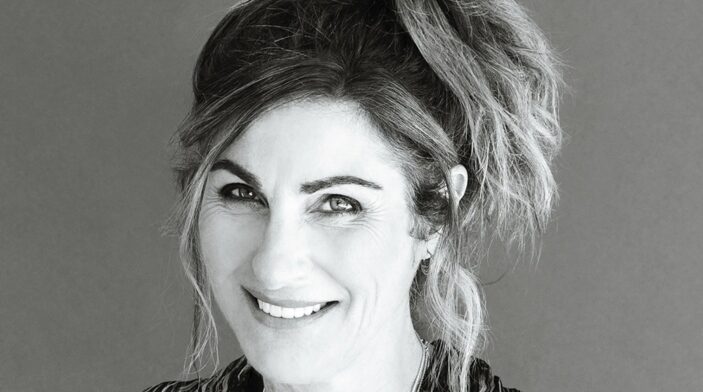
Bringing this inspired-by-a-true-story family film to life is director Kate Woods, who returns to feature filmmaking after a 25-year absence, having spent that time helming such television projects as All Saints, Agent of S.H.I.E.L.D., The Umbrella Academy, and The Lincoln Lawyer.
Speaking with our own Peter Gray in the lead up to the film’s release, Woods touched on the connective tissue between Kangaroo and her last film, Looking For Alibrandi, what struck her about this story, and collaborating with local indigenous communities to ensure an on-screen authenticity.
I spoke to the lovely Ryan Corr, and he’s a bit of a charmer, so I imagine it wouldn’t have been the worst thing directing him…
No, no, it wasn’t at all. He’s absolutely delightful. He did a brilliant job. He’s just as good with comedy and drama, and he’s fabulous at physical comedy. And it was a little bit of a reunion, because I worked with him when he was about 13-years-old on The Sleepover Club, so it was delightful to work with him. He did a beautiful job.
On the mention of previous work, you directed Looking For Alibrandi. There’s connective tissue with this film in belonging to family. Was that something you thought about? Or was it more something in hindsight?
It was something I recognised straight away. There is a lot of connective tissue between the two films. They are both about finding your home and being true to who you are. They’re both comedy/dramas, and they have a young person in it that’s starting this important part of their lives. I was immediately drawn to it. Not just because of that, but was certainly part of it. It’s my happy place.
And when you first encountered Chris Barns’s story, what was it that immediately struck for you, in terms of the cinematic nature of the story?
It was brought to me by StudioCanal as a pretty well-developed script, and it’s inspired by Chris’s story, but we made up details. The most important thing was it was an opportunity to show things were pretty iconic, but also have only been shown in one particular way for a long time, like the outback, It’s so often shown as something vast and empty, and (Kangaroo) was an opportunity to bring a more personal and close-up, intimate experience. That was probably the biggest drawcard for me.
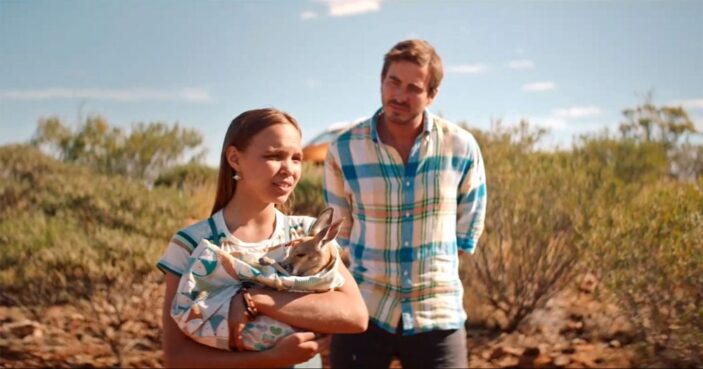
When you’re looking at the fictional town of Silver Gum, there’s very much a sense of place. When you were filming there, was the authenticity of its indigenous nature something you were conscious of?
It was everything. We created the town. There was nothing there, and the incredible production designer, Sam Hobbs and his team, brought that out of nothing. It was this derelict (place) of buildings, overgrown, and he chiseled the town out of it and painted it these beautiful colours. They made it such a welcoming place. I do love the face that instead of the usual image of a small town with the one street going through and shops either side, it was so different. It actually feels like it’s a part of nature.
You’ve worked across multiple genres as a director. Is there a sense of comfort in returning to comedy?
I think there was a challenge to it, because I didn’t want to keep repeating the same kind of story that we’d seen before. That was really important to me. I wanted it to be very joyful. We all need a bit of joy in our lives. I wanted people to feel good about the world, and certainly about their own country. I just wanted them to be proud of being Aussie.
Kangaroo is about care for animals, care across generations, care across cultures. Was that something that you consciously built into your direction?
I think it was very clearly part of the story. It’s about the healing nature of animals and being in a natural environment. That’s a huge part of the story. And I wanted that to come across as strongly as we could.
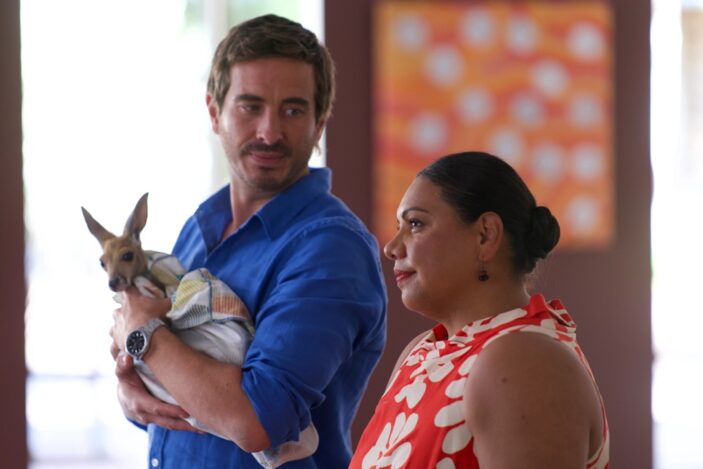
And you have Roger the kangaroo, already something of a viral star. How was it translating his presence into storytelling?
I knew it was going to be a challenge. They always say, “Don’t work with children and animals,” and here I am putting them together. And also, wild animals. Traumatised, wild animals that can’t be trained. But, as a storyteller, I wanted to be part of this, and I felt like I have certainly worked with many animals, and some more challenging than kangaroos, I have worked with emus, and lots of kids. And I love working with kids, and I particularly working with young people that are new to the game of acting. And Lily (Whiteley) did such a beautiful job. When she came along, we were just blown away. I’m so proud of what she did, because she holds the heart of this film, her and Ryan’s performance, they really are the heart of the film.
With everything that you’ve worked on, and finding your directional voice on a wealth of stories, coming back to feature films here, was there anything you learned about yourself as a director you hadn’t expected?
Oh yeah, every time you step out to do anything as a director, you learn every single day. I think that your voice changes with every part of the production. You think one thing with the script process, another with the production process, and then in the editing process, it all sort of changes. Slowly, but surely, you find your voice, mainly by listening to all the other voices – the actors, the writer, the crew, producers, everybody. Everybody has something to offer. I think a director’s main job is to listen and understand how all those voices can come together.
And with all of those voices, you have over 100 indigenous languages in the Northern Territory. How was it collaborating with local communities and cultural advisors during production?
We were mainly working with Aranda people, and the producers have made wonderful indigenous films, and they opened so many doors for us. There was a trust from the local community and elders, because of the integrity of those producers. It was an honour to be able to work with them. They let us film in very special places and welcome us into their country. Which is why (the film) looks so beautiful.
Kangaroo is screening in Australian theatres from September 18th, 2025.
