

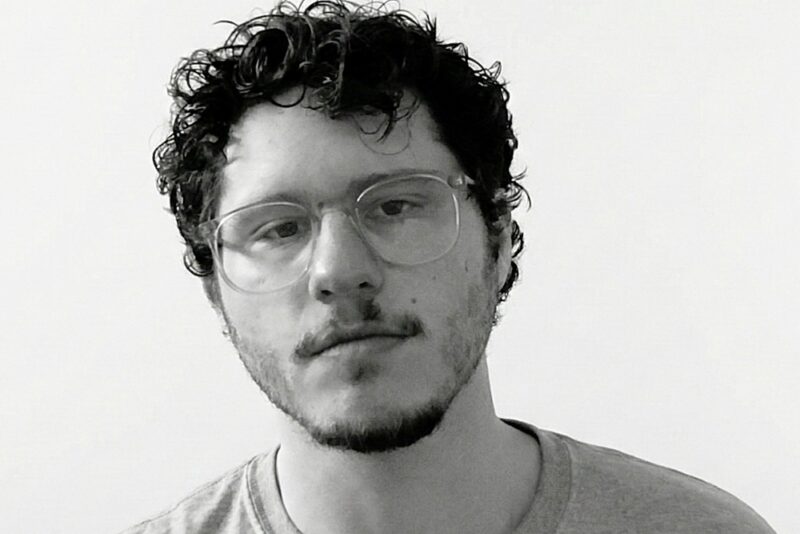
Lismore has long worn its floods as a badge of resilience – a town that rebuilds, again and again, along the banks of a river that refuses to be tamed. But in Floodland, director Jordan Giusti looks beyond the mythology of grit and endurance to ask a far more unsettling question: what happens when resilience isn’t enough?
Set in what’s often described as Australia’s most flood-prone postcode, Floodland immerses us in the lives of Lismore residents navigating the aftermath of the catastrophic 2022 floods. But Giusti’s film is not simply a disaster chronicle. Shot in an intimate cinéma vérité style over several years, it captures the slow, complicated collision between history, climate change, politics, love and identity. We meet Eli, whose evolving love story unfolds against the uncertainty of repeated deluge; we witness families reckoning with generational memory; and we hear from First Nations voices, including Dr Carlie Atkinson, whose perspective reframes the region’s colonial past and its uneasy present.
Rather than delivering a conventional climate exposé, Giusti allows the river – and the people who live alongside it – to speak. The result is a work that feels less like reportage and more like lived experience: immersive, human and quietly devastating. It’s a documentary that interrogates government response and policy failures, while never losing sight of the emotional stakes of home, belonging and survival.
Winner of the Sustainable Futures Award at the 2025 Sydney Film Festival – the world’s largest environmental film prize – Floodland announces Giusti as a filmmaker deeply attuned to both the political and the personal. In conversation with our Peter Gray, he reflects on the immense responsibility of documenting a community still in recovery, the unexpected spirituality of the river that shaped the project, and the small, tangible policy changes he hopes the film might inspire.
You chose a cinéma vérité approach. What did that allow you to capture that traditional news coverage couldn’t?
I think it creates intimacy. When someone is seated in a formal interview setup, they’re measured, they think through their answers and give you coherent information, but often without much emotion. With cinéma vérité, you film long enough that people forget the camera is there. They just exist in the space. That’s when you start to see what you couldn’t otherwise – unless you were living through it with them.
That immersion is very difficult to achieve in traditional journalism, especially with the time pressures of the news cycle. With documentary, I could spend three years observing and letting the story unfold without that urgency. That freedom is a real privilege, and it’s what made the process so special for me.
With that intimacy – was there a moment during production where you realised this wasn’t just about a flood, but about history colliding with climate change?
I went in with that conceptual interest. But what shifted everything was meeting the people living it. Before that, I had ideas about how to frame the history – perhaps in a more informational way. But then you meet someone whose childhood is marked by different floods across Lismore’s history. You meet Jensen, six-years-old, walking through ruins – and you realise this is his flood, just like earlier floods marked previous generations.
Seeing that cycle repeat in real time, that changed it for me. It moved from an idea to something embodied. We can read about these issues, but seeing what it looks like in someone’s life – that only comes from time spent with people.
And then you have Eli’s love story with Jess unfolding inside the catastrophe. Why was it important to frame climate disaster through romance and family, rather than only loss?
Even in the most disastrous circumstances, life goes on. There’s still hope – sometimes in the smallest things. Lismore felt so dire, but out of that came something positive. That contradiction felt deeply human.
Lismore itself is a contradiction. People talk about how much they love it, even as floods keep destroying their homes. Two truths existing at once. The love story captures that. It also shows Eli’s transformation. At first, he’s very individualistic – it’s just him, his house, his dog. But once he has a family, he starts thinking long-term. His perspective shifts.
It’s almost a coming-of-age story into adulthood – and seeing that unfold under such extreme circumstances was inspiring.
Did Eli teach you anything about courage?
He taught me something about fatherhood. When I met him, he was about the age I am now. Watching him move from independence into fatherhood, especially in that environment, was powerful. It shows the resilience of the human spirit. If someone can make it work under those conditions, that’s inspiring.
A story like this inevitably touches politics. Were you ever worried about how directly the film critiques government response?
If anything, I wanted to lean into it. These decisions, and the history behind them, shaped how severe it became. Criticism is how we improve. It’s like sharing a first draft of something and hoping someone says “no notes.” But there are always notes. There’s always room to improve. The critique in this film is in the spirit of doing better. Lismore can be a case study – especially for communities that haven’t yet experienced something like this. Addressing these issues beforehand would save money, hardship, and potentially lives.
There’s trauma here. How did you balance showing that without re-traumatising people?
It’s something we’re still navigating. Even Harper, for example, there were screenings he couldn’t attend because it was too hard. The only way to approach that is with respect. If someone says it’s too much, you leave it. You make it clear there’s no pressure. Some people found the process cathartic. Others stepped away because it was too painful. You just let them lead. It’s not for everyone – and you can’t force it.
When Dr Carlie Atkinson enters the story, First Nations knowledge shifts the perspective. How did that change your thinking?
I was aware of that history, but I knew it wasn’t my place to author it. When I met Carlie, she brought depth I wasn’t aware of. The story of settlers being warned not to build there – and doing so anyway – is crucial. It complicates the denial. There’s love of place, yes. But is there also something deeper – something about admitting past wrongs? When people act against what seems like their best interests, there’s often an emotional logic underneath. Carly’s presence opened that up.
It feels like the flood is haunted by both past and future. Did making this film change how you think about staying or leaving the places we love?
Definitely. There’s almost a sense of hauntology – like something unresolved hanging over the area. That resonates globally. Many places are grappling with histories they haven’t reconciled. There’s a pull toward nostalgia – toward a time we thought we were getting it right – and a pull toward confronting what still needs to change. The film made me think deeply about that tension.
Eli says, “You can’t fight the river forever.” That feels almost like wisdom. What responsibility do filmmakers have telling stories about communities still in danger?
It’s enormous. Almost overwhelming. There were many sleepless nights asking, “Am I doing this right?” Especially not being from Lismore, that responsibility felt heavy. But that weight keeps you honest. It keeps you grounded. And I was fortunate to have guidance – Carlie included – throughout the process. A film like this can’t be made alone.
After four years, was there one image or moment that stayed with you?
At a screening in Lismore, Carlie hosted a river ceremony. We were invited to go to the river and reflect. I unexpectedly broke down. I said, “This river changed my life.” Four years – all because of this body of water. It’s altered so many lives. There’s something powerful about that. Not in a mystical way, just in acknowledging that this river shapes lives in profound ways. That’s what’s stayed with me.
What does “home” mean to you now?
I still don’t have a simple answer. The film showed me how complex that idea is. Is home where you’re born? Where you belong? In Australia, that question carries history. On a personal level, much of my family arrived here as immigrants or refugees. So is this home? Or is it simply where I was born? The film made me realise the importance of asking that question – even if you don’t have the answer.
If this film could change one concrete thing, what would you want it to be?
A tangible policy change. For example, mandatory disclosure if a property is flood-affected. Right now, the onus is on buyers to find that information. If something as practical as that shifted, it would help people make informed decisions. The film won’t solve climate change. But small, real-world changes matter.
Floodland is screening in Australian theatres from February 26th, 2026.
