

Growing older has a way of revealing which friendships were chapters and which became part of the entire story. Or, as Forgotten Island co-director Januel Mercado rather wonderfully puts it, perhaps we’re not getting old so much as we’ve simply “been younger, longer.”
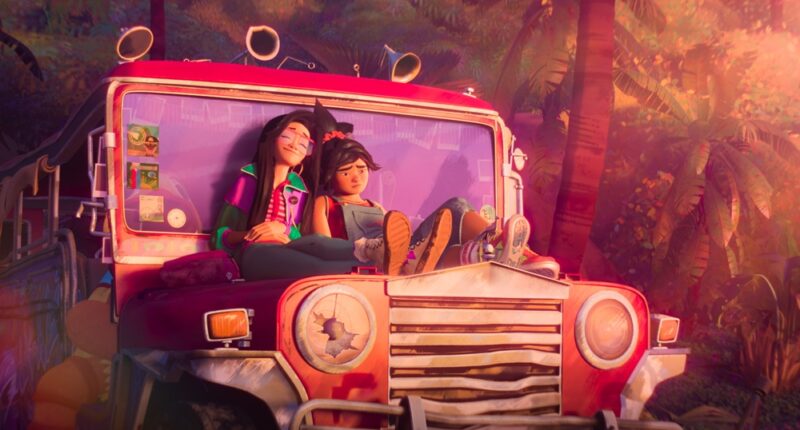
That perspective feels particularly fitting for DreamWorks Animation’s latest original adventure, a fantastical celebration of friendship, memory and the people who become embedded in the very DNA of who we are. Co-written and directed by Puss in Boots: The Last Wish filmmaker Joel Crawford and Mercado, Forgotten Island follows lifelong best friends Jo (H.E.R.) and Raissa (Liza Soberano) on the eve of their lives moving in separate directions. When a mysterious portal transports them to Nakali, an island populated by the magical and mythological creatures of their Filipino heritage, getting home comes with a devastating price: the memories of their friendship.
For Crawford and Mercado, those ideas of friendship and memory aren’t merely narrative devices. Drawing inspiration from the women in their lives, decades-long relationships and the memories of the artists surrounding them, the filmmakers approached Forgotten Island as something of a collective time capsule. Jokes, songs and seemingly incidental details emerged from conversations and recollections across the production, allowing something intensely personal to take on a universal quality.
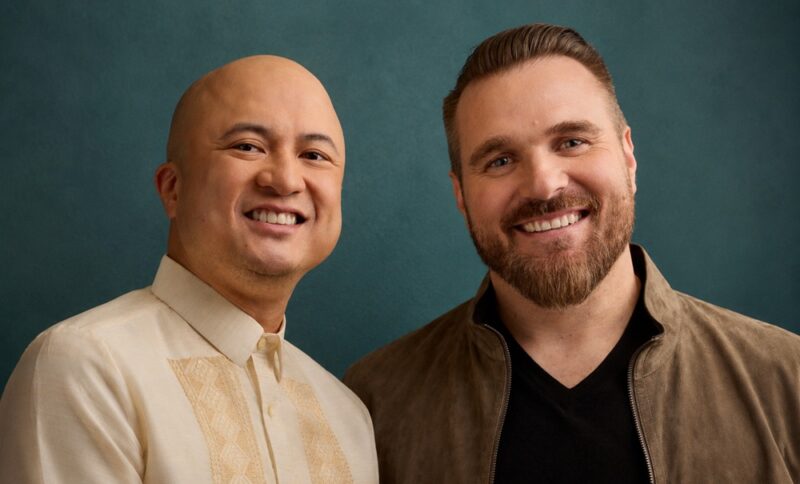
Speaking with our Peter Gray, Crawford and Mercado reflected on why they perhaps needed 40 years of living to tell this particular story, the friends who prove themselves to be “ride-or-dies,” how their own creative partnership mirrors the friendship at the heart of the film, and their deceptively simple hope for audiences when the credits roll: that they’ll want to call their best friend.
One thing you said, Januel, that really resonated with me, as a 40-year-old, was that we’re not old, we’ve just “been younger, longer.” I very much appreciated that. It made me wonder, with a story like this, do you both feel this is something you could have told in your 20s? Or did you need that perspective that comes from living a little more, and perhaps losing a few chapters of friendship along the way, to really tell this story and do it justice?
Januel Mercado: That’s a great question. I don’t know. Part of me thinks that, even as a young 20-year-old, you could still speak to friendship. But to your point, maybe there’s another, deeper level that you don’t understand until you’ve had those extra 20 years.
We’ve seen friends come and go, and you start to understand who your ride-or-die is, who’s still there and who remains in your life. That’s not to say people won’t come back, but I do feel like, at this particular moment in our lives, those 40 years probably give us some wisdom to draw from when exploring the more profound themes of the movie.
Joel Crawford: So much of the inspiration for this movie came from the strong women in our lives. My wife is Filipino and was born in the Philippines, and we’ve been married for over 20 years. If I went back 20 years, I still don’t think I would have been in a position to tell this story.
Like you said, it’s about your ride-or-die – who’s there with you. There’s something about not being old, but having experienced life as a young person for a while, that allows you to reflect and realise just how special certain people and moments were.
So much of this movie is about the meaningful people in your life, the moments they create, how those moments become memories, and how those memories become part of the DNA of who you are today. I have to say, there’s no way I could have told this story about those people if it wasn’t today.
I feel like music and movies are very closely tied to memory. We obviously get a nice little “Who Let the Dogs Out” mention in this. How many jokes or references in this film are pulled directly from your own conversations over the years?
Januel Mercado: Oh, many. And not just our conversations with each other, but with our loved ones, our family and friends, and the crew. It really was this multi-level experience of other people’s experiences combining into something that feels very specific because it comes from our own interactions, but also very universal. Ultimately, it’s about the people you love and the community you build together. So, yeah, a lot of it came from that.
Joel Crawford: And so much of our filmmaking style is spontaneous. We wrote the script, but as with The Croods and Puss in Boots: The Last Wish, we treat the film as this evolving thing. We know what it’s about, but the end result is shaped by the crew and cast we make it with.
Like Januel was saying, there are so many moments in the movie, or even songs, that came from a storyboard artist pulling from something they remembered from the ’90s that made them laugh. What’s beautiful about that is these movies become a kind of time capsule, not only for us making them, but hopefully for the audience too. When people are sitting together in a theatre, there are sights, sounds and music that can transport them back to a nostalgic place.
It’s been really exciting to create a story about the importance of memories and to celebrate them. Tonally, whether we’re moving from comedy to drama, we’ve tried to take every opportunity to showcase that throughout the movie.
I actually had a question about time capsules, because in this film, the time capsule is your friendship. Looking at Forgotten Island, what do you hope survives even if the memories don’t?
Januel Mercado: Another amazing question. Yeah, I think it’s maybe that feeling you get from a movie you love, where you’re still thinking about it afterwards. You’re asking yourself, “What was the message? What is this movie saying to me? Why can’t I shake it?”
