

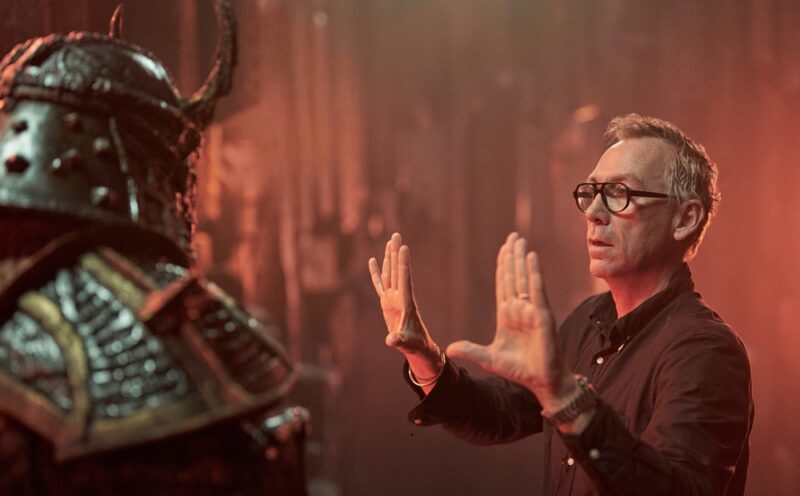
As Earthrealm prepares for its most brutal battle yet in Mortal Kombat II, director Simon McQuoid returns with a sequel determined to go bigger, bloodier and far more ambitious than its predecessor. Bringing the long-awaited tournament to the screen, the film introduces Karl Urban’s swaggering Johnny Cage into a sprawling war against Shao Kahn, while expanding the mythology, emotional stakes and fan-favourite roster of the iconic gaming franchise.
Ahead of the film’s release, our Peter Gray sat down with McQuoid following the Gold Coast premiere screening about balancing spectacle with emotional grounding, why Kitana became the heart of the story, finding the right tone for Johnny Cage, and how he approached creating a sense of “wonder” within a universe built on violence, fatalities and chaos.
The original Mortal Kombat movies are “guilty pleasure” movies for some people. For you, is there a movie that you find a similar pleasure in?
Guilty does suggest that I think there’s something inherently wrong with it, and I tend to not look at films like that. I guess the closest thing to a guilty pleasure for me, when I was in post (production) on both films, it’s so labor intensive, and you’re thinking about story all the time. It’s quite full on. What got me through was watching episodes of The Great British Bake Off. There’s nothing guilty about that, it’s a great show, but that’s as close to that as I would get. I watch reruns of TV shows, like The Thick of It, because that, to me, I love that sort of comedic quality.
I know that you said that you wanted the tone of Mortal Kombat II to hold the audience in a sense of wonder. What does “wonder” look like in a world that’s so violent and blood-soaked?
Well, I think everything starts for me with, “How do I make the audience believe in this world, in these characters, in this story, in these relationships, so that they will go on that journey with you?” That’s where it starts. It’s sort of genre agnostic in that it’s the fundamental first thought with everything. Whether it’s costume or who the actor will be, or what the world production design looks like. A lot of the conversations that I had with Yohei Taneda, the production designer, was all about, “I need these places we go to feel like there’s a society and a history and a detail here,” so that we feel like that even though we’re visiting them for a small moment, there’s the sense that there’s a history of centuries before and after.
Well, going off the sense of characters, we obviously have Karl Urban joining the fold as Johnny Cage. He’s such a loveable character, but it’s very easy for his personality to play too broadly. How did you find that key to making him funny without feeling like he’s wandered in from a different movie altogether?
We talked about that a lot, and I think it was by giving him a very specific, very clear journey from being this dispirited, you know, at the lowest ebb of his career, so that he had somewhere to go. We could watch that journey take place through the film. Once you’re grounded in a sense of realism like that, which is a very truthful emotion (and) something we all understand, it then was really about getting very truthful emotions and character journeys so that we could connect with them. And even Kitana was the same with her revenge tale.
We set the movie off that way, and it’s like, you’re locked in. So, then what? Once we had that with Johnny, it was a map. It was about finding the actor who knew where the comedy was. How to make sure it didn’t get too broad, but stayed strong and clear. Karl was just so perfect for it. He does that so well. I mean, his role in Star Trek was a great example. He’s very good with comedy, but he also has the other facets to him where he can add the layers and the depth of a truthful character.
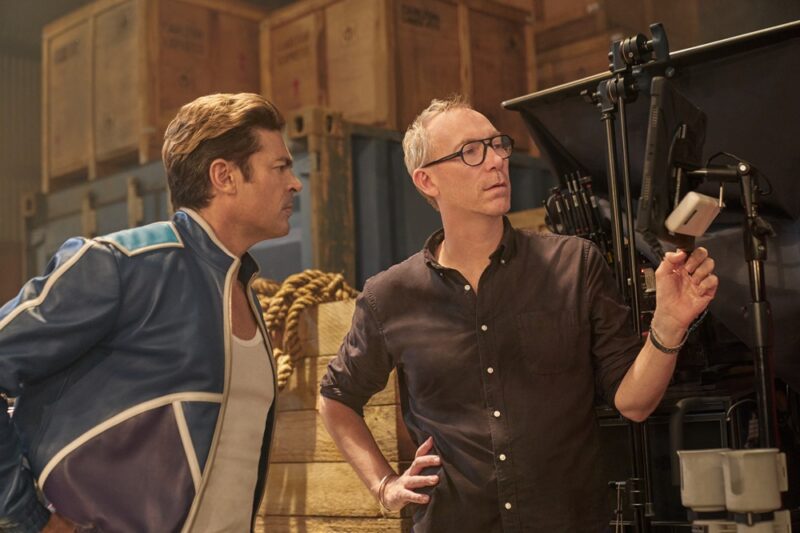
Mentioning Kitana, she’s more the emotional centre of the film. Who made that decision in her being the character to offset Johnny’s comedic, fallen star?
That was my decision. It came about because we wanted to up the female representation. Her story in the Mortal Kombat lore is a very powerful one, and a very clear one. The emotion and the heart in the film was really important to me. It couldn’t just be all funny jokes – of which there are many, and I love that – but there needed to be some other facets of emotion that go with it in grounding the film. By setting up Kitana’s backstory in a very tragic tale that fuels her revenge, I think it gives the story some substance. I wanted it to feel like those emotions had depth and authenticity. What better way to do it than with her story?
Well, there’s such dense mythology across the games. How do you decide what needs explanation for newcomers? And what you can just trust with the fans?
It was really deciding what the key elements were that did two things at once. I analyzed elements of the Mortal Kombat history and lore, and had to make sure that it’s clear that this won’t trip anyone up if you haven’t seen it, whilst giving the fans what they were hoping for. Like I said about the character journeys, they’re all clear, truthful human journeys.
If that’s the core of it, all of the stuff doesn’t get in the way of a newcomer understanding what’s going on. Jade’s costume, for example, is layered with the different eras of her costume. If you look carefully there’s design elements of all her costumes over the years, and putting that in is the type of thing a super fan is going to love, right? But someone new is not necessarily going to see that, but that doesn’t stop them enjoying Jade’s story. It was a constant process of discussions.
Mortal Kombat II is now screening in Australian theatres, before opening in the United States on May 8th, 2026.
