
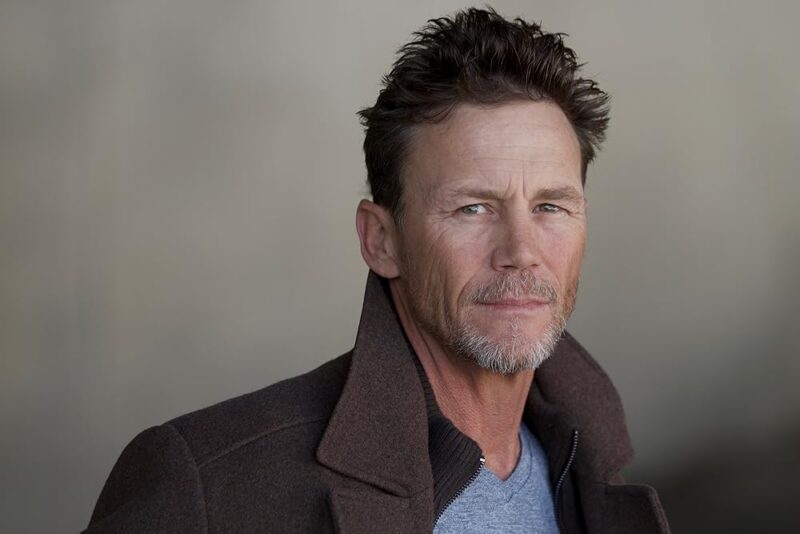
From the tropical shores of the Blue Lagoon to Stephen King’s vampiric world in Sleepwalkers, Brian Krause has indulged in a plethora of genres across his varied career, but there’ll always be one role synonymous with his name – that of Leo the white lighter in The WB’s long running fantasy series, Charmed.
As the fan-favourite actor attends the Supanova Comic Con & Gaming convention in Brisbane (November 7th – 9th), our own Peter Gray spoke with him about how he has seen the craft of acting shift since his beginnings, the importance of Charmed and its enduring legacy, and how it has felt to rewatch the show all these years later.
Obviously so many people know you as Leo from Charmed, but my introduction to Brian Krause was watching Sleepwalkers when I was far too young. But everybody has their introduction to you. At conventions, is there a project of yours that surprises you that people know you from?
There’s definitely a Sleepwalkers crowd. Every once in a while someone will pull up some random sci-fi movie that I did. You know, one of those bad, “save the world” kind of things, and they’ll have it on DVD. They’ll tell me they love it, and I’m like, “Wow, I was hoping nobody saw that.” (Laughs).
Going back to when you were with the Actor’s Workshop where you trained, was there something from that training that clicked with you when you were first on a film set? A moment where you realised, “Oh, this is what they were preparing me for?”
Yeah, a lot of what my coach (said), RJ Adams, he’s since passed, but his school was pretty much just about being real and being natural. Listening is the key, and that’ll kind of lead you to everything. I think when I first got on the first few sets, and I was watching the regulars, and I only had a line or two, they were doing that. Everyone else has their process. But at the end of the day, when you roll camera, you have to listen and react in a way. So I think that’s what it took. I still took that with me, even today.
When you started out, it was all pre-digital, where it was auditions and tapes, and networking was analogue. How did that shape your resilience and your relationship with the craft compared to how you see actors work today?
It’s very different. You know, now you don’t go into a room. You self tape at home and send it in. But when I was first starting out, the late 80s and early 90s, we would sneak on to the studio lots with a backpack full of pictures and resumes, and find out where the casting directors are, and then just walk into their room. “Hey, I don’t want to bother you…” and just place your pictures. You would just go around in all the casting offices. That was the hustle. I never got a job that way, but I met a lot of casting directors that eventually brought me back in. You know, sitting in the room, in the hallway, and you see there’s 10 other actors going for (the same role), and you’re all sitting together. It felt a bit more competitive where you had to feel like, “I’m going to win the room.” And that’s what’s changed. You used to walk into the room, there’s five or six people, and you can’t be nervous. You almost had to be a salesman. I think that’s what prepared me. At the time I was a Bellman at a hotel, so I was constantly walking into a room and I didn’t know what I was going to get on the other side. Is this a couple fighting? Are they happy? I had to change their day, in a way, and so that helped me go into the room for acting. I struggle with self tape, because I’m sitting at home. It doesn’t have the same energy.
With Leo, I guess you would say in Charmed, he was not the showiest or flashiest character. He was this calm centre in all the chaos. As an actor, how do you keep the quiet roles so interesting and so investing without repeating the same emotional beats over so many years?
So much of it was just listening and paying attention to Holly (Marie Combs), who I had the most scenes with. She’s so good. I just kind of followed the leader on that one. I made a decision at the very beginning when I found out I was a white lighter, and they explained it to me, and I said, “Alright, what would a guardian angel be? He’d be pretty calm, right?” A pacifist. Rational. Maybe a bit boring, but that was the role.
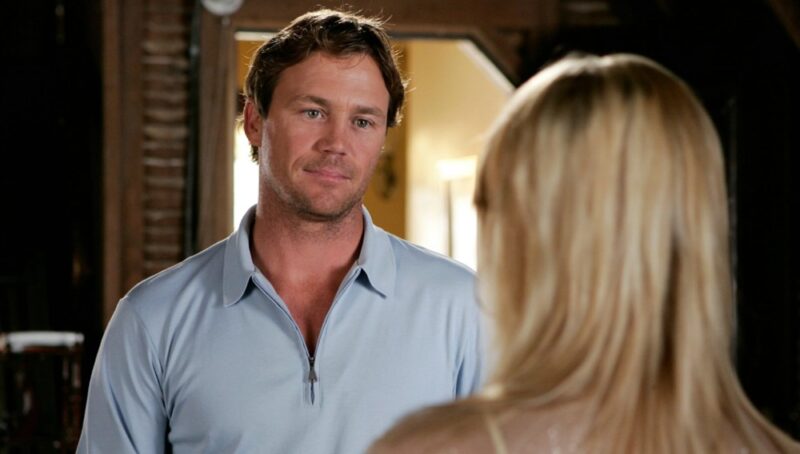
Playing someone for almost a decade, that feels quite rare to have that sort of role. Was there a point where you started to influence how Leo was written? Where you noticed your own personality or worldview seep into the character?
I think the writers all got to know us fairly well, and I think they started writing for us. I always try to…I mean, it’s me, right? I’m not Daniel Day-Lewis here, you know what I mean? You have to allow yourself to come through the work. But I think we got to change every week. I was pregnant. I became an elder. I became a gladiator. It was never always the same. It’s not like being on ER, where you’re just a doctor every week doing a doctor thing, you know? That was the beauty of Charmed, that we got to become so many different things. We were just watching (the show) the other day where Holly becomes the Fury, and it’s like, “Wow, you got to transform,” it’s just this kind of alternate character. It was always staying fresh for us.
In re-watching the show, and looking at Leo, does it feel like a different person? Is it one of things where you’re so detached from it now? Or do you have notes for your younger self?
I mean, I’ve definitely developed my craft more since then, obviously. It’s hard to watch myself in anything, and if you’ve listened in the podcast (“The House of Halliwell”) you’ll hear me say it all the time. It’s hard to separate myself and watch it objectively. I’ve watched a lot of the movies and TV I’m in, and I’m no Matt Damon, you know? But watching myself I’m looking at myself, not Leo. It’s harder to get into the story. But now that we’re doing this podcast, I just kind of dive into it. Watching the girls and the guest stars, I’m into that.
It really is crazy to look at the amount of people that guest starred on Charmed. You go back and watch and there’s Melissa George, and Amy Adams, and John Cho. And I think people forget just how much of an event Charmed was when it was one. It bred so much talent and it became so important to so many people. Was there a moment during whichever season, or as the show just kept going, where you started to notice how impactful it was?
I don’t think we really saw that. A couple seasons in I started to get recognised on the street, but I don’t think we started feeling or getting to know (the impact) until we started doing these conventions. You know, going out and actually sitting and meeting the fans, and getting to talk to different people for a few minutes at the time, telling us what it meant and why they watched it, or that it was their comfort show, or whatever it might be. So doing the conventions has really given us an insight. To hear the impact that it made on so many lives is a blessing, because, as an artist, you’re always hoping what you’re putting out is (meaningful). We watch TV to escape the real world. We help people do that. And (Charmed) is still on today helping people escape. It’s amazing.
As Charmed is a comfort show for so many people, is there a show for you that’s your escape?
I watch more movies. I don’t necessarily watch many TV shows. If I hear something’s really good I’ll stream it, but I’ve watched Ancient Aliens (laughs). It’s on every night. It’s how I go to bed. It’s fascinating. That’s my go-to.
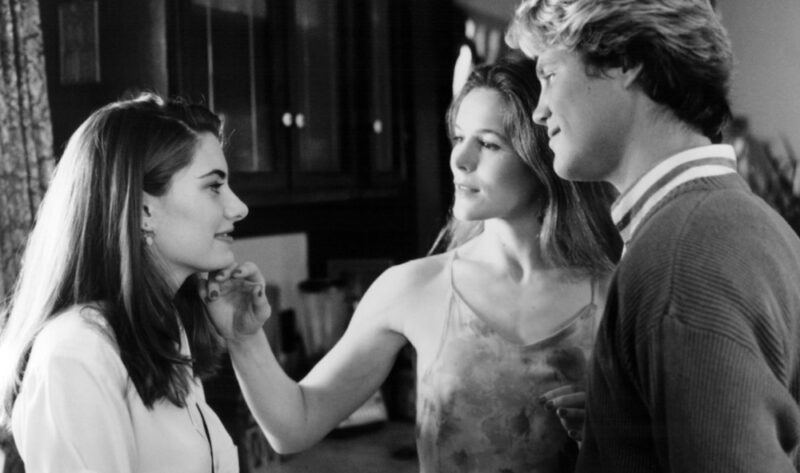
And you’ve acted across so many different areas. Network TV, cable, YouTube, video games. What’s the most profound way that the language of performance has changed for you across those mediums?
I think in TV, when you’re playing beats for the audience, I never really change the lines. They’re very specific, because whoever wrote it, it’s got to get approved by the network and the higher-ups, you know? It’s all been cleared. So you have to say it exactly like that, because it’s been done by a corporation. That’s the beauty of getting on an independent film, perhaps you can rewrite scenes, because we’re doing it on the spot. This is what feels right. Let’s try this. Let’s try that. There seems to be a bit more freedom in film. Maybe not when you’re getting into the big studio arena, because, again, that’s all cleared and corporate, and what have you. But the independent film world seems to have a little more freedom. And it wasn’t always that way. Independent films have really taken off over the last 25, 30 years. You don’t need a million dollars to make a movie anymore.
There’s been so many conversations in the last few years regarding men’s mental health and toxic masculinity, and I feel like Leo represented a male gentleness and healing in a way that, looking back, was probably quit rare for shows in the 90s. Do you think of that as because of the character? Or is more because of what Leo represented?
I think it’s what he represented. I didn’t grow up very religious, but I went to youth groups and things like that, and I had a neighbour who was a pastor, and he was Leo. He was calm and said the right thin all the time. There were a few people in my life that were like that. They were godly, I suppose. I kind of pulled Leo from some of the different people I’ve met who are in that field, or some Zen masters I had met that are like, “Hey, we don’t get excited here. Don’t lose your cool. I’ll go check with the elders.”
I assume people approach you and tell you what Leo meant to them. He was a protector, a healer, a partner. When you think about Leo now, is there a part of him that healed you in any way?
I had a young child at the time, and I was glad I was the one giving the good moral message. “Do the right thing,” and the good thing will work out right. There was a part of me that Leo helped, because he would always stay so calm. When you keep saying it over and over, it’s like, “Oh, am I becoming more moral?”
And looking back, obviously there’s Charmed, but I know you’ve done some documentary filmmaking too, is there a throughline for you? Is there one question about people or life that you’re trying to answer through your work?
No, I don’t think so. I just did a movie where I play Santa Clause. Last year I was in this Kevin Hart movie, and I played a meth addict former cop. I love doing different. As far as going into it and having what I want to put on, I’m not a celebrity, right? I don’t get offers like Leo (DiCaprio) and get to choose what I want to do. I still audition. Offers do come in for a few different things, but I like to make sure that if I’m playing the bad guy, it’s not too bad a of a guy, right? Maybe he’s a bit villainous, but I don’t want to be the racist. I don’t want to be demeaning people on TV, even if it’s written well. I don’t know if I’m that guy. There’s someone out there that wants to do that, and they’re probably good at it, but I try to look for someone that has a telling story and a good moral message. That’s what I like to do.
Well that does feel very Zen master of you. But as I was speaking to Holly, she was saying that with Shannen’s (Doherty) passing, she had to have a break from watching the show, but now she’s picking it back up and really able to enjoy the show and watch it for what it was. The fact that everybody loved it so much, and it really was a show that meant so much to me growing up, so it’s amazing it has this longevity and that it’s this beacon of greatness. It’s still here and being spoken about. So, thank you so much.
It’s a testament to the women, right? Holly, Shannen, Alyssa (Milano), Rose (McGowan). They’re really talented. They put so much into it and the story lines. It’s okay to be different. I think the storylines hold up today. I think the healing for Holly (was) definitely doing the conventions and hearing from the fans, you know? And Shannen loved going out there and meeting the fans. She was so generous. I think Holly wants to carry that torch. It’s not easy. But having Drew (Fuller) and I there with her is helpful, as well. It’s been a shocking last year, for sure. Both her and Julian (McMahon). Just too young.
Supanova Expo Pty Ltd has delivered 100+ events and counting across Australia, beginning in Sydney in 2002, providing bespoke intimate events all the way to multi-day consumer expos showcasing sci-fi, fantasy, comics, anime, gaming, cosplay and much more. Run by a diverse and passionate team of professionals, Supanova is held annually in Sydney, Melbourne, Brisbane, Perth, Adelaide, and the Gold Coast, and is Australia’s longest-running, leading, and largest event of its kind. For more information and tickets, head to the official site here.
