

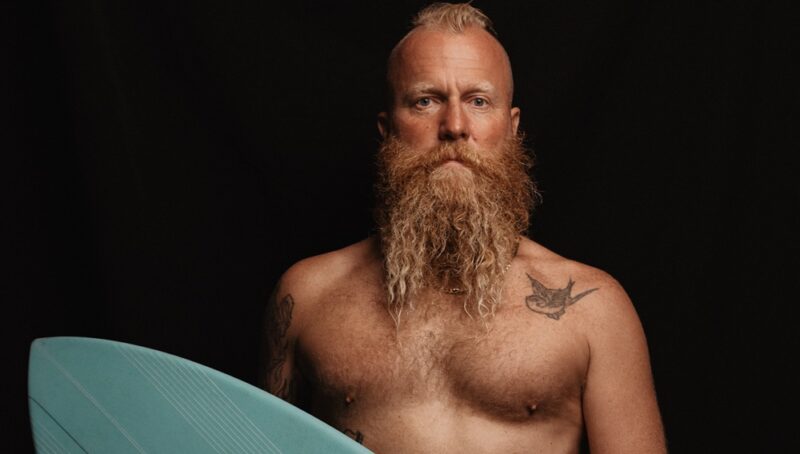
Endurance stories are often framed around the finish line – the record broken, the impossible conquered. But In Pieces Together reframes that idea entirely. What begins as Blake Johnston’s attempt to break the world record for the longest continuous surf – a gruelling 40-hour effort – quickly reveals itself to be something far more profound. Undertaken in honour of the 10-year anniversary of his father’s death by suicide, the challenge becomes less about physical limits and more about emotional survival, connection, and healing.
Directed by Macario de Souza, the film expands beyond Johnston’s solitary feat, weaving in voices from across Australia – from athletes and media figures to mental health advocates – all united by a shared mission: to break down the silence surrounding mental health, particularly among men. What emerges is not just a portrait of endurance, but a deeply human story about vulnerability, community, and the quiet power of showing up for one another.
When our Peter Gray spoke to Johnston, it’s clear the waves were only ever part of the story. What lingers most from In Pieces Together isn’t the record attempt itself, but the emotional undercurrent beneath it – the battles we don’t see, the conversations we avoid, and the small, often difficult steps it takes to reach out. For Johnston, the hope is simple but urgent: that this story might spark even the smallest ripple – a conversation, a moment of honesty, a reminder that no one is as alone as they might feel.
First of all, congratulations on the film. I went in not knowing much, and as someone who’s struggled with mental health myself, it was a really powerful watch. There’s something almost cathartic about it – seeing that so many people go through this, and that there is a way through it. So, genuinely, thank you.
Thank you, I really appreciate that. It means a lot to hear.
You were out there surfing for 40 hours – was there a moment where the physical challenge dropped away and it became something more emotional or even spiritual for you?
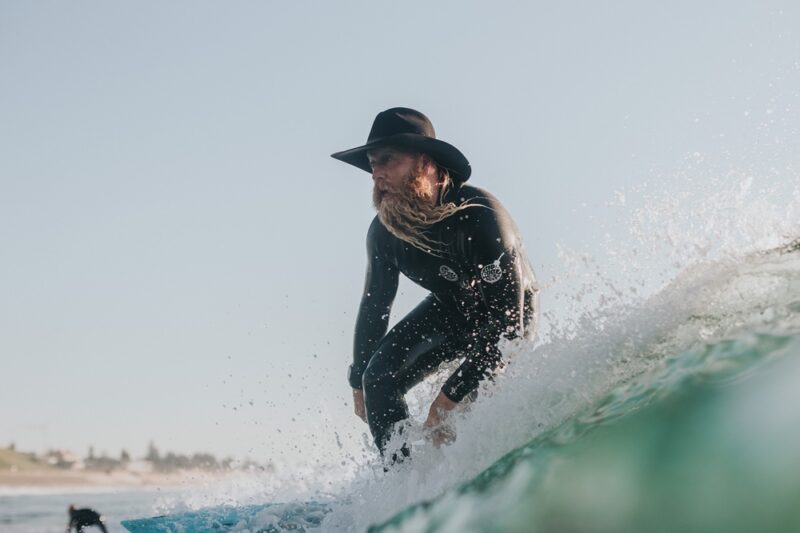
Absolutely. I’ve always been quite emotional, so I went through the full range – frustration, anger, loneliness, even feeling misunderstood. It really became a mental battle. Physically, I knew I could get through it, but emotionally, you’re pushed to your limits. It’s like life compressed into two days – you’re just moving through those emotions and learning from them.
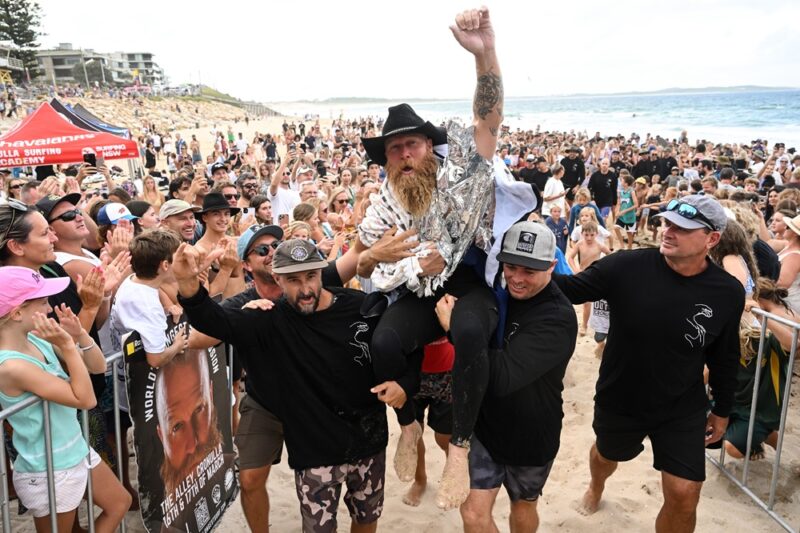
I did a 100km Oxfam walk a few years ago without sleep, and it’s wild what your body can do. Watching that moment near the end, when your mate joined you and you seemed to get that second wind – I completely understood that feeling.
Exactly. We move through pain – physical and emotional – and come out the other side. The body adapts in ways we don’t give it credit for, and that reflects how we handle emotions too.
There’s a version of this story where people only see the achievement. What’s the part of the experience people don’t see – or wouldn’t understand unless they’ve been through it themselves?
It’s the internal battle. Everyone has their own challenges, and this just makes that visible. You can either get stuck in those hard moments or trust the process and learn from them. That’s where the real growth is.
When did you realise you trusted Macario enough to tell this story so openly?
I was always going to be honest – I’ve got nothing to hide. But with him, I could tell he genuinely wanted to learn and grow through the process too. That made it feel right.
Were there ever moments where you hesitated, or disagreed on how something should be portrayed?
No – for me, it had to be completely open. That’s the whole point. If sharing my story helps people start conversations or see themselves in it, then that’s the gift.
A lot of this connects to that broader idea – especially for men – of being told to “just handle things on your own.” Why do you think that’s still so hard to break?
Those conversations just haven’t happened enough. Vulnerability has been seen as weakness, especially for men. But the truth is, we don’t thrive without connection and support. Not everyone is wired to open up easily, so it’s about showing – through action – that vulnerability is actually strength.
Even something as simple as “reach out” can feel impossible in the moment. So what does that actually look like to you when you’re in that headspace?
That first step is the hardest – taking any action at all. It doesn’t have to be big. It can be as simple as saying, “Something’s not right.” If you leave it too long, it becomes part of your identity and harder to break. But that small step is what builds momentum.
It does feel like we’re moving forward – these conversations are more open than they were 10 or 20 years ago. And films like this help, because they show that even people who seem strong have struggled too. It reminds people they’re not alone.
Exactly. People feel shame and guilt when they’re struggling, like they’re not enough. But it’s the opposite – we find value through connection, through being part of something bigger than ourselves.
Finally, if this film creates a ripple effect, what’s the first ripple you hope to see?
I want people to take action – to realise their self-worth and the impact they already have on the people around them. If they can live better for themselves and lead by example, that’s where real change happens.
In Pieces Together will premiere on Fox Sports available on Kayo Sports and Foxtel, as well as BINGE, at 8.30pm AEST on May 13th.
