
There’s a moment early in Finding Emily where sensitive musician Owen locks eyes with a stranger across a crowded student union, and suddenly the world feels charged with possibility. It’s a feeling director Alicia MacDonald spends the entirety of her warm, witty and deeply heartfelt romantic comedy chasing – that intoxicating blur between adolescence and adulthood where every decision feels life-altering, every crush feels mythic, and the future arrives with equal parts excitement and dread.
Produced by Working Title Films, the film follows Owen (Spike Fearn) as he desperately tries to reconnect with a girl he met during one unforgettable night, only to accidentally spiral into a campus-wide frenzy alongside cynical psychology student Emily (Angourie Rice). While the setup recalls the grand romantic gestures of beloved classics like When Harry Met Sally… and 10 Things I Hate About You, MacDonald uses that familiar framework to explore something more existential: the panic of becoming a person in a hyper-online generation constantly performing versions of themselves.
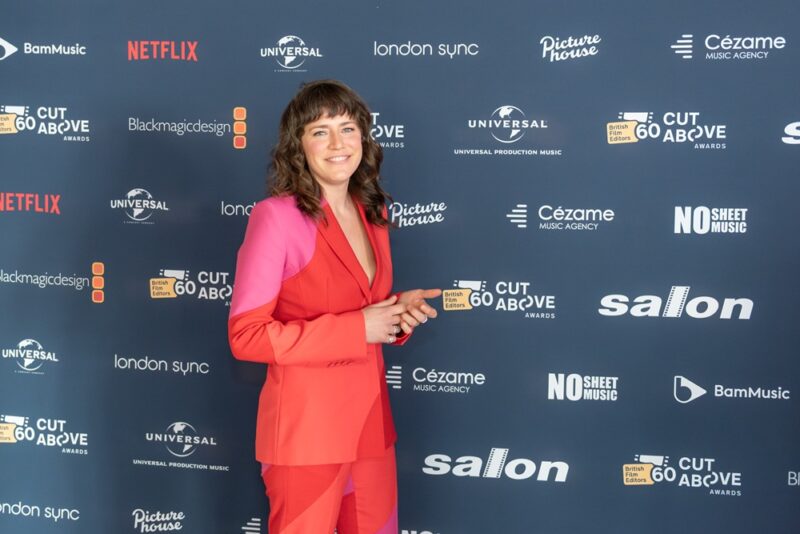
When our Peter Gray spoke with MacDonald ahead of the film’s national release, they talked about directing rhythm like a piece of music, the lack of university-set coming-of-age films, romantic optimism in cynical times, and why she refused to punish her messy, confused characters for simply trying to connect. The result is a conversation as thoughtful, funny and emotionally open-hearted as the film itself.
I’m a massive romantic comedy fan, and I was reading that When Harry Met Sally… and His Girl Friday were very specific references for you. Obviously those films are built on rhythm and verbal sparring. How much of directing this film was actually about directing tempo?
Yeah, there was a huge amount to that, especially once we got to the edit. The rhythm of the edit was really important to me, and we spent a lot of time shaping a real energy between the characters. A lot of that was already there as well, because I would always do a take where we went a bit faster – not for the sake of it, but to make it feel like they were both sort of rumbling over their words and trying to get everything out. That, combined with the rhythm of the edit, was a hugely conscious decision.
I think the music played a massive part in holding the whole film together too. I wanted it to feel like, sonically, it had you the entire time. Even in the edit, my editor Phil (Hignett) was amazing because we’d have conversations about whether it was too much to have the action in time with the music. For example, there’s a moment with Phil Wang, who plays Pervy Martin in the student union scene, where he does this little gesture to Owen when he says, “I’ve got my eyes on you,” and it’s perfectly in time with the music – it lands right on the beat of the New Order track.
There were loads of little moments like that, and I just find them so satisfying to watch. When those tiny beats line up, it feels like someone’s really in control of the rhythm and momentum of the film. So yeah, it was a very conscious decision to build that sense of rhythm throughout.
Talking about the music, I feel like there are certain songs that remind us of a certain time, and the fact that this is set at a very poignant time in many people’s lives – the beginning of adulthood – but this film seems more interested in the panic of becoming a person. Was that existential uncertainty always central to the story for you?
It was, 100%. I actually went back over my initial pitch document to Working Title when I was first pitching the script, and that was a huge thing for me. I think the specific phrase I used was being “stuck between the rock of adolescence and the hard place of adulthood”. It’s such an interesting space to be in because you’re not really a grown-up, but you’re not a kid either. You’re away from home, probably working some random job at an art gallery around the corner, drinking too much, eating terribly, and making really bad romantic decisions. It’s such a riotous time in your life.
I also found it interesting because there really aren’t that many films about that stage of life. There’s so much high school stuff, but not much about university. I remember actively looking for films in that space and finding Starter for 10, which was set at Bristol University, but that came out in, like, 2007. James McAvoy was amazing in it, but I remember thinking, “Why aren’t there more films about this?” It feels like such rich territory to explore.
And with Emily, I really wanted to capture that feeling of wondering what you’re going to do after graduation. Graduation itself feels so intense because suddenly it’s all over, and you have no idea what’s waiting on the other side. So existentially, that was a huge part of it for me.
I love that Owen’s quest starts out as this very classic 90s romantic comedy fantasy. But the film seems deeply aware of how self-conscious and hyper-analytical young people have become. Do you think the generation struggles to surrender to emotion? It feels like everyone is constantly narrativizing themselves…
I don’t know. I wouldn’t really want to generalise, because I think that’s usually when things go wrong – when people say, “Oh, Gen Z are all on their phones and they can’t feel anything.” I don’t really believe that. Knowing Spike and Angourie, and the rest of the cast as well, they’re all genuinely very open-hearted, emotional people. I think there’s definitely an awareness that they live online and that there’s a performative aspect to that generation sometimes, but I also think a lot of them are deeply romantic. That’s definitely what I found, anyway.
The missing digit setup almost feels mythological now, because we live in this era where people can just find someone instantly online. Was part of the appeal exploring what happens when mystery re-enters modern dating?
Yeah, yeah. I think what really struck me was how rare it felt. Even though I put a lot of tech and social media nods into the story, there was still something incredibly nostalgic about meeting someone in real life – like meeting someone on a night out – and then having no real way to find them afterwards.
There was also this panic around how you actually track someone down, and that became really interesting to me. In the initial script, I felt like there was something quite gnarly at the centre of it all – almost a political or satirical element about what it means to be romantic in this day and age. Is he a creep? Is he a hopeless romantic? Holding those ideas up to the light felt really fascinating to explore.
And then, like you said, there’s also that mystery of trying to find someone. Maybe I didn’t fully realise it at the time, but that emotional pull became a huge part of the story for me.
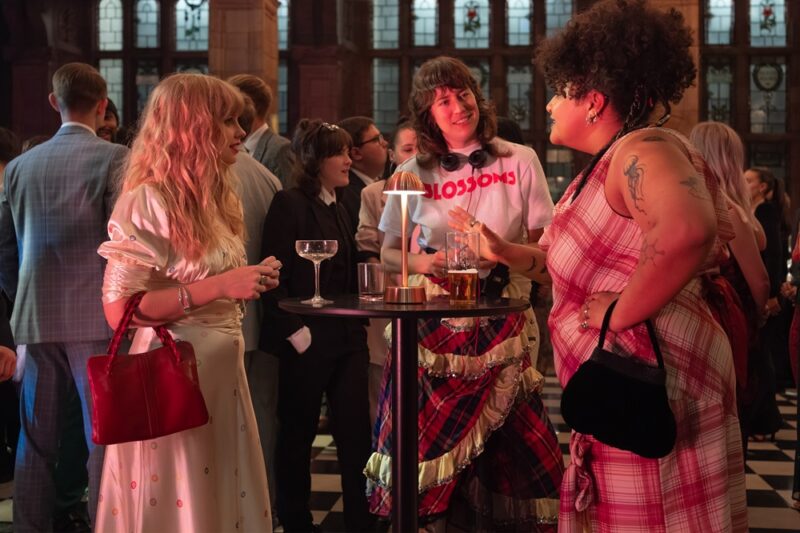
It’s so nice to watch a romantic comedy on the big screen. It’s where these films deserve to be seen. You said that When Harry Met Sally… was an inspiration, and I think One Fine Day is one of the ultimates of the genre, but it has me wondering about romantic comedy couples. Angourie and Spike have that instant chemistry, and we know they’re going to get together, but do you think – in the history of the genre – there’s a couple that would still be together?
(Laughs) Oh my God, I would love for Heath Ledger and Julia Stiles’ characters at the end of 10 Things I Hate About You to still be together. Obviously Heath’s gone now, but in terms of their story, it just felt like such a great connection. By the end of the film, they really seemed to understand each other. And then there’s When Harry Met Sally… – are they still together? I honestly don’t know.
I’d like to think Harry and Sally are endgame, surely…
It would be awful if they weren’t.
And I read in the press notes about you saying that you wanted to reassert some faith in human connection. That feels so radical now. Do you think audiences are craving optimism again in films?
I mean, I certainly am. In the end, I felt like all you can really do is make something that you’d want to see yourself. I want my soul to be stirred. I want to feel something, whether that’s real sadness or joy – I just want to feel something. And I think optimism is really important right now. We all know the world is complicated, at best, but sitting in audiences with this film now and hearing people laugh together has been really special.
I don’t know the exact psychological reasons behind it, but we know that shared laughter is good for us. It’s galvanising. It sends you back out into the world feeling different than you would after watching something completely grim. So yeah, I do think it’s time for stories that are positive and hopeful. Maybe they’ll even encourage people to try and do a bit of good in their own lives – or, at the very least, finally tell the person they like that they actually like them.
One thing I found really interesting in the film was that it doesn’t punish its characters for being messy and confused and contradictory. Before I go, was compassion important to your approach to comedy here?
It really was, actually. Rachel Hirons (writer) and I worked really closely on the script, but there were certain moments I specifically wanted to add in – things like the car singing scene with his (Owen’s) brother, or the dancing scenes with Anna.
With Emily and Anna especially, I really wanted them to have their people. I wanted them to have people who cared for them, looked after them, and could pull them out of their sadness.
And yeah, like you said, I didn’t want to punish my characters. I know a lot of scriptwriting books say you should, but I honestly feel like people punish themselves enough already. We’re all psychologically so hard on ourselves. He’s mean to himself, she’s mean to herself – that already exists within them. So it was really important to me that they also had people around them who were looking out for them.
Well, I’m very appreciative that we have people here that are ultimately good to each other. It’s such a nice film to settle into and escape from whatever the hell is going on in the world right now. Watching a movie in a theatre, laughing with other people, watching two people fall in love – it’s just so sweet. I laughed a lot. Minnie Driver is the best. So, thank you so much for taking the time out.
Thank you. That means the world. Thank you so much.
Finding Emily is screening in Australian theatres from May 21st, 2026, before opening in the United Kingdom on May 22nd. Finding Emily is scheduled for a release in the United States on August 28th, 2026.
