
An acquired taste in cinema, but one that proves important regardless of how you personally react to his esoteric, boundary-pushing temperament, Paul Thomas Anderson has been responsible for some of the most important and, arguably, brilliant films across cinema the last four decades; Boogie Nights, Magnolia, There Will Be Blood, The Master, and Licorice Pizza, to name but a few.
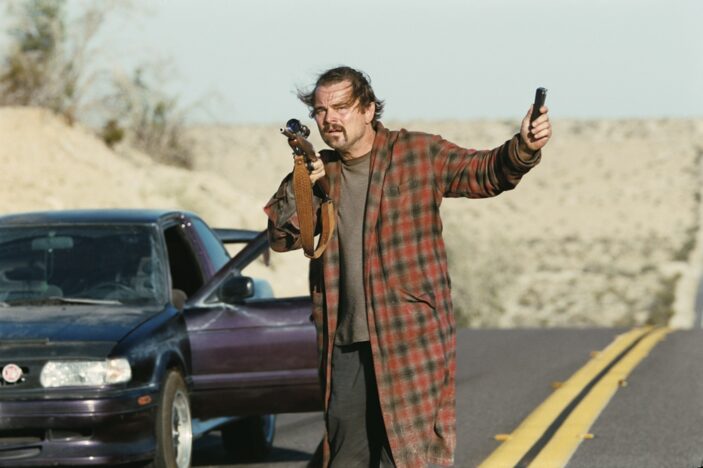
And his latest, One Battle After Another, only continues such a notion, with the filmmaker delivering what could be his most significant work to date – a call to arms that’s both viscerally hilarious and incredibly pointed in its assessment as to the current state of America. Taking loose inspiration from Thomas Pynchon‘s 1990 novel “Vineland” (Anderson no stranger to his works having adapted his 2009 works “Inherent Vice” into a feature), after a chaotic opening 40 minutes-or-so that acts as an extended prologue of sorts, the film settles into an anarchic rhythm as it follows Bob Ferguson (Leonardo DiCaprio, who’s rarely been better), a revolutionary who has been in hiding for over a decade with his teen daughter, Willa (Chase Infiniti, a standout in her film debut), and his attempts to evade the steely, brutal gaze of Colonel Lockjaw (Sean Penn, terrifyingly great).
Through the aforementioned opening, we learn that Bob and Willa’s mother, Perfidia Beverly Hills (Teyana Taylor), along with a slew of cohorts (including Regina Hall, Alana Haim and Shayna McHayle as the wonderfully monikered Junglepussy), were a violently-minded rebel crew, staging bank raids and general acts of civil disobedience. Aside from bringing to mind the works of Michael Mann in how he stages some of the messy, grounded car chases they indulge in, Anderson’s script sets up the dynamic between Perfidia and Lockjaw, leading to why he’s so obsessed with tracking Bob and Willa down sixteen years after the fact.
Once the film settles into its current day status, where Bob is washed-up and wildly altered by his years of substance abuse (this proving a hilarious running gag when he’s unable to recall necessary passwords that he must recount to current revolutionaries), it’s an easier film to digest. By no means is it orderly or pleasant, but the chaos it initially appears to adhere to feels more streamlined as Bob and Willa come under attack, leading to a literal representation of the film’s title as Bob’s day goes from bad to worse, overcoming farcical, violent obstacles in his attempt to save Willa from the relentless Lockjaw.
Whilst a straightforward story when looking at its basic structure, One Battle After Another is intricate in how it presents its commentary on the way of the world and the mentality of how easy it is for people to become corrupted. It’s also near-impossible to escape what’s being said with Penn’s almost-cartoonish villain – a corrupt buffoon with rage issues and very specific mannerisms – with the actor delivering some of his most exciting work in years, layering the film with a risible weirdness that, in any other time period, may feel too exaggerated to be considered tangible.
Whilst the appeal of DiCaprio may bring in unsuspecting audiences, Anderson’s back catalogue and the film’s 164 minute running time should clue viewers in that this isn’t going to be a standard genre feature in any way, and though that may disappointingly put some on caution, true appreciators of cinema will be all too aware that you’ll be hard pressed to find a better merging of black comedy, political satire, and animalistic action (there’s a third act car chase sequence that brings to mind the cult classic Vanishing Point). One Battle After Another is tense, atmospheric and assured in its conviction.
Viva la revolution!


FOUR AND A HALF STARS (OUT OF FIVE)
One Battle After Another is screening in Australian theatres from September 25th, 2025, before opening in the United States on September 26th.
