

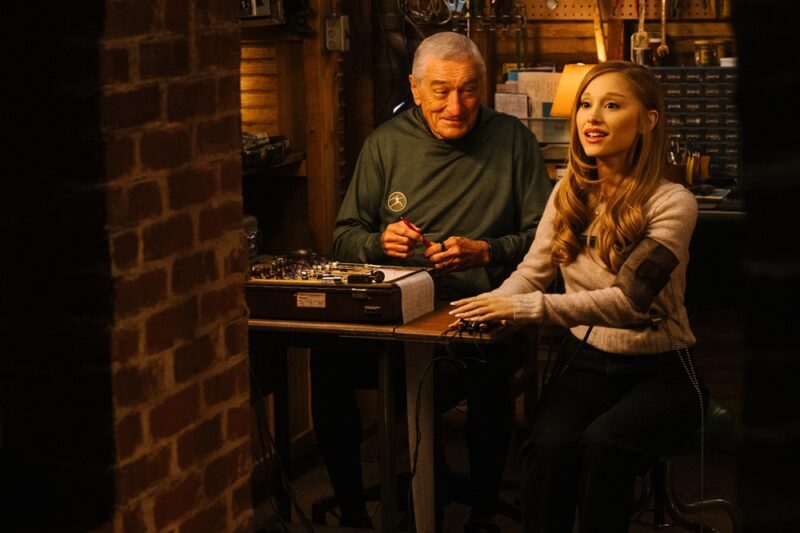
Whilst the box office returns for 2010’s Little Fockers were hardly anything to dismiss, the third instalment in the increasingly chaotic Meet the Parents franchise represented a considerable comedown from its more successful predecessors. Critics were particularly unkind, with the film earning a dismal 10% approval rating on Rotten Tomatoes, a far cry from the 85% bestowed upon the original. Despite its commercial success, it seemed only logical that the series had run its course, with Robert De Niro‘s intimidating patriarch Jack Byrnes and Ben Stiller‘s perpetually unfortunate Gaylord “Greg” Focker having exhausted just about every conceivable way to make family gatherings an exercise in humiliation.
Sixteen years later, the prospect of another sequel to a property nobody was particularly clamouring to revisit doesn’t exactly inspire confidence. And yet, there’s an undeniable pleasure in watching De Niro and Stiller fall back into their familiar rhythm, the former effortlessly intimidating with little more than a disapproving glance, the latter surrendering himself to the sort of escalating comedic indignities that have long been his specialty. Focker-In-Law hardly reinvents the formula, but that old chestnut of “if it ain’t broke, don’t fix it” feels particularly appropriate here. Sometimes familiarity is precisely what the occasion calls for, and director John Hamburg understands that the enduring appeal of these films has always rested less on the absurdity of their situations than on the people unfortunate enough to find themselves in them.
The fourth instalment finds Greg and Pam’s children all grown up, with their son Henry (Skyler Gisondo) preparing to take the next step in his relationship with Olivia Jones (Ariana Grande-Butera, as she’s officially credited). A strong-willed life coach and former FBI hostage negotiator, Olivia seems an unlikely match for the comparatively unassuming Henry, and her impending introduction to the Focker family naturally promises a fresh round of awkward encounters, misunderstandings and catastrophically misguided attempts at making a good impression.
You’d think that after all these years of being related through marriage, Jack and Greg might finally have reached some semblance of mutual understanding. And with a potential new member of the family entering the picture, there’s an opportunity for Greg to experience the other side of the interrogation table, perhaps even finding common ground with the father-in-law who has spent decades making his life miserable. Unfortunately for Greg, Olivia’s professional background means she’s immediately on Jack’s wavelength, leaving him once again on the outside of a relationship he’d desperately like to be part of.
It doesn’t help that Greg and Olivia’s first encounter, before either realises who the other is, results in Greg being patted down by a pair of wonderfully put-upon flight attendants (Kali Rocha and Cole Escola). It’s the sort of ridiculous misunderstanding upon which this franchise has built its reputation, and one that immediately establishes Olivia’s understandable reservations about the man who could soon become her father-in-law. Greg, meanwhile, finds himself in the increasingly familiar position of having to defend his character against circumstances that make him appear considerably more suspicious than he actually is.
Hamburg, making his directorial debut within the franchise after contributing to the screenplays of the previous instalments, knows exactly how to exploit these dynamics. There’s a comforting, almost nostalgic quality to the film’s construction, with its misunderstandings, uncomfortable conversations and escalating embarrassments recalling a particular strain of mainstream studio comedy that dominated the early 2000s. The humour isn’t especially sophisticated, nor does it need to be. Much of the enjoyment comes from knowing precisely how Greg is going to react to a situation and watching Stiller somehow make that inevitable response amusing all over again.
De Niro, too, remains wonderfully committed to Jack’s particular brand of humourless authority. His ability to make even the most innocuous exchange feel like a criminal interrogation has lost none of its effectiveness, and the pleasure he appears to take in playing against Stiller’s nervous energy is infectious. Their chemistry remains the franchise’s most reliable asset, even if the film occasionally feels content to simply let them repeat variations on exchanges we’ve witnessed several times before.
The younger additions prove equally agreeable. Gisondo brings an appealing sincerity to Henry, making him an easy character to root for amid the familial madness, whilst Beanie Feldstein is a welcome presence as his sister Samantha. Eduardo Franco, playing Samantha’s long-term boyfriend Eduardo Villalobos, provides another amusing wrinkle to the family dynamic, particularly through his own desire to be accepted into the peculiar boys’ club that Jack and Greg have established, however reluctantly, over the years.
If there’s a disappointment in the ensemble, it’s that Teri Polo and Blythe Danner are afforded relatively little to do. Both have always been important counterbalances to the more exaggerated personalities surrounding them, and their reduced involvement is noticeable in a film that otherwise makes such an effort to celebrate the franchise’s established relationships. With so many characters competing for attention, some inevitably fall by the wayside, but it’s a shame that Pam and Dina aren’t given more opportunities to contribute to the chaos.
Ultimately, though, this is Ariana Grande’s film.
Whilst her comedic abilities have never been in question, with her numerous appearances on Saturday Night Live providing ample evidence of her impeccable timing and willingness to embrace the ridiculous, Focker-In-Law offers something a little different. Even her Oscar-nominated work in the Wicked films, for all its delightful comedic flourishes, operated within a heightened, fantastical world that encouraged a certain theatricality. Here, playing a comparatively ordinary woman in a recognisably contemporary setting, Grande demonstrates just how assured and instinctive a screen comedian she can be.
What makes her performance so enjoyable is how little she appears to be trying. Rather than approaching Olivia as an opportunity to deliver exaggerated reactions or steal scenes through sheer force of personality, Grande plays her with a wonderfully natural confidence. Her delivery is subtle, her timing precise, and she’s entirely comfortable holding her own against two performers whose comedic partnership has been refined over more than a quarter of a century. It’s no small achievement to enter a franchise so firmly associated with its established stars and emerge as its most memorable presence, but Grande makes it look remarkably effortless.
It helps enormously that Olivia isn’t written as some villain-in-waiting, either. Hamburg resists the temptation to make her an obvious antagonist or an insufferable outsider whose eventual acceptance into the family requires a complete personality overhaul. She’s intelligent, capable, charming and genuinely likeable. We understand why Henry loves her, why Jack takes such an immediate shine to her, and, crucially, why we should want her to become part of this wonderfully dysfunctional clan.
If anything, Olivia’s greatest weakness as a character is that she’s almost too perfect. Her professional accomplishments, emotional intelligence and seemingly effortless ability to navigate situations that leave everyone else floundering mean there are relatively few cracks in her armour. A little more vulnerability, or even a greater willingness to let her make a complete fool of herself, might have afforded Grande the opportunity to explore an even broader comedic range. The film does, however, teasingly suggest that the Fockers may eventually have to meet Olivia’s own parents, a prospect that could open up some delicious possibilities should another instalment eventuate. Watching a character so accustomed to being in control suddenly confronted with her own familial insecurities could prove particularly entertaining.
But that’s perhaps getting ahead of ourselves. The fact that Focker-In-Law leaves the door open for another sequel without making the prospect seem entirely unwelcome is something of an achievement in itself.
More importantly, the film serves as a reminder of how enjoyable a straightforward, character-driven studio comedy can be when it isn’t desperately trying to reinvent the genre or justify its existence through some grander thematic ambition. In recent years, theatrical comedy has increasingly found itself either absorbed into other genres or relegated to streaming platforms, as though audiences can only be persuaded to leave their homes for something spectacular, franchise-driven or visually extravagant. Horror, arguably one of the most consistently thriving theatrical genres of late, has repeatedly demonstrated the value of experiencing a film collectively, and comedy deserves that same consideration.
After all, there’s something wonderfully infectious about sitting in a cinema full of people laughing at the same ridiculous situation, anticipating the same inevitable disaster, or collectively cringing as Greg Focker once again says precisely the wrong thing at precisely the wrong time. That communal experience is part of what made films like Meet the Parents such enduring favourites in the first place, and it’s a pleasure to see that particular sensibility return to the big screen without being dressed up as something it isn’t.
Focker-In-Law isn’t the sharpest comedy of the year, and its reliance on familiar character dynamics means there are few genuine surprises along the way. Some of its supporting players deserve more attention, and its most exciting new addition could benefit from being allowed to be a little less accomplished. But there’s a warmth to the proceedings, an easy chemistry amongst the cast, and a refreshing lack of pretension about what the film is trying to achieve.
Sixteen years after the franchise appeared to have exhausted its welcome, the Fockers have somehow managed to make themselves enjoyable company again. And with Grande proving such a natural fit for the family’s particular brand of dysfunction, it turns out there might still be a little life left in the old Fockers yet.


THREE AND A HALF STARS (OUT OF FIVE)
Focker-In-Law is screening in Australian theatres from November 26th, 2026.
