

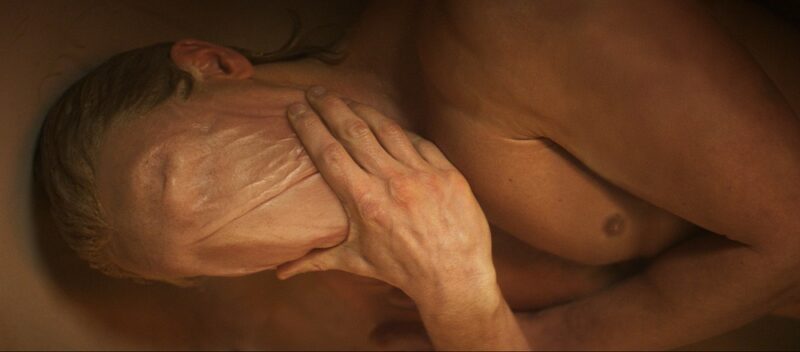
For all the spectacle and larger-than-life personalities that have traditionally defined comic book cinema, there’s something refreshing about a superhero universe willing to embrace the ugliness of its own mythology. And in the case of Clayface, ugliness is very much the point. Unrelentingly bleak, frequently grotesque and entirely uninterested in providing audiences with the usual moments of comic relief, James Watkins‘ horror thriller is a particularly nasty addition to the DC Universe, and all the more fascinating because of it.
While James Gunn‘s rejuvenated DC landscape has so far largely concerned itself with the heroics of Superman and Supergirl, Clayface ventures into considerably more disturbing territory, shifting its attention to one of Gotham City’s more tragic villains. There’s still enough comic book flair to remind audiences of the world they’re inhabiting, but Watkins wisely resists allowing the theatricality of the source material to overwhelm what is, at its core, a deeply unsettling psychological horror story.
The film centres on Matt Hagen (Tom Rhys Harries), a former Gotham street kid who has successfully reinvented himself as one of Hollywood’s most celebrated leading men. With his career flourishing and Oscar recognition seemingly within reach, Matt has everything he once dreamed of, until a violent encounter with a local crime boss leaves him horrifically disfigured; this sequence setting the tone for the brutality the film adheres to across its 108 minutes. Suddenly abandoned by the very industry that once adored him, and with his personal and professional relationships crumbling, Matt turns to an experimental treatment that promises to restore his appearance.
The procedure works, at least initially, but the physical regeneration comes with increasingly disturbing consequences. As Matt’s body begins to betray him and his sense of identity deteriorates, his desperation to reclaim the life he lost gradually gives way to an all-consuming appetite for revenge.
It’s an inherently tragic premise, and one that could have easily positioned Matt as a sympathetic anti-hero, particularly given the cruelty of the circumstances that bring about his transformation. Watkins, however, has little interest in making his protagonist particularly easy to champion. While there’s an understandable satisfaction in watching Matt pursue those responsible for his suffering, the film becomes increasingly uncomfortable as his vengeance extends beyond the people who directly wronged him.
Even those closest to him aren’t necessarily spared from his escalating brutality. Such choices are crucial in establishing that this isn’t simply the story of a good man pushed too far, but rather one whose desperation and entitlement gradually expose something far more monstrous. The film allows us to understand Matt without insisting that we forgive him, and that distinction makes his descent considerably more compelling.
It helps enormously that Rhys Harries is such an effective presence in the title role. Possessing a natural boyish charm that makes Matt’s early success and subsequent vulnerability believable, the actor is equally convincing when that charm begins to curdle into something altogether more threatening. There’s a fascinating tension between his outward attractiveness and the ugliness gradually consuming him, with Rhys Harries demonstrating an impressive ability to move between wounded vulnerability and stoic menace without making the character’s evolution feel entirely disconnected.
It’s a demanding performance, not least because Matt is constantly being reshaped, both physically and psychologically, and Rhys Harries ensures there’s a recognisable humanity beneath even his most disturbing iterations. That humanity doesn’t always make Matt likeable, but it does make him difficult to look away from.
Naomi Ackie, meanwhile, is afforded considerably more to work with than the traditional love interest role her character could have occupied. As Dr. Caitlyn Corr, the scientist responsible for Matt’s extraordinary regenerative abilities, Ackie brings an intelligence and moral ambiguity to proceedings that complements the film’s central examination of scientific ambition and personal obsession. Caitlyn is hardly a passive participant in Matt’s transformation, and the implications of her work give her an important place within the narrative beyond her romantic connection to him.
Indeed, one of Clayface‘s more interesting qualities is its exploration of responsibility. Matt may ultimately be accountable for the decisions he makes, but the film also considers the various people and institutions that contribute to his downfall. From an entertainment industry that places extraordinary value on physical appearance to scientific advancement pursued without sufficient consideration of its consequences, there’s an underlying cruelty to the world around him that makes his transformation feel almost inevitable.
And then, of course, there’s the violence. Anyone familiar with Watkins’ previous work, particularly the merciless Eden Lake and his deeply uncomfortable reimagining of Speak No Evil, will know that the filmmaker isn’t especially interested in making brutality palatable. Clayface continues that tendency with considerable enthusiasm, delivering a succession of graphic sequences that feel deliberately confrontational rather than merely decorative.
Matt’s initial disfigurement is especially difficult to stomach, a horrifying sequence that establishes the film’s uncompromising intentions early on. Rather than treating the incident as a convenient narrative device before moving swiftly into more conventional comic book territory, Watkins makes audiences confront the physical devastation that sets everything in motion. It’s a sequence that lingers, not simply because of its graphic nature, but because of how effectively it establishes the terror of losing the very thing upon which you’ve built your identity.
The subsequent body horror is similarly disturbing, drawing considerable unease from the idea that Matt’s restored appearance is merely a temporary illusion of normality. There’s something particularly cruel about a character so dependent on his looks being granted the ability to physically reinvent himself, only to discover that he has less control over his body than ever before.
The film’s grotesque imagery naturally invites comparisons to David Cronenberg’s The Fly, but Watkins doesn’t simply rely on the shock value of physical transformation. The more disturbing element is often the psychological deterioration accompanying it, with Matt’s inability to recognise himself becoming as frightening as anything happening to his flesh.
What also proves effective is how comfortably the film exists within the broader DC mythology without becoming beholden to it. Gotham remains a recognisable environment, its criminal underworld and inherent corruption providing an appropriately grim backdrop, but there’s little sense that Clayface is desperately trying to remind audiences of its place within a larger franchise.
That restraint is particularly welcome given how frequently comic book films have become preoccupied with interconnected storytelling at the expense of their own identities. Here, the mythology is present without demanding attention, allowing the film to function as a standalone horror experience rather than another piece of franchise housekeeping.
There’s also an interesting blending of the character’s comic book history. The original Clayface, Basil Karlo, was a struggling actor who adopted the identity of a villain he had once portrayed on screen, while Matt Hagen, the second incarnation, was a treasure hunter whose exposure to a mysterious substance granted him extraordinary shapeshifting abilities. This interpretation borrows elements from both, retaining the actor’s relationship with fame and appearance while incorporating Hagen’s transformative physical abilities.
It’s a smart amalgamation that serves the film’s thematic interests without feeling unnecessarily constrained by decades of established continuity. More importantly, it gives the character a contemporary relevance, particularly in an entertainment culture where image, celebrity and the fear of becoming obsolete can carry an almost pathological significance.
If there’s a potential stumbling block, it’s that Clayface is so committed to its oppressive atmosphere that it offers precious little respite. There are no knowing winks to the audience, no conveniently timed jokes to alleviate the tension, and certainly no suggestion that Watkins is concerned about making the experience more accessible to those expecting a traditional comic book adventure. Its sustained nastiness may prove exhausting for some, particularly as Matt’s actions become increasingly difficult to justify.
Yet that refusal to soften its edges is also one of the film’s greatest strengths. There would have been a considerably safer version of this story in which Matt’s vengeance was directed exclusively towards obviously deserving targets, allowing audiences to indulge in his violence without questioning their own sympathies. Watkins instead embraces the discomfort of watching someone who has suffered terribly become capable of inflicting equally terrible suffering on others.
For a genre creator like Mike Flanagan, whose original conception of the project helped bring it into existence, the combination of tragedy, psychological torment and monstrous transformation feels entirely appropriate. And while Watkins brings his own particularly unforgiving sensibilities to the material, there’s a genuine emotional foundation beneath the carnage that prevents the film from becoming an empty exercise in cruelty.
In a genre increasingly reliant on familiarity, Clayface is an encouraging reminder that comic book adaptations needn’t all adhere to the same formula. It’s violent, joyless and occasionally stomach-churning, but also impressively assured in its understanding of what makes a villain’s origin story worth telling.
Rather than asking audiences to celebrate Matt Hagen’s transformation, Watkins forces them to witness the destruction of a man who becomes so consumed with restoring his former self that he loses whatever humanity he had left.
A gruesome, uncompromising and unexpectedly affecting descent into villainy, Clayface finds DC Studios embracing its darker instincts with considerable confidence. It may not be the crowd-pleasing comic book adventure some audiences expect, but its willingness to be genuinely monstrous is precisely what makes it so worthwhile.


FOUR STARS (OUT OF FIVE)
Clayface is now screening in Australian theatres, before opening in the United States on October 23rd.
