
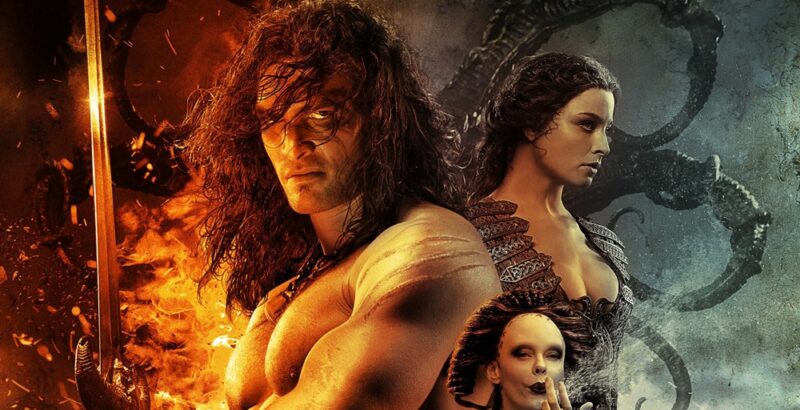
Fifteen years after its release, Conan the Barbarian remains one of modern fantasy cinema’s most understood films. Dismissed upon arrival by critics and audiences alike, it was quickly branded an unnecessary remake, a hollow echo of John Milius’s 1982 classic, and a failed vehicle for a rising star. Yet time has been kinder to Conan than its initial reception ever was. Revisited today, the film reveals itself as a far stronger – and far more confident – entry in the sword-and-sorcery genre than its reputation suggests.
Rather than attempting to outdo the operatic grandeur of Arnold Schwarzenegger’s Conan, director Marcus Nispel‘s film leans into a different tradition: the raw, pulp-infused brutality of Robert E. Howard‘s original stories. This is not a mythic meditation on destiny and masculinity; it’s a blood-soaked, sun-scorched fantasy epic that embraces violence, eroticism, and primal ambition with little apology. In doing so, it captures something essential that many modern fantasy films shy away from – an adult, physical, and unapologetically savage worldview.
At its core, the 2011 Conan the Barbarian feels like a throwback to the sword-and-sandal epics of an earlier era, hardened by modern sensibilities. The film’s world is tactle and cruel; blades bite deep, bones break, and bodies bear the cost of violence. Unlike the increasingly sanitised fantasy blockbusters of the 2000s, Conan refuses to soften its edges. Its shameless sexuality, grim brutality, and pulpy excess are not bugs – they are features. The film understands that Howard’s world was never meant to be polite or refined, but feral, dangerous, and intoxicating.
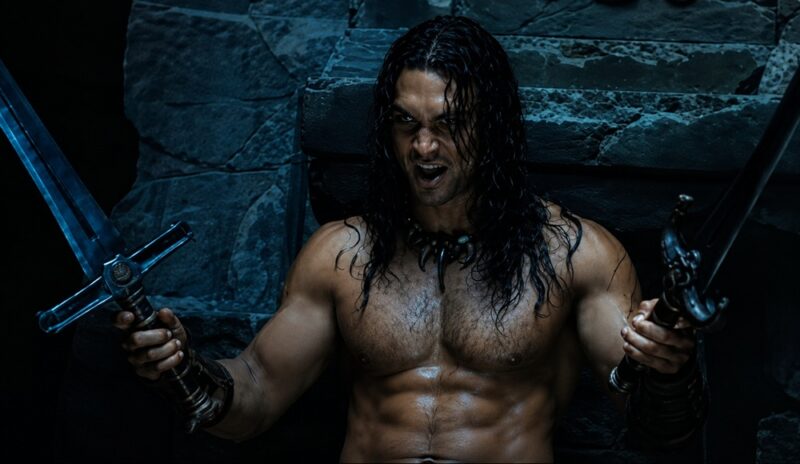
Central to this success is Jason Momoa, whose performance as Conan has aged remarkably well. Where Schwarzenegger embodied the character as a near-mythic force of nature, Momoa plays Conan as a living, breathing predator – quick witted, ferocious, and unmistakably charismatic. His physicality is undeniable, but it is his ease on screen, his confidence, and his ability to project dominance without stiffness that truly sells the role. Momoa’s Conan smiles, taunts, seduces, and kills with equal conviction, embodying the character’s legendary prowess while grounding him in human desire and rage. In retrospect, it is one of the most faithful cinematic interpretations of Howard’s barbarian to date.
Equally deserving of reevaluation is Rose McGowan‘s performance as Marique. Originally conceived as a male character, the role was rewritten after McGowan’s casting – a testament to the impact she brought to the production. Her villain is theatrical, cruel, and magnetically sinister, stealing scenes through sheer presence. McGowan leans into the character’s sadism and decadence, crafting a villain who feels both mythic and grotesquely human. In a film often criticised for its antagonists, Marique stands out as a bold and memorable creation, one whose flamboyance complements the film’s heightened tone.
There’s no denying that Conan the Barbarian endured a troubled production. Studio interference, shifting creative priorities, and the weight of an iconic predecessor all left their mark. At times, the film’s narrative feels rushed, and certain supporting characters lack the depth they deserve. But these flaws do not negate the film’s strengths; if anything, they highlight the ambition behind it. This was a film attempting to resurrect a genre that Hollywood had largely abandoned, without diluting its essence for mass appeal.
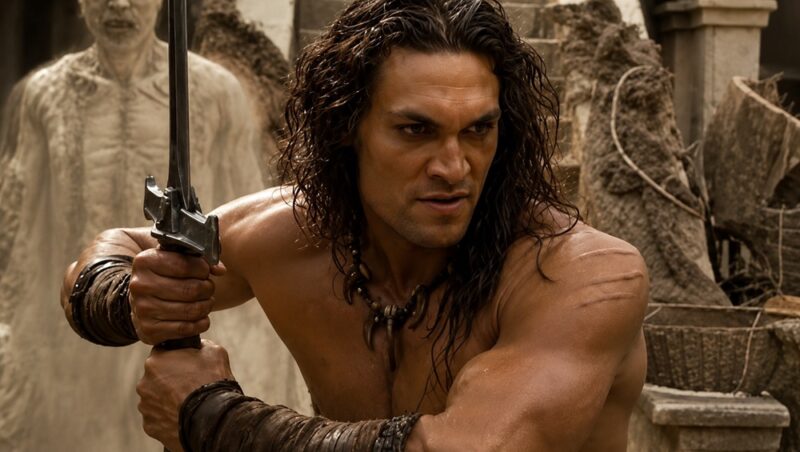
In hindsight, Conan the Barbarian occupies an unusual but important place in fantasy cinema. It is neither prestige fantasy nor ironic reinvention, it is a sincere, muscular, and often audacious attempt to bring pulp fantasy back to the screen on its own terms. Its failures a visible, but so is its passion. It understands that Conan is not a hero of speeches or moral clarity, but of survival, desire, and willpower.
Fifteen years on, Conan the Barbarian deserves to be remembered not as a failed remake, but as a bold, flawed, and fiercely committed genre piece. In an era increasingly dominated by digital excess and franchise homogenization, its sweat, blood, and shamelessness feel almost radical. Time has revealed what opening weekend numbers couldn’t: this Conan may not have conquered the box office, but it earned its place on the battlefield of fantasy cinema.
