

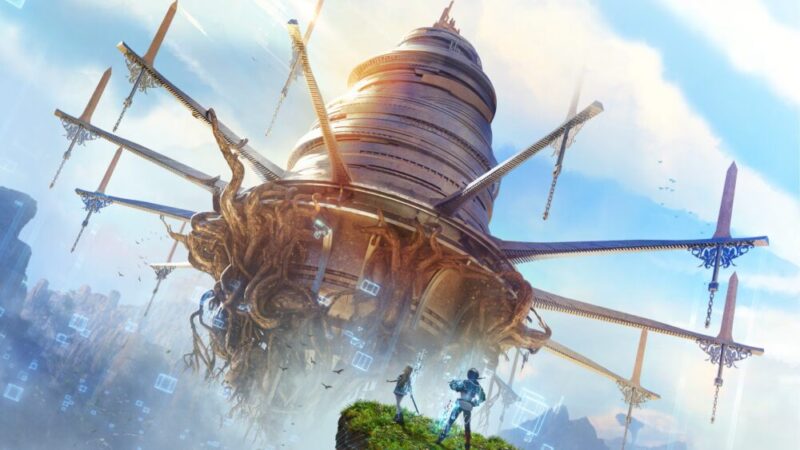
I’ve never been a massive fan of the Sword Art Online franchise, but have followed it loosely over the years, across a few novels, and more recently, the wildly popular anime series. For what it’s worth, there’s an incredibly dense and unique world on offer, complete with memorable characters and several great story arcs.
The Sword Art Online games for me, however, have been a bit of a blind spot throughout. Echoes of Aincrad is the latest addition to the franchise, which aims for a fresh take on the franchise, given its setting within the early roots of the franchise’s lore and overall narrative. There’s a decent and functional combat system and interesting narrative, even if it’s ultimately held back by somewhat bland and linear environments, which can affect pacing outside of the main story.
A New Tale
Sword Art Online can feel a little overwhelming at the best of times, so let’s quickly outline the gist of it. The main story involves a dangerous virtual world, where the concept of logging off is impossible, and an in-game death essentially kills you in real life.
Thankfully, Echoes of Aincrad takes place earlier in the series’ narrative, and this story actually fits in quite well without disrupting the main story and its characters. While players create their own protagonists here, the journey actually follows a new band of characters as a whole, as opposed to covering the show’s protagonists, Kirito, once again.
Sword Art Online’s creator, Akihiko Kayaba, has trapped the game’s 10,000 players in its world and forced them to take on the waves of enemies housed in the 100 floors of the floating castle Aincrad, to ultimately escape.
Your new band of warriors gain access to various visions throughout the narrative, painting a picture of a future ravaged by war and destruction, so they’re now fighting to save everyone else in the game as well, aside from themselves. It’s a fine narrative that sits nicely alongside Kirito’s main arc, without ever disturbing or altering it.
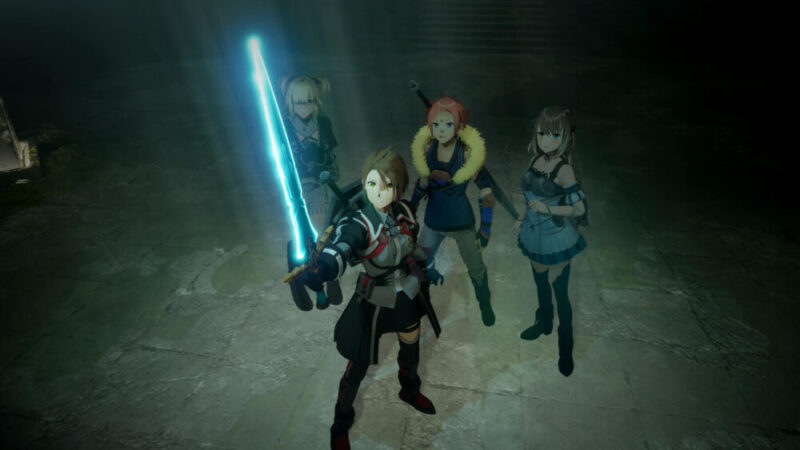
Without spoiling the main story, I do wish we got to explore a little more within the main castle of Aincrad, but the high stakes of the story that exist outside of it aren’t bad either.
I am, however, a fan of the game’s main introduction and tutorial, which plays out like a beta test within the actual game itself. You’ll meet up with a couple of party members before Sword Art Online actually launches, and you seemingly begin again. It’s a very cool and meta example that blends nicely within the larger context of the game and ultimately helps with world-building.
Your party members are interesting enough, bringing with them unique personalities and some interesting conversations along the way, while their full effectiveness is generally reserved for combat. While my gripes with the overall narrative will follow shortly, I had fun with the more contained and introductory premise, especially as a more distant and casual fan.
If you’re a hardcore fan or simply brave enough, there’s even a Death Mode, which expects you to complete the game in one attempt without dying. Either way, the narrative is certainly serviceable.
To Explore, or Not to Explore
I must say, though, that for as engaging as the main narrative is, its exploration is less than exciting. Echoes of Aincrad divides its many chapters and environments into smaller hubs that, while they appear to be open and explorable, are anything but. Too often does the experience pull you back in with invisible walls, linear pathways and limited options for progression. At times, I felt privileged if there was even one alternate path forward. As a result, the pacing of certain main and side missions alike can feel sluggish and mundane.
The environments also look fantastic, thanks to decent lighting, plenty of detail and awesome draw distances. Given Echoes of Aincrad makes you feel like you could explore this open world at your own pace, it constantly reminds you that it would rather push you through linear pathways and corridors to push the narrative along. But given how drab this feels, I would argue it runs the game’s pacing.
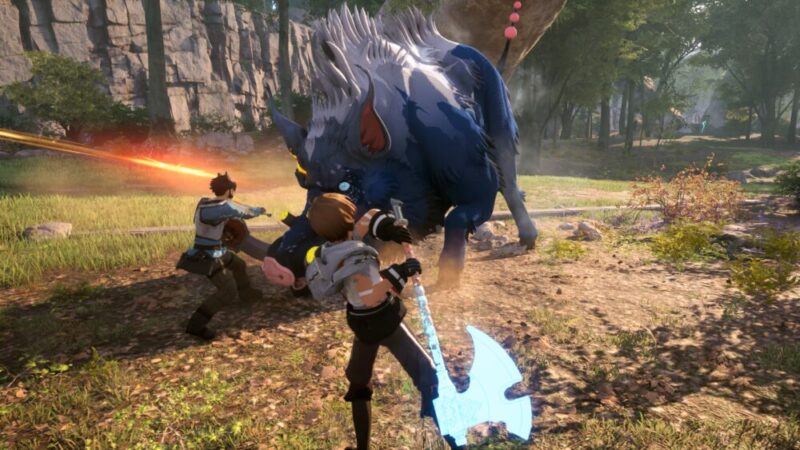
The game does grant you various Safe Zones along the way, which do open up more of these limited hubs as you progress. Various side quests don’t really help much with this level of variety, and usually involve defeating certain enemies or fetching items of importance in exchange for various rewards. While there are some more interesting enemies thrown at you as the story develops, much of the earlier hours throw the same enemy types at you, regardless of the quest, which is disappointing.
Given that the actual game within Sword Art Online is in itself an MMO, some elements reflect this, but only briefly. The loot-based system is fine, but given that its grind isn’t made more satisfying by the inclusion of various environments and enemy types, it can feel a little conflicted.
All of this makes exploration in Echos of Aincrad feel relatively and unfortunately redundant. The illusion of exploration is much greater than the execution, and I wish Echoes of Aincrad had made the dedicated choice to make this a much more linear experience, packed with a more cinematic feel within.
The Art of Combat
Combat is certainly the highlight of Echoes of Aincrad. Players will have access to both light and heavy attacks, along with a block, dodge and parry. Combat feels largely functional and, at times, satisfying, but it gains much of its depth and variety from its reliance on party member input.
Aside from your standard attacks, your character will also be able to wield a range of weapons, from swords, daggers and rapiers to heavier two-handed swords and axes, each with its own attacks and combinations.
Thanks to a loot-style upgrade and crafting system, you’ll be able to collect rewards from fallen enemies and take them to the Blacksmith within the game’s central town to upgrade your various weapons and abilities. You’ll also attain Ex-MODs, which can be applied to weapons for various advantages like damage or stamina boosts while activated.
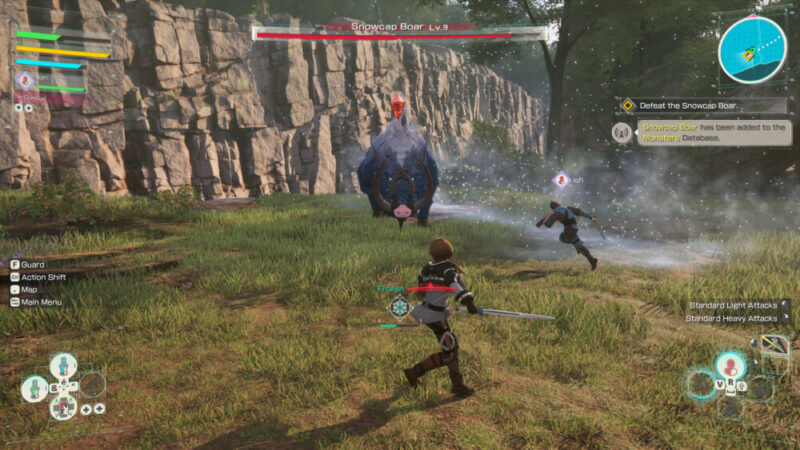
In each encounter, you’ll still need to manage both stamina and SP. Stamina will drain with each attack and automatically regenerate as you stop, while SP allows you to use your Sword Skills, which are basically just more powerful attacks activated by holding down the L2 on PlayStation 5 or Left Trigger on Xbox Series X/S while pressing one of the required face buttons.
Each quest allows you to bring one partner with you, and this is where things get a little more interesting. Partners can fight with you in one of two modes: Switch Mode and Free Mode. Switch Mode will allow your partner to focus on the same enemy with you, distracting it and causing damage at the same time, a much handier strategy for bosses and tougher enemies.
Free Mode will allow your partner to attack other enemies at will, which is a little more useful for busier areas packed with more standard enemies. The AI also works really well on these occasions, and you’re generally encouraged to use this system whenever possible.
You’ll also be able to call upon your partners for various coordinated attacks, depending on your selected partner and weapon of choice. These attacks are usually quite powerful and at times, devastating for most standard enemy types, and thanks to some awesome animation sequences, really satisfying to use.
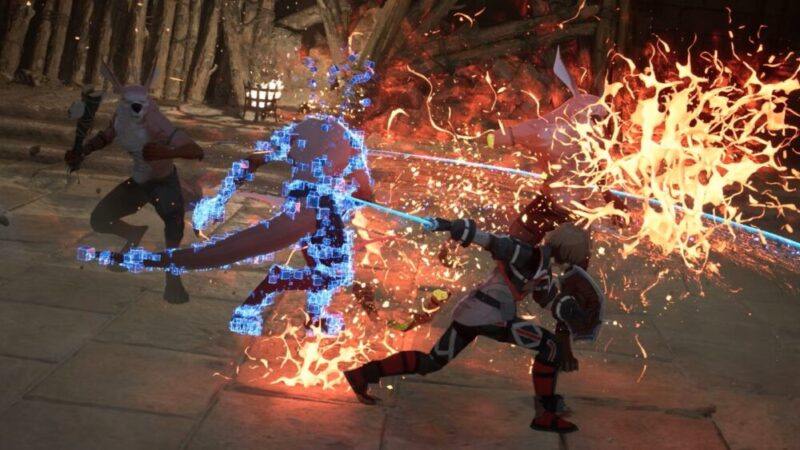
While general combat is functional and serviceable, it’s the inclusion of your partner’s skills and abilities that allows you to gain the upper hand in most encounters, making them feel that much more useful, outside of their input in the game’s main story.
Look the Part
Echoes of Aincrad does a great job of recreating the look and feel of its anime counterpart, thanks to some impressive detail in most of the environments and character models. Most attacks have a range of flashy animations and sequences, helping combat feel more robust, and the soundtrack is also quite varied and, during combat, really epic.
On the PlayStation 5 Pro, Echoes of Aincrad also runs really well, pretty much nailing the intended 4K 60 FPS experience with minimal frame rate drops throughout even the busiest combat encounters.
Final Thoughts
Overall, Echoes of Aincrad is a serviceable entry point for most casual fans, complementing the main narrative without ever detracting from it. Combat is also incredibly functional and enhanced by the inclusion of your partner and their abilities.
Unfortunately, the limited and linear exploration really does hurt the pacing of the experience and takes away from most side quests and additional encounters.


THREE STARS (OUT OF FIVE)
Highlights: Engaging narrative; Solid combat; Slick visuals and performance
Lowlights: Bland and limited exploration hurts pacing
Developer: Game Studio Inc.
Publisher: Bandai Namco Entertainment
Platforms: PlayStation 5, Xbox Series X/S, Windows PC
Available: Now
Review conducted on PlayStation 5 with a code provided by the publisher.
Featured header image also provided by the publisher.
