

Class-leading brands tend to experiment more with value once they’ve reached a certain threshold of quality. Apple’s been doing it for years with the iPhone, for example. The company has already got smartphone production down to a tee, constantly putting out high-quality phones to fit all price points. Yet, Apple isn’t as adventurous as it used to be, with the main criticism of each iPhone generation simply being that each update feels iterative rather than meaningful.
But that’d be missing the point. Apple is trying to make the best phone for everyone, working hard to hit all price points so that everyone has access to a quality smartphone experience, regardless of their budget. Switch that thinking over to coffee machines, and you’ll see that Breville is still sitting at the top of the crop.
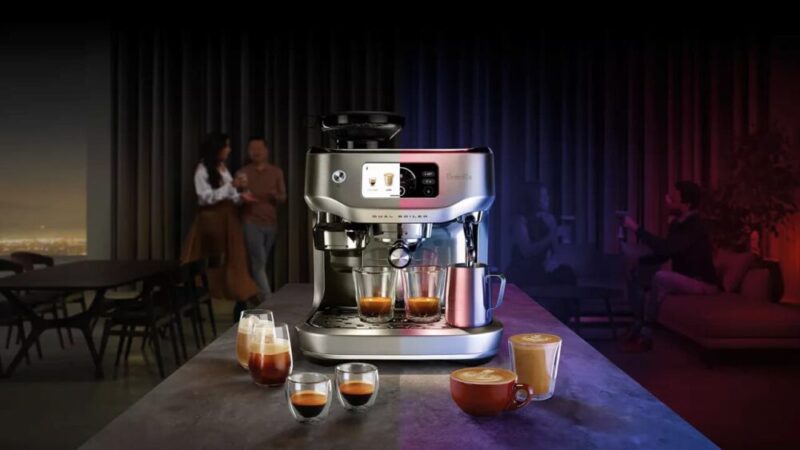
And that’s because Breville offers exceptional coffee machines for all budgets, whether it’s the $500-$600 Breville the Barista, still my favourite mid-range coffee machine to date, or their latest innovation, the Breville Oracle Dual Boiler. It’s one of the brand’s most expensive, high-end, automatic espresso machines. You’ll be looking at around $4,000 if you want to pick one of these up.
That’s a lot of money to spend on anything, even if a few thousand dollars is chump change for you. This is the kind of category that demands a bit of moolah, though. The humble coffee machine can be a powerful money-saving tactic if you’ve chosen right.
Say the $4,000 machine can produce barista-quality coffee that completely cuts out your daily visit to your local cafe. Now imagine you have two coffees a day, which can hover around the $10 mark. But that’s just for you. Imagine you’ve got a family of four espresso enthusiasts, all saving $10 per day. In about 100 days, that $4000 coffee machine will not only pay itself off, but it’ll also start putting money back into your family’s collective pocket.
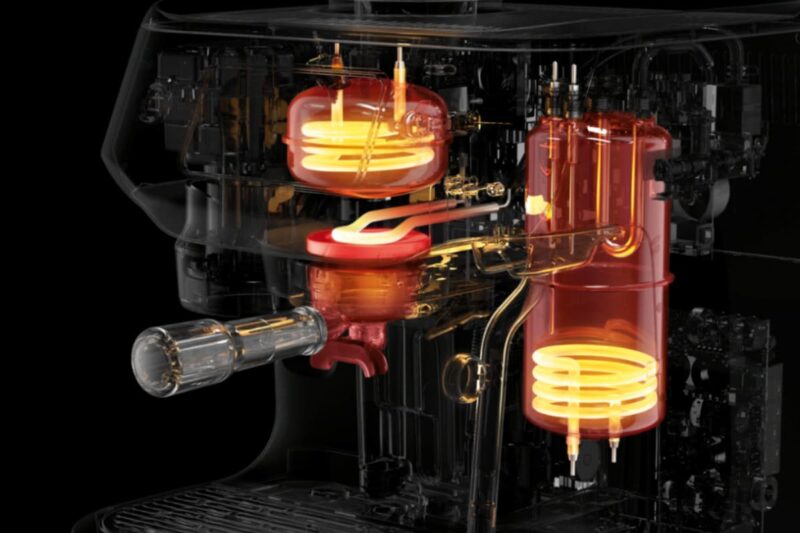
Breville has been intentional with the design for the Oracle Dual Boiler. Automation sits at the heart of it, but you have the precise control of a manual machine. This is far from the only premium coffee machine that attempts such a balance, but Breville has worked hard to properly seperate the brewing and steaming process so you can maximise both boilers at the same time. Temperature stability is stronger, set doses are more consistent, and there’s enough scope to get the texture perfect across a range of cafe-style drinks with virtually no learning curve.
Paying this much to reduce variability would seem superfluous from a casual perspective. If coffee is only a semi-regular need for you, then you’ll start to see less value here. However, if having a good, reliable cup of coffee, that doesn’t make you feel like running for your favourite barista, is absolutely crucial, you’ll have a hard time finding anything good as what Breville has done here.
The question is not whether it can make excellent coffee. It’s whether this level of ease and performance is worth the investment.
Design
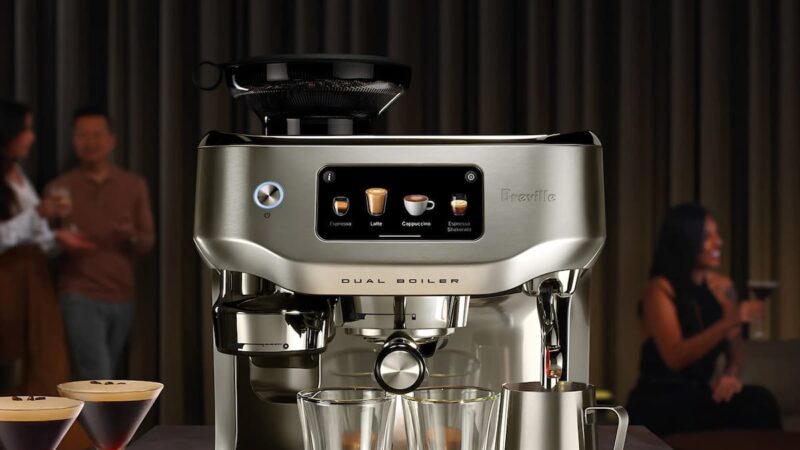
The Oracle Dual Boiler is the rare espresso machine that fits comfortably in both an advanced home kitchen and a premium cafe. It’s big, heavy, and unapologetically stainless, with the kind of footprint that makes you commit to a coffee corner. The layout is practical: a 58mm commercial-style portafilter, a built-in grinder cradle up top, and a full-colour touchscreen that does most of the hand-holding without making you feel like you’re using a pod machine.
In daily use, I appreciated the little ergonomic wins. The drip tray slides smoothly. The wand area is well-lit. The interface is plain-English enough that guests can make a drink, but not so simplified that you lose the sense of craft. It still has that Breville personality: a lot of machine, but not intimidating. The only design downside is the same one most dual-boiler machines share. You need bench space, and you need clearance to work around it.
Features
This is where the Oracle Dual Boiler earns its name. The headline is the dual boiler system, which means you can pull espresso and steam milk at the same time, with stable temperatures and none of that waiting around for the machine to swap modes. That alone changes the rhythm of making coffee at home. The speed would make a world of difference for a busy family all trying to get their individual morning routines in before heading off.
Then there’s the core trick: it automatically grinds, doses, and tamps, feeding a proper 22g dose into a 58mm portafilter. This is the part of espresso that creates the most mess, inconsistency, and self-doubt for beginners. Here, it’s tidy and repeatable. For a lot of households, that automation is the difference between “nice machine” and “actually used every day”.
Milk is similarly clever. Breville’s Auto MilQ system textures hands-free, with options tuned for different milk types, including alternative milks, and it can aim for latte art style microfoam without you hovering like a nervous apprentice. If you want to take over manually, you can, but the point is that you don’t have to. It’s a machine built for people who want café results with minimal friction, while still leaving the door open to tinkering.
One thing to understand up front: the built-in grinder is integral to the one-machine appeal, but it also becomes the ceiling for the most obsessive users. If you are the type who weighs every dose and chases ultra-fine repeatability across different beans, you may find yourself bumping into its limits.
Performance
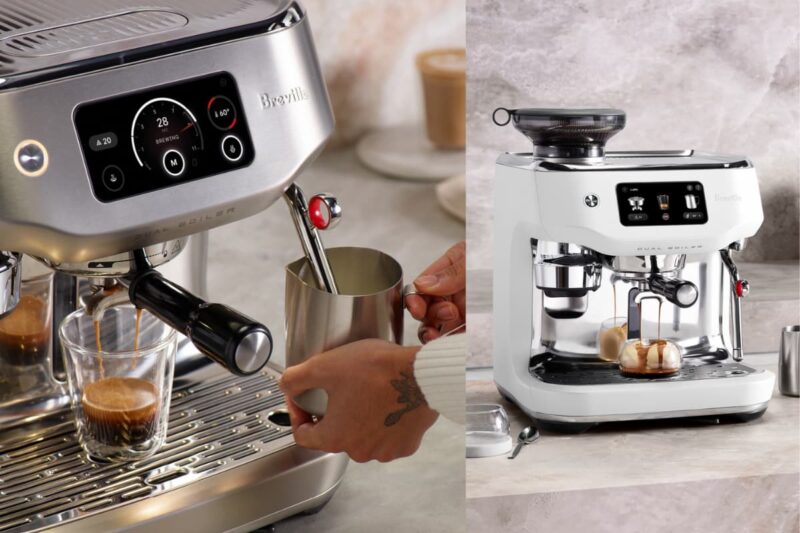
Shot quality is excellent when you give it decent beans and a quick dial-in. Espresso comes out full-bodied, with the sort of texture and sweetness that makes milk drinks taste more expensive. Temperature stability is impressive, and the machine’s overall workflow encourages consistency. Not every shot is magic on day one. I’m used to overshooting the temperature to get it just right, but everything seemed to be exacting with the machine.
The learning curve is gentler than it has any right to be for a dual boiler setup. But, for some, that could also be a downside. Classification aside, this is Breville’s best attempt at a prosumer machine, but leaning more heavily towards automation. Almost all the “hard” parts of automated so well that you lose the excitement of routine. For heavily enthused coffee drinkers, the process is part of the appeal.
You don’t even need to calibrate the machine. A massive part of the appeal is that all the internals can adapt. The machine calibrates itself based on each previous shot, constantly adjusting the built-in grinder for the best results.
Milk drinks are where this machine excels. The automatic steaming is fast and polished. It hits a repeatable texture that’s genuinely cafe-adjacent, especially for flat whites and lattes, and it does it while you focus on the espresso. I found myself making “one more” coffee because the effort was so low.
Now, the balanced bit. It’s not perfect. The price is high, even for this category, with Australian pricing commonly sitting in the four-thousand-dollar range, depending on the retailer. It’s also a complex machine, which means maintenance matters. Regular cleaning, purging the wand, and keeping up with descaling guidance are part of the deal. Ignore that stuff, and any premium espresso machine will punish you later.
I haven’t owned it long enough to run into any maintanence issue, but cleaning was very straightforward with minimal parts needing to be polished off seperately.
Then there’s that grinder caveat. In automatic mode, it’s largely a non-issue because the system is designed to be consistent enough for everyday excellence. In more manual, enthusiast-style workflows, some users will still find dose variability frustrating. If you’re building a home barista hobby, you might prefer a separate grinder.
Verdict
If you want the short version: this is the best option at its price point for people who care about real espresso, but also care about time, consistency and quality. The combination of dual boiler performance and genuinely useful automation is still rare, and Breville executes it with the kind of polish that makes you use the machine daily, as opposed to every other day between cafe visits.
The value story is also unusually straightforward. If you’re currently buying one or two café coffees a day, you’re easily spending an extra $10 to $15 daily. This machine starts putting money back in your pocket because it makes exceptional coffee with so little effort that you actually replace those purchases, rather than just supplement them. Do the maths. Even at $10 a day, that’s roughly $3,650 a year. At $15 a day, it’s closer to $5,500. Over time, the Oracle Dual Boiler can pay for itself in a way that cheaper machines often don’t, because the results are good enough that you do not feel like you’re settling at home.
It’s not the right pick for everyone. If you love the ritual and want full manual control with a separate grinder, the machine could feel like overkill. But if you want cafe-quality espresso and milk, quickly, consistently, and with just enough room to grow your skills, the Oracle Dual Boiler stands out. In this bracket, it’s the one I’d recommend first. Don’t delay if you spot this one on sale.

FIVE STARS (OUT OF FIVE)
Highlights: Boiling and steaming are exceptional; very easy to use; very consistent results
Lowlights: You may prefer a standalone grinder for tighter control; very expensive; requires a lot of space
The Breville Oracle Dual Boiler retails for $4,499 can be purchased online.
