

There was a time when an album’s success meant something simple: people bought it. One version. One release. One shot. Artists lived or died by whether the music itself convinced listeners to open their wallets. That’s why comparisons between today’s record-breaking sales and those of pre-digital eras are increasingly meaningless – especially in the case of Taylor Swift.
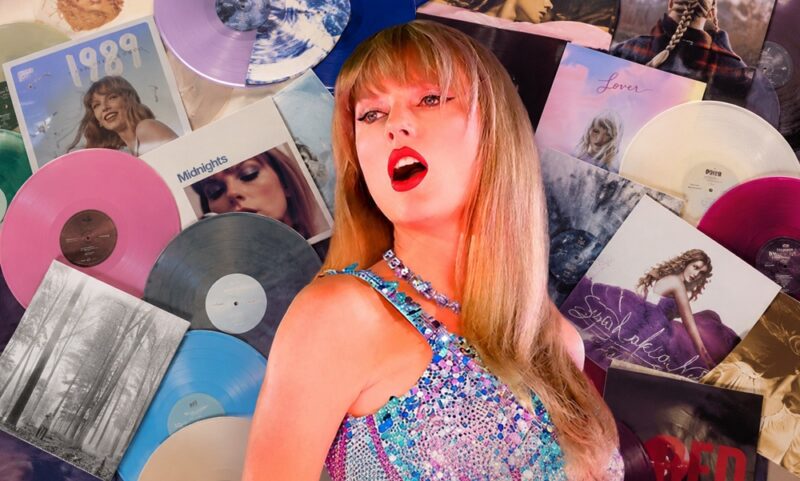
Swift’s recent release cycle has pushed the idea of “multiple variants” to its breaking point. Different covers, bonus tracks locked behind specific editions, surprise drops, and timed reissues all inflate sales numbers while fragmenting what should be a single artistic statement. When headlines scream “millions of copies sold”, it no longer reflects millions of people buying one album – it reflects the same core fanbase being incentivized to buy the same album four, five, or six times.
Compared to artists of past decades – who had one vinyl pressing and a CD later – today’s numbers feel…padded. It’s not that Swift isn’t popular. It’s that her commercial dominance is now built as much on product design as on songwriting. The achievement becomes less “this music connected with everyone” and more “this marketing strategy worked flawlessly.”
What makes this more glaring is the lack of staying power from her latest era. For all the noise around The Life of a Showgirl, the album’s cultural footprint feels shallow. The conversation moved on almost as quickly as it arrived. That suggests something uncomfortable: the success of the project wasn’t driven by the music embedding itself into everyday life, but by the machinery around it – limited editions, countdowns, exclusives, and perfectly engineered urgency.
Then there’s the visual strategy. As chart rules tightened around what kinds of views and streams count toward official placements, Swift “coincidentally” began premiering key videos on alternative platforms rather than relying solely on YouTube. That’s not innovation – it’s optimization. It signals an artist who understands the system so well that she can route around it when needed. Again, impressive from a business standpoint, but revealing artistically. The metric becomes the goal, not the music.
None of this erases Swift’s talent or legacy. She’s written undeniable hits and shaped modern pop in real ways. But her current era highlights a growing disconnect between “record-breaking” and “record-worthy.” When every release is padded with variants and every milestone is engineered, numbers stop being a measure of impact and start being a measure of strategy.
In the end, the danger isn’t that Swift sells too much – it’s that selling too much, in too many forms, cheapens the meaning of the sale itself. If success can be manufactured through excess, then the charts no longer tell us what people love. They just tell us who gamed the system best.
