

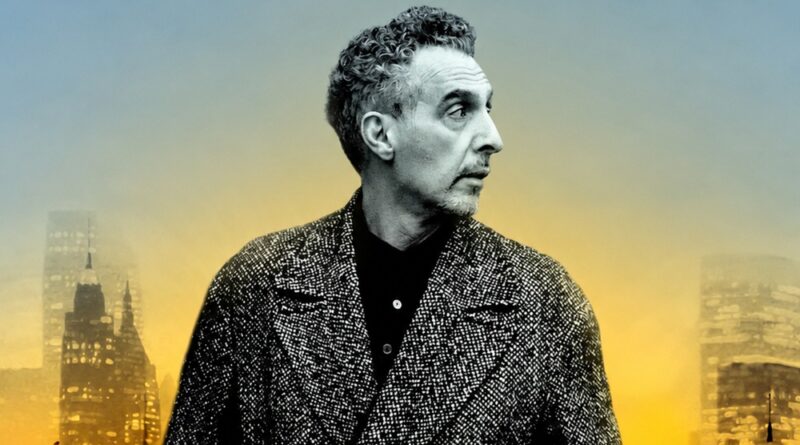
In writer/director Noah Segan’s beautifully understated The Only Living Pickpocket in New York, John Turturro portrays Harry, an old-school Manhattan hustler whose carefully cultivated existence is increasingly threatened by a city that has seemingly outgrown him. Where once there were wallets stuffed with cash and watches worth stealing, there are now credit cards, smartphones and digital transactions, leaving Harry navigating a world in which his particular talents are becoming increasingly obsolete.
But beneath its gently melancholic portrait of a career criminal, Segan’s film is something altogether more affecting: a love letter to New York, to the people who inhabit its ever-changing neighbourhoods, and to the quiet dignity of those struggling to find their place in a world that refuses to stand still. Anchored by a wonderfully restrained performance from Turturro, the film finds unexpected poetry in the smallest gestures, exploring the intersection of craftsmanship, human connection and the inevitability of change.
Speaking with our Peter Gray ahead of the film’s theatrical release, Turturro reflected on the surprising similarities between acting and the intricate art of pickpocketing, the importance of observation and instinct in his craft, and why New York’s constantly evolving cultural identity remains one of its greatest strengths. He also shared his admiration for Segan’s delicate storytelling, and the rare pleasure of working on a film that trusts its audience to find meaning in what remains unspoken.
I saw the film at this year’s TIFF, and prior to that I had spent two weeks in New York, so it was amazing to watch this film and be reminded of the city I would happily live in if I could.
(Laughs) Well, you’re welcome anytime.
One of the things that really struck me in the film is how Harry’s relationship with pickpocketing is almost artistic. There’s such precision and intimacy to the way he observes people and moves through the world. Knowing how much preparation that you put into the physicality of this character, did you find any unexpected similarities between Harry’s craftsmanship and your own relationship with acting? The idea of doing something for so long that it becomes instinctive?
Well, I mean, after you’ve done all your research and preparation, if I’m acting with you, I have to listen to you. I have to put my attention on you, rather than think about all the preparation I’ve done, and hopefully that’s already in my body. There’s an osmosis that happens, and then you respond. Everything you do affects my behaviour, so you’re constantly observing and listening to the other person.
If you’re a pickpocket, you’re doing the same thing. You’re observing people, seeing whether they’re paying attention or not. If we were a pickpocket team, I’d say, “Peter, you set the person up. You move them a little bit, because the idea is that I’ll clip it, but if you move them, they’ll take it out of their pocket themselves.”
It’s a magic act. It’s a violation, but it’s a non-violent violation. The really good ones don’t use a razor blade. Some do, they’ll cut into your coat, but the really good ones don’t need to. They work as a team or alone, but to work alone, you have to be very skilled.
The whole idea is that they don’t feel you. You know what I mean? If you’ve got your hand on a pole and the guy’s looking away, not paying attention, you’re slipping the thing out. But the biggest movement, if it’s not metal, is this little movement (gestures towards his watch buckle). If you can do that without them feeling it, you’ve got a chance. They don’t feel a thing, and suddenly (the watch is) gone.
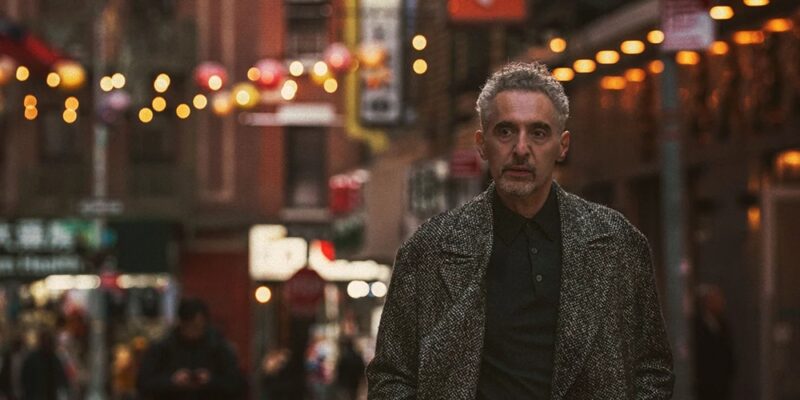
One of the really wonderful things in the movie is the relationship with New York. The city feels like another character in the film, and Harry very much knows the city through its people, rather than its landmarks. You’ve spent so much of your career telling stories about this city, and I wonder whether playing Harry made you reflect on your own relationship with New York? Is there a version of the city that you still carry with you, even if it doesn’t exist anymore?
It’s true, but then it’s not true, because you go into these neighbourhoods and there’s a whole new group of people. There are people from Ukraine, Syria, a big Russian community. In the ’80s, there was this huge Colombian exodus, with people coming from South America. So there are all these different neighbourhoods in Manhattan. There used to be more, and there are still some uptown, around Harlem and Washington Heights, but there are always new groups coming in, and always new places to discover.
You go somewhere and think, “Oh my God, I had no idea.” There are restaurants, people dressing differently, listening to different music, signs in different languages. It’s always morphing and changing.
It’s a port city. It’s a city of foreigners. There’s no original New Yorker. I mean, I was born here, so I can say I’ve lived my life here, but I’m not Native American. They’re the original New Yorkers, you know what I mean? There’s something about that diversity that’s both challenging and invigorating.
I loved my time there. I stayed in the Bronx. It felt like a whole other city in itself. I went into this film knowing nothing about it, and it’s so beautiful. So poetic. It has its own rhythm to it, and I loved the ambiguity of the ending.
That’s all (writer/director) Noah (Segen). All Noah’s script. Noah’s hand. There’s a delicacy to what he did. And that’s to be applauded. It’s a gift to work on something like this. It really is.
The Only Living Pickpocket in New York is screening in Australian theatres from November 26th, 2026.
