
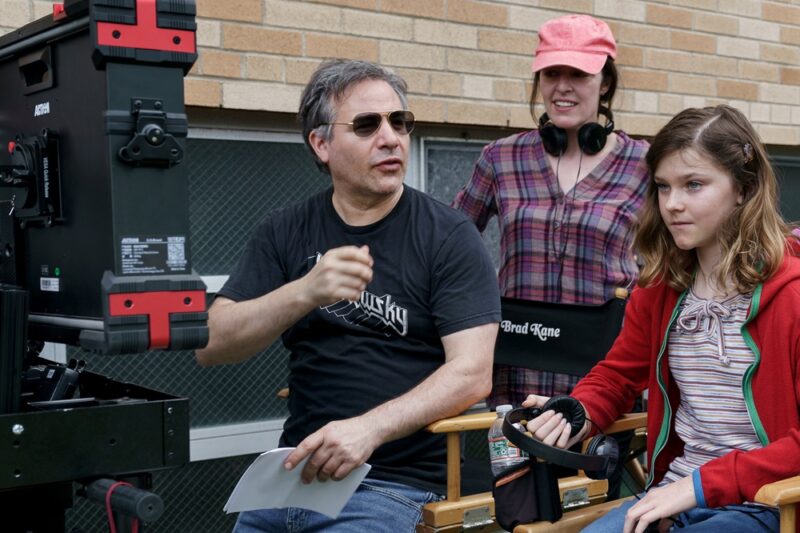
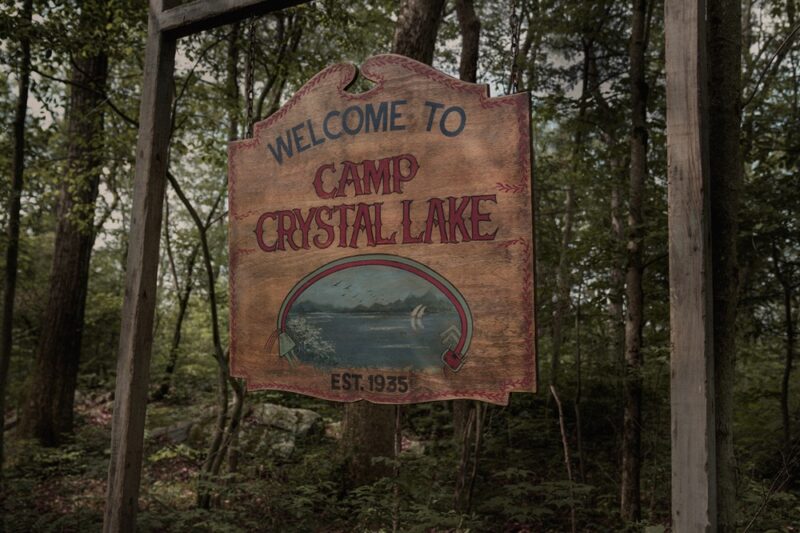
For nearly half a century, the Friday the 13th franchise has taught audiences to fear what lurks around Crystal Lake. With A24’s Crystal Lake, creator and showrunner Brad Caleb Kane is asking audiences to look at that mythology from an entirely different perspective – not by beginning with the unstoppable killing machine Jason Voorhees would become, but with the mother whose grief helped create the legend.
Emmy nominee Linda Cardellini leads the psychological thriller as Pamela Voorhees, a single mother grieving the death of her young son Jason, who drowned in Crystal Lake a year earlier. When two strangers arrive at her door asking questions about her past, a disturbing chain of events begins to unravel, gradually revealing the woman behind one of horror cinema’s most infamous killers. Rather than simply recreate Betsy Palmer’s iconic performance from the original 1980 film, Kane saw the expanded canvas of television as an opportunity to understand Pamela in her own right – exploring her life, her relationship with Jason and the social environment that shaped them both.
For Kane, though, understanding Pamela doesn’t mean sanding away the edges that made Friday the 13th such an enduring horror institution. A lifelong fan who says he knows the films “chapter and verse,” the showrunner approached Crystal Lake by asking what he himself would want to see, balancing the deeper character work afforded by long-form television with the visceral, vicarious thrills of the movies. And with Cardellini delivering what Kane describes as a “mind-blowing” and “riveting” performance, Crystal Lake promises not simply to explain a monster, but to examine how one might be made.
Sitting down with Peter Gray ahead of the show’s release, Kane discussed recontextualizing Pamela and Jason’s relationship, why he believes “monsters are made, not born,” the importance of respecting a franchise that helped inspire his own career, and how his background as a performer continues to fuel the sense of Grand Guignol showmanship he brings to his work.
In making Pamela Vorhees the protagonist, you’re almost reversing what we know of the series. What did you discover about Pamela when you stopped treating her like an explanation for Jason, and started treating her as a woman in her own right?
I discovered that you can’t tell Pamela’s story – which we only really know from the 1980 movie right now – without telling the story of the era she came up in and the America she grew up in. America in the ’60s and ’70s was a very specific time for marginalized groups. Some people want to hear this and some people don’t, but we’re not making – people can be at ease – a “woke” show, with a capital W.
I grew up on these movies. I know what people want to see, and they will see a lot of that in theshow. But you can’t tell the story of Jason’s mother without telling the story of women in America in the ’60s and ’70s: where they came from, why she was so close to her son, and why protecting him was so important to her. There have to be explanations for that.
Of course, some people don’t want those explanations, and they’re perfectly free to go back and enjoy the movies that they have. But if you want to learn a little more about Pamela, if you’re curious and interested in seeing where the legend started, we offer that. We offer a pretty creative and deep-dive explanation.
For those people who are skeptical about what we’re doing, this is not a show made by somebody who was just looking for a job. This is a show made by fans, lovingly crafted with nods to the fans that I know they’ll want to see, but without being heavy-handed or corny about it.
I approached this with the utmost respect for the characters and the lore, and with an understanding that, even though these movies hold a certain place in the culture, a lot of people considered them schlock when they first came out. But then you have to ask yourself: why have they stuck with us and with the culture for nearly half a century? There’s a reason for that. They hit us on a very primal level.
We were kids growing up at a time when we needed that. I think Ryan Reynolds famously said, when he was promoting his latest movie, that the ’80s were a really hard and crazy time. In retrospect, we have Back to the Future, and you can look at the ’80s and think, “Oh, that was the last great time.” But if you were an ’80s kid growing up then, you were under the constant threat of the Cold War and nuclear annihilation.
I remember walking in on my mom watching The Day After, which was about nuclear war, and freaking out at what I was seeing. The time was fraught, and we needed those kinds of escapes. We needed those thrills. We needed to watch other people get theirs without any threat to ourselves. There was something vicarious about the thrills these movies gave us, and they’ve become the soundtrack of our lives to some degree.
So I try to approach this with great respect for the fans, great respect for the characters, and great respect for the place they hold in our hearts.
And if nothing else for those skeptical, you have Linda Cardellini!
Linda Cardellini puts in a performance that is mind-blowing. It’s riveting. She approached the character of Pamela Voorhees with the same level of craft, seriousness and joy that she would approach any other character. She’s not doing an impression of Betsy Palmer. It’s very much her own performance, but one that’s done with great respect.
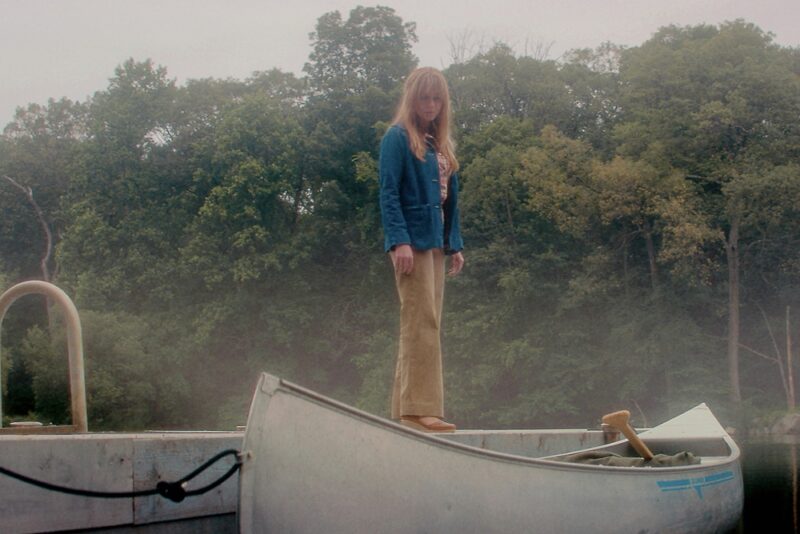
I did really appreciate the ways that you recontextualized some aspects of the original, like when Pamela and Jason are cleaning and he comes across the machete, picks it up and asks, “How do I look with it?”
The way we understand how he came to it is that he’s just always had it. You’re sort of thinking, “There’s got to be one as part of a camping kit.” They live in the woods, and she says, “If we move to the woods, we have to learn to camp and hunt and fish. These are going to be your woods.” “Carve your own path.” It’s all intentional. But I also wanted those scenes to feel, in a way, Amblin-esque – like we’re recontextualizing what you think you know about Jason and Pam, their relationship, and Jason as a little boy.
It’s about how he came to identify with these talismanic things that we now associate with him, and one of those is the machete. So there is a little bit of, “How did Jason come to get the machete, and what did it mean to him when he was just a boy?”
And, as you said, Linda very much makes this her own. The original essentially asked us to fear Pamela, but in Crystal Lake we spend time with her, we understand her. Where was the line for you and for Linda between understanding the person she becomes and then explaining her so completely that you risk taking away what makes her frightening?
We do give some explanation for why she might have gone down the path to psychosis. I think there’s a hunger to understand and empathize with characters that we hold in our hearts and carry with us through life. I don’t think we over-explain things, but we do offer an explanation for why these people could have become the way they were, and why Jason might have grown up to be a killer.
Again, it’s all rooted in the period that Pamela and Jason came up in – the ’60s and ’70s. I think one of the major themes of that time in America was a mistrust of institutions, and we’re experiencing that now, too. We don’t know what the hell is in our food. We don’t know what’s in our medications. That was a big part of the ’70s: trying to re-examine who we are as a nation and as people when we can’t trust the things we thought we could trust. That’s where the show’s explanation is rooted – in that particular time in America.
That probably answers this question, but Pam’s grief created one of our most famous cinematic monsters. Though she is arguably the monster first. In terms of what we see in the film, did you find yourself thinking about this as the story of a mother creating a monster? Or a tragedy in which the world creates the two of them?
That’s how I feel about it. I think monsters are made, not born. People can be born with a propensity towards a certain emotional nature, but I think there really is a balance between nature and nurture.
Pamela was messed with. She was manipulated, she was gaslit, and her life was not easy. Ultimately, when she got away from the things that had manipulated her and made her life difficult, she was left with this boy – this very special boy. So she put all of her emotion, her entire reason for living, into him.
Then, when he’s wrenched away from her, the dam that was holding back the flood of everything she had endured finally bursts, and she becomes who she becomes. By giving that further explanation of her, I think you’re able to empathize with what she became. That was the intention.
We’ve obviously been designed to think of Jason as this unstoppable killing machine, which is great, but this show we just see he’s this incredibly sweet, innocent boy. He was, initially, in the original film, but this obviously gives us more of his character. The real villains are all the shitty teenagers!
I think you have to do that in television because, with a 90-minute movie, you can get in and out without explanation. We go to movies for different things than we come to television for. Oftentimes, we go to movies for a roller-coaster ride, for the thrills, and we don’t necessarily require deeper explanations.
But I think we come to television for character. Long-form storytelling allows you to go deeper, to explore those characters and create more labyrinthine, complex stories and backstories. For people who want that – who are curious about where Jason and Pam might have come from – we provide it. But we also provide the thrills of the movies.
And I know that this project has existed in several proposed forms before your version. I believe there was a Brian Fuller incarnation. When you’re coming into this property carrying decades of mythology, fan expectation, previous ideas about what a Crystal Lake television series could be. When you finally sat down with a blank page, what was the thing you had to forget in order to discover what your Crystal Lake was?
That’s a good question. I approach everything from the point of view of, “What do I want to see?” The benefit I’ve had approaching this one that way is that I’m a longtime fan. I know these movies chapter and verse. I understand what I would want to see from a Friday the 13th movie, but I also understand that you have to go deeper in television. It’s what people come to television for.
I had to remember that this wasn’t a movie. This is a television show, it’s an expansion, and it’s about character in a way the movies aren’t. The movies are about visceral, vicarious thrills – which are great and valid – and they’re about an unstoppable killing machine. With television, you have to see how she becomes that unstoppable killing machine, because you can’t do eight episodes of an unstoppable killing machine.
So I had to forget about fan expectation and look inward. I’m one of those fans, but I’m also somebody who has a lot of experience in storytelling. Ultimately, it became a question of: “What do I want to see?”
In terms of all the films, is there a favourite for you?
I have a number of favourites. It’s really difficult with this series because, when you’re a fan, you like all the different movies for different reasons.
I love Friday the 13th Part III in 3D because it was the first Friday the 13th movie I saw in theatres, in 3D, on its original release. I have very Proustian memories of being in the theatre with a thousand people and a thin layer of pot smoke over all of our heads, the blue beam of the projector going through it, and then Jason squeezing the guy’s head and his eyeball popping out into the audience. Everyone was screaming. I remember how I felt watching that, and it was one of the reasons I wanted to go into this industry.
So, coming full circle with this, I have to look back and say that’s my favourite because of that feeling and that experience. In terms of which one is the best, I think Part VI is probably the most purely fun, especially because that gives rise to Zombie Jason. That’s where he becomes more than what he was before – he becomes undead, this sort of ridiculous character – and it’s the funniest one, too.
I think The Final Chapter is purely the best made movie. And, of course, the OG, because it’s always fun to go back and revisit where it all started.
Quickly, before I let you go, I know that you’ve spent a huge portion of your life telling stories from very different positions. Child actor, singer, writer, showrunner. Does the performer who was once on the other side of the script still influence the way that you would write for actors like Linda?
Completely. In a lot of ways, I was raised as a song-and-dance kid, so there’s an element of showmanship that’s always going to bleed into my shows. There’s an element of Grand Guignol – that sense of, “Let me show you something that’s truly going to make you jump off your couch, point at the screen and go, ‘Holy shit, what am I looking at?’”
That’s the showmanship. So, yeah, that will always bleed into my work.
Crystal Lake will be available to stream on Peacock in the United States from October 15th, 2026 and on Stan in Australia from October 16th.
