
The act of speaking out is so often framed as an inherently empowering one. But what happens when telling your story comes with the threat of financial ruin, public vilification, exile, or years spent defending the very fact that you chose to speak at all?
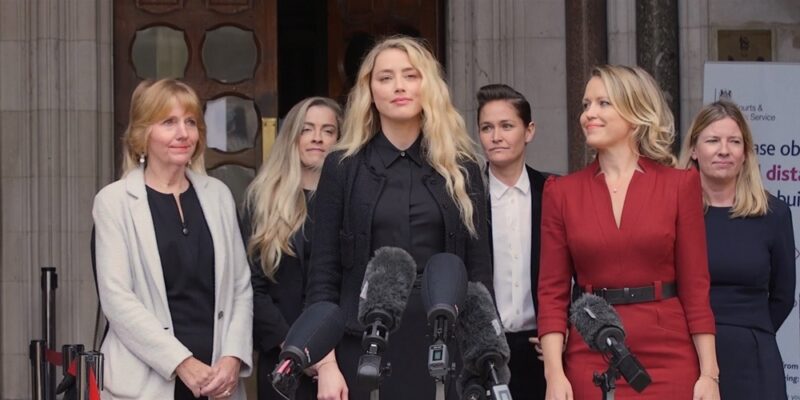
That question sits at the unsettling heart of Silenced, the urgent new documentary from International Emmy Award-winning filmmaker Selina Miles. Drawing from Jennifer Robinson and Keina Yoshida’s book How Many More Women?, the film examines the chilling effect created when defamation law becomes a tool capable of discouraging survivors and journalists from speaking about gender-based violence. Through Robinson, Silenced brings together the experiences of Brittany Higgins, Catalina Ruiz-Navarro and Amber Heard, shifting attention away from relitigating their individual cases and towards the systems, financial pressures and cultural attitudes that can make speaking out extraordinarily costly.
For Miles, that responsibility extended to the filmmaking itself. Speaking with Peter Gray ahead of the film’s theatrical release, the director discusses the impossibility of complete objectivity in documentary filmmaking and the rigorous legal scrutiny surrounding the production, as well as confronting some of her own assumptions throughout the process. She also explains why the film’s intimate handheld aesthetic grew from a duty of care towards its participants, how ongoing consent meant accepting that a woman choosing not to speak could be every bit as important as giving her a platform, and why the visible jump cuts became an unexpectedly fitting part of the film’s language.
Obviously the film is about women fighting for the right to tell their own stories. But documentary filmmaking inevitably involves shaping those stories through editing. Did that create a particular responsibility for you as a filmmaker, knowing that even with the best intentions, you were becoming another person deciding what part of the stories the world would hear?
Yeah, I think that’s an excellent question. As documentary filmmakers, it’s something we grapple with because everyone sets out with the best intentions to tell the truth, but there’s no such thing as a completely objective position. As a creative person, journalist or filmmaker, you inevitably bring your own biases, ideas and perceptions to every facet of a project.
What was unique about this film was that we were adapting Jennifer Robinson and Keina Yoshida’s book, How Many More Women?, so I felt incredibly well supported by having that as our starting point. The film was also a genuine collaboration between so many people. It’s funny because Sundance is such a director-focused festival, and there can be this idea of the director as an auteur and the film being their baby, but that really wasn’t the case here. The film belonged to the participants, to Jennifer (Robinson), to our producer Blayke (Hoffman), who is also a writer and an amazing filmmaker. There was a lot of accountability and the process was incredibly rigorous. We had teams of lawyers across different jurisdictions, as well as our commissioning editors.
Having that support, and working from a book that had already been thoroughly researched and legally vetted, meant I could really focus on the filmmaking and understand my role as one small part of this much bigger machine.
In terms of confronting my own biases, my introduction to some of these cases had been through what I was consuming on social media at the time. It was during COVID, when so many of us were stuck inside and constantly on our phones. Particularly with Amber Heard (and Depp v Heard), it was everywhere. I remember having this instinct that what I was witnessing felt wrong. It was incredibly private and personal material being treated in a way that felt quite disgusting, but I didn’t yet have the language or background to fully understand what I was seeing. Reading the book really expanded my understanding of those issues.
Another example was meeting Brittany’s husband, David Sharaz. He isn’t featured in the film because we made a decision not to explore the harassment and treatment he received in the media, but I had seen how he had been portrayed before meeting him. Then I met him and came to see him as a genuinely supportive, loving and protective partner to Brittany. He had been portrayed as this kind of puppet master, and I found that really interesting.
I think that narrative was able to take hold partly because of an inherent misogyny – this idea that a man couldn’t simply support his partner and be happy to give her a platform without having some ulterior motive. Those kinds of myths and tropes were very quickly dispelled once I met him.
That was one of the really interesting things about making the film: seeing just how differently someone can be framed in the media compared with the experience of actually sitting across from them and meeting them.
That’s the high highs and very low lows of what social media can do. As you said with Amber Heard, she arrives in the film carrying this extraordinary amount of cultural baggage. How do you make a documentary about somebody some viewers have already decided who she is before she appears on screen?
The conviction with which a lot of people come to that case, based on their parasocial relationship with her ex-husband, is extraordinary. I’ve never seen anything like it. I’ve never seen people be so passionate about two people they’ve never met. We knew we were up against something incredibly potent and powerful, and you have to accept that there’s a cohort whose minds you’re simply never going to change. People are entitled to their opinions, too.
We didn’t set out with this film to relitigate these cases or to change people’s minds. It was about giving these women a platform to talk about their experiences with the legal system. We settled on that direction quite early because the cases themselves have already been extensively covered. There’s a four-part Netflix series about the Heard case alone. We felt the real opportunity was in the access we had to these women and what they could tell us about their experiences.
Amber making the decision to speak to us after everything she’s been through was extraordinary. Any time she appears publicly, she’s very quickly shouted down, so we’re extremely grateful that she trusted us. She was also adamant from the very beginning that this film was not to be about her. She wanted to use her platform and her voice to elevate the voices of other women and, hopefully, prevent what happened to her from happening to someone else. I think that has always been her motivation, and we’re incredibly grateful to her for participating.
I think it speaks a lot about her character. She was dragged in just the most public fashion. I feel like there’s this uncomfortable paradox in making this film, because you’re making something about how fear of litigation prevents people from speaking, but you also have to be intensely conscious of what you can legally say. Did you ever feel like the film was experiencing the very thing it was trying to expose?
Absolutely. It’s always important to caveat this by saying that what I or our team experienced is a tiny fraction of what a lot of women go through. It wasn’t happening to us personally, and we had resources in place to manage it that many women simply don’t have. For every story we were able to tell, there are thousands that will never be told because women have been successfully silenced or don’t have the resources to defend themselves. So I certainly don’t want to frame myself as a victim.
But the chilling effect is real. At every stage of production, we had to consider the worst-case scenario. It’s relatively cheap and easy for someone to send a legal threat, and they don’t necessarily have to prove the grounds for it at that point. Even if your film is watertight and has been through eight different lawyers, there’s always the possibility that somebody will send that letter. Those were the conditions we were working under.
And it wasn’t only legal threats. In the days after our Sundance premiere, the film was review-bombed. We had hundreds of one-star reviews from people who hadn’t even seen it. I can take criticism, but when it’s coming from people who haven’t watched the film, it’s devastating as a filmmaker. You work on these projects for years, so that kind of response does have a real impact.
Since then, there was also an attempt to subpoena the film. We were successful in having that set aside, but it was an expensive process. Then you think about journalists like Catalina (Ruiz Navarro), who don’t necessarily have access to the resources that we had. That’s why I think it’s important for us to talk about these experiences. These pressures genuinely shape who is able to speak about these issues and, ultimately, what we’re allowed to say.
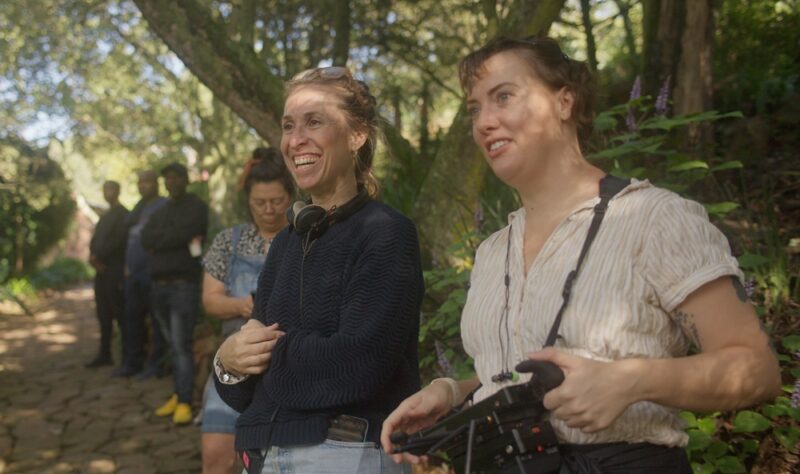
You kept the interviews quite visually intimate here. It’s a handheld camera. It’s five or six hours. It’s retaining jump cuts. When the subject of the film is truth, did you become more conscious of the ways polished filmmaking can sometimes make reality feel less truthful?
Thank you so much for asking. I can really see that you’ve thought about this interview, and I appreciate it. It’s so nice to talk about the craft because that can sometimes get forgotten amid the advocacy around the film.
The approach actually came out of a duty-of-care conversation. We had to be extremely mindful of security on the shoot, so we couldn’t be travelling with and loading in huge amounts of equipment. More importantly, we didn’t want to re-traumatise people who had already been treated horrendously by the media. We wanted to keep our footprint as light as possible.
Our cinematographer, Michael Latham, proposed the handheld, single-camera approach. We also chose to shoot the interviews from more of a front three-quarter angle rather than having participants looking directly down the barrel. We didn’t want it to feel as though we were putting these women back on the stand or asking them to give testimony. We wanted the audience to feel like they were observing a private conversation.
That meant we didn’t have the traditional coverage to disguise our jump cuts, but I think that ultimately worked in the film’s favour. The audience can see exactly where we’ve made a cut, and many of those cuts were made for legal reasons. There’s a transparency to that.
It also meant we couldn’t over-edit someone’s performance. There can be a temptation to keep cutting until you make an answer word-perfect, but we simply didn’t have the coverage to do that. So it became quite a holistic approach – something that began with duty of care and practical considerations but ultimately became really beneficial to the language of the film.
I know there was one woman you intended to interview who decided she couldn’t go through with it. In a documentary that’s fundamentally arguing that women should be able to speak, how important was it for you to equally respect somebody choosing silence as well?
When you consider the personal risk and cost for these women, there was really no question. We, as filmmakers, get to walk away at the end of this and continue with our lives, whereas there can be lasting consequences for the participants.
It was disappointing because we had already travelled internationally to speak to this particular person, and they withdrew on the day of the interview. But that decision came as a result of the trauma they had been through, and I was actually really glad that she was able to recognise that she wasn’t in a position to do the interview.
Even if we had recorded the interview and she had withdrawn her consent afterwards, we wouldn’t have included it. We made it very clear to everyone that consent was an ongoing process. If somebody changed their mind after speaking with us, we would respect that. Given the nature of the film and what these women had already experienced, that was really the only way we could approach it.
One of the things the film exposes is that silencing doesn’t necessarily look like somebody literally being told they can’t speak; it’s making the consequences of speaking so exhausting and so expensive or frightening that silence becomes the only survivable option. Was that distinction something you understood differently by the end of the film?
Absolutely. I think the expression “chilling effect” is really helpful because it captures what’s happening here. You see a lot of comments, particularly about Brittany Higgins and Amber Heard, saying, “I’ve seen this person everywhere. How can they say they’ve been silenced?” But often what people are seeing are excerpts of their court testimony that were broadcast against their will. They didn’t necessarily have agency over what was being put into the public domain. Just because you’re seeing someone doesn’t mean they’re there by choice. That’s an important distinction that people forget.
In fact, our interview with Brittany was the first time she had spoken to the media since what she’d been through. That’s where the chilling effect becomes so significant. Of course, technically, there’s still the option to speak, but what happens when the potential cost is being socially ostracised, exiled or bankrupted? It’s incredible how many of these women ultimately leave the countries where they live, sometimes for their own physical safety. Faced with those consequences, who would willingly put themselves through that?
Some journalists have asked us whether we’re worried the film might deter women from speaking out. I don’t hope that it deters anyone, but I do think, as we saw with #MeToo, it’s incredibly important that anyone making that decision understands the potential risks and consequences.
What I hope is that the film prevents someone from finding themselves in this situation without understanding what it might entail, and then looking back and thinking, “I had no idea what this was going to cost me.”
There is, of course, that want to encourage women to speak out, but the language sometimes unfairly places the responsibility back onto the women. Do you feel the greater question should be whether we’ve created a culture worthy of being trusted with somebody’s story?
Absolutely. That’s really our hope for the film: that people come away from it understanding what they can do to make our culture safer for those who choose to speak out.
It can be something as simple as, the next time a case like Amber Heard’s is playing out across social media, stopping to think before you pile on. That’s something all of us can do. Because there are women in our lives watching how someone like Amber is being treated, perhaps thinking about speaking out themselves, and seeing that treatment may ultimately deter them from doing so.
We all have a role to play in creating a safer culture around speaking out, however big or small that role might be.
And just before letting you go, and I want to thank you again for your time, I know that you started the film wanting audiences to interrogate their assumptions. After years of making Silenced, is there an assumption about yourself that you had to interrogate the most?
Oh, that’s a good question. I think I’ve definitely become much more attuned to the ways I’ve experienced and participated in internalised misogyny. One thing we’re very clear about in the film is that we’re not suggesting all the perpetrators of misogyny are men. There are many women who hold these attitudes as well, and throughout this process I’ve had moments where I’ve had to check myself and interrogate some of my own assumptions.
I’ve also had the privilege of witnessing the incredible people working in this space who are constantly banging their heads against the wall. They know the statistics and understand the realities, yet they’re still desperately trying to break through these misconceptions and myths around gender-based violence.
The frontline workers in particular are extraordinary. Seeing people like (Philipa Cracknell) and others doing this work, I’m in awe of their ability to get up every day and continue fighting this fight. I’ve come away from the film with an enormous amount of respect for the people who dedicate themselves to this work.
Silenced is screening in Australian theatres from September 3rd, 2026.
