

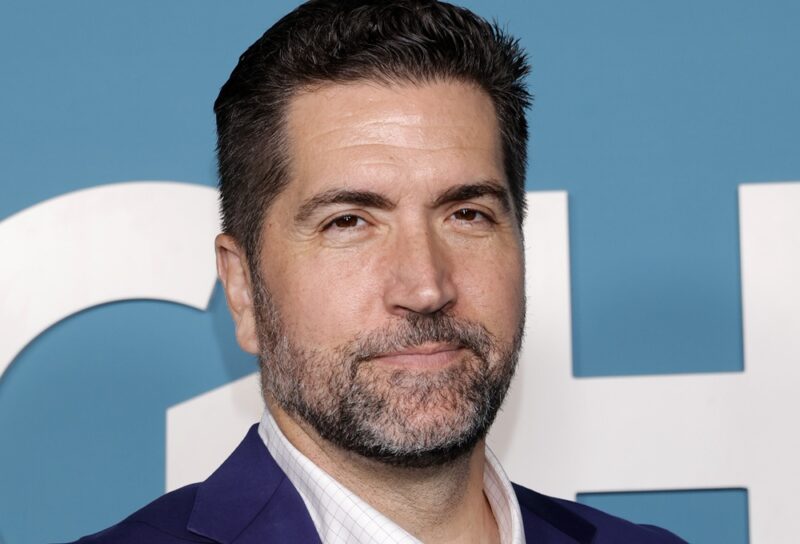
Thank you for your time. First of all, as a kid of the ’90s, I can’t go past saying thank you for Buffy the Vampire Slayer.
You know what, someone just asked me recently what my favourite thing I’ve ever worked on is – and it’s still Buffy. It defined me, and I’m so grateful it was my first show. So thank you for saying that, it really means a lot.
I could talk about that all day, but I actually spoke with Andy (Weir) recently – I moderated a panel with him – and he said when he writes something like Project Hail Mary or The Martian, he doesn’t really have a visual plan. He just writes. I found that fascinating. Since you’d already adapted his work before, did that familiarity with his rhythm, humour and procedural tension change how you approached Project Hail Mary? Were you anticipating the structural challenges this time rather than discovering them?
That’s a great question. I think it was both anticipating and discovering. The big difference was the trust we had after working together for more than a decade. But Project Hail Mary is a more challenging book – it’s more mature and more ambitious. We’re no longer in our solar system; the canvas is the entire universe. At the same time it’s incredibly internal, because it’s about learning empathy and compassion for an alien on the other side of the universe. So it was challenging, but my love for Andy’s work gave us a strong place to start.
Like The Martian, I was struck by how funny Project Hail Mary is. I shouldn’t be surprised since you’re involved – you manage to find humour in places we wouldn’t expect it. But the novel lives so much inside Grace’s head, and cinema doesn’t always allow that luxury. What was the hardest part of externalising that inner process without simplifying it?
Probably exactly that. Not only is it inside his head – he also doesn’t know what’s happening. And when he finally gets a scene partner, that partner doesn’t speak English, communicates in whale songs, and doesn’t have a face to emote with. Everything I’m describing is a screenwriter’s nightmare. But then I realised those challenges were the point. The soul of the story is empathy and communication. Once we embraced that – the actors, Chris and Phil directing – we realised we had a movie, because we could show how difficult that process really is and take the audience along that journey.
And so much of the film hinges on Rocky and Grace together. I love that they don’t connect through shared culture, but through language, biology and purpose. Do you think this might be one of the most realistic depictions of first contact we’ve seen?
I’d have to think about the others, but I know that was very much on Andy’s mind. He wanted to approach first contact through a lens of scientific reality – even in how he designed Rocky – so it would feel authentic. We wanted it to be messy and difficult. So it makes me really happy to hear you say that came through.
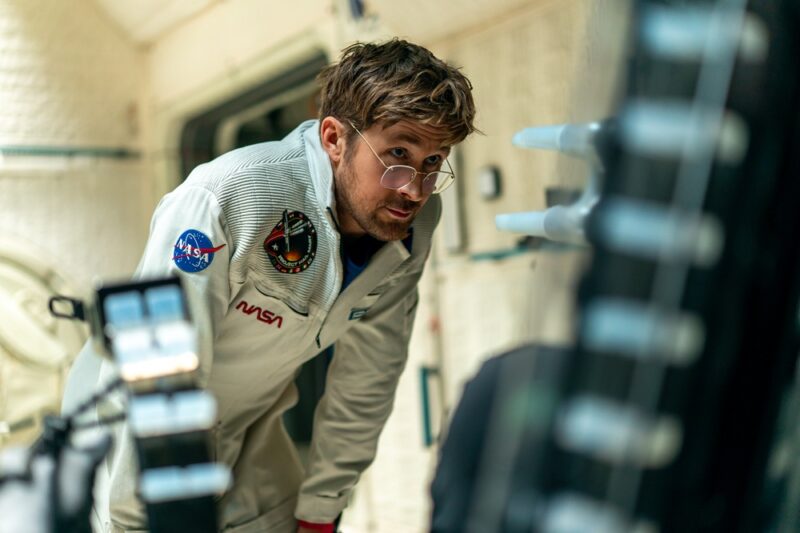
I’ve always wondered – if Rocky watched this movie, do you think he’d misunderstand humanity?
(Laughs) Maybe for the first hour. But once Rocky shows up, he’d realise he’s seeing the flip side of compassion. The door of compassion swings both ways. I’d hope he’d at least see the good in humanity.
You’ve written so many films that feel tailor-made for the theatrical experience. Big sci-fi often focuses on destruction, but this film is about repair. Do you think audiences might be hungry for problem-solving instead of apocalypse right now?
I can’t speak for audiences, but I know I am. I’m tired of post-apocalyptic stories for the sake of it. I’m more interested in humanity. I tend to shy away from nihilism, and that’s what spoke to me in Andy’s work.
When you and Andy collaborate, have you ever disagreed on something – science, emotion, structure – where you thought, “I know how to write this”?
Not really in a strong way. Usually I’d just say, “Let me go write it.” Then he’d read it and we’d talk about what’s working. We also involve Chris and Phil, and Ryan – it’s a collaboration. Andy is wonderful because if something in the book is hard to translate to screen, he’s often the first to suggest solutions.
He told me he wrote the book, then stepped onto set and thought, “Oh, that’s what it looks like.” I’ll say this – the film was one of the most joyous cinema experiences I’ve had in a long time. It’s funny, uplifting, and it makes you feel like the world can actually be good. That’s something we really need right now. So thank you for keeping big, joyful cinema alive.
That really means a lot. Truly. You just made my day. Thank you.
Project Hail Mary is screening in Australian theatres from March 19th, 2026, before opening in the United States on March 20th.
