
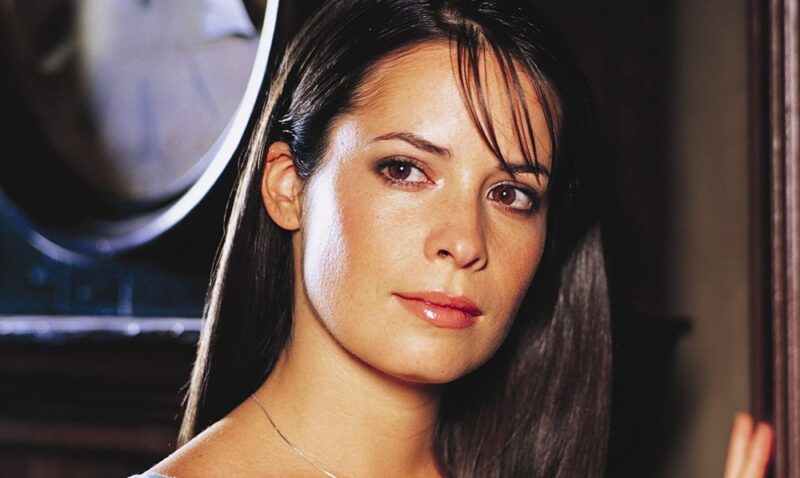
After cutting her teeth with her critically acclaimed turn in the seminal 90s drama Picket Fences, Holly Marie Combs became a household name as Piper Halliwell in the long-running fantasy series Charmed.
Moving from the magic of that show to the murderous mystery of Pretty Little Liars, Combs has become a cross-generational figure, something our Peter Gray asked her about as she arrives in Australia as part of this year’s Supanova Comic Con & Gaming convention in Brisbane (November 7th – 9th).
From fan interactions to what she learned on those early sets that she carried through, Combs unpacked her career as she looked at the legacy of Charmed and how she views it all these years on.
We will talk about Charmed, but I’d love to ask you about the beginning, because I know that you started acting very young. Print ads, then film. Looking back, what do you think you learned on those early sets that influenced how you continued working today?
Well, it was tough. I started at the very bottom, I guess you would say. I did do print ads, I did do commercials, and I did do extra work on films, where you’re just kind of in the background. I did extra work on music videos. I was in a Whitney Houston video, like literally! So it’s a lot of waiting. It’s long hours, which is what I learned from the very beginning. I did my first movie when I was 13. I did a few pilots. I did a few movies, and then my first (show), Picket Fences, when I was about 18. And in those days we did 22 to 24 episodes a year. It was a big part of my life. So if you were going to be dedicated to it, you had to be very dedicated to it!
I was going to ask about Picket Fences. That show tackled quite the social issues for its time. Were there moments on that show that shaped how you wanted to tell stories, especially as you became a producer?
At the time it was, yeah. There was David Kelly (producer) taking a lot of risks, and with CBS, it was kind of a conservative network, so the network would go over his scripts and have to approve them. That was just the nature of the business then, and there was a lot of stuff we got in trouble for. It’s still a very timely show as of today. There’s still issues that that show addressed that people were not ready to see on TV. Specifically, David called me at one point and said, “I have a script coming for you,” and usually the scripts were delivered to my house, and this was nothing new, but he told me that this was a special one for me. “What do you mean?” And that’s when we did, basically, the first teenage lesbian kiss on network TV. The network had read and approved it, but when they saw it filmed, they thought it was too much. So they had this discussion about how to fix that and how to edit it. The network’s suggestion was to cut right before we kissed and come back after the kiss, and David was against that because it made you think that more happened.
That leaves it up to imagination, so their concession was to optically darken it, as if it’s okay in the shadows, which was, like, I was definitely the teenage eye roll (laughs), because I had no problem doing it. I thought it was very well written and very well explored, and very sensitively done. By the time Pretty Little Liars came around, it was a whole new ball game. So many years later, I was like, “Are we allowed to do this?” I was so shell shocked from Picket Fences all the time doing groundbreaking stuff, and then we would get in trouble for it. We did a Mormon episode where we were blacked out in Utah, but now there’s like Mormon wife shows. So, you know, a lot of struggle and heartache for just to be where we are.
It’s wild to think it wasn’t that long ago. So taboo, and now it’s like what can’t we show on TV? And obviously fans know you as Piper, but as someone who produced Charmed, was there a creative decision, or a non-Piper moment, that you’re proud of getting to fruition?
Obviously in season three, there was somebody who was let go that I was not a fan of her being let go, and so as sort of a concession of me being still part of the show, I wanted to be more involved with decisions. That really blindsided me. So that was part of it. But as for the creative aspect of it, I always felt like I and Shannen (Doherty) were so involved in everything, from the way it looked, to the lighting and the writing, to being true to ourselves, that I didn’t feel like I was doing anything differently. I was always terribly invested, as (Shannen) was, and we just wanted it to be the best that it could be. So producing was just a natural extension of that. It was a formal title of something that I already felt like I was doing. We were not quiet about our opinions (laughs). We were not quiet because we were terribly invested.
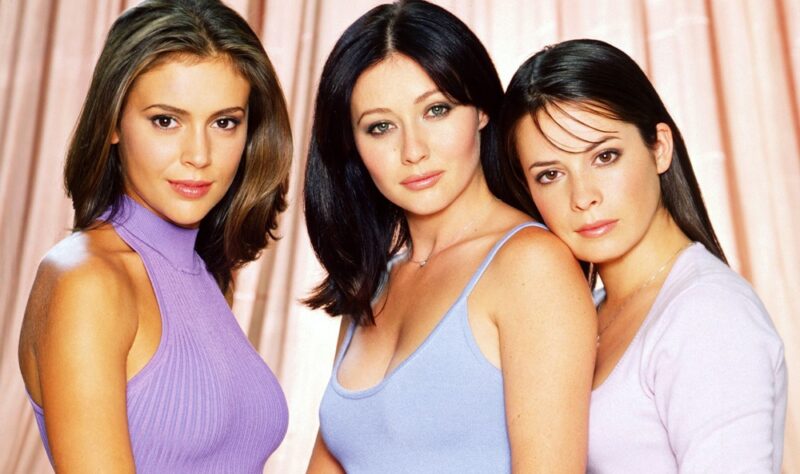
You were the only actor to appear in every episode and the unaired pilot! What do you remember about the tone or the spirit of Charmed, from where it evolved from that first pilot to the final season?
There was always a lot of cooks in that kitchen. We had a lot of writers and a lot of producers. A lot of input from The WB, a lot of input from (Aaron) Spelling. I think that’s why our nucleus, you know, Shannen and Alyssa (Milano) and I, and then Rose (McGowan), just tried to be steadfast and true to what a young person in that situation would be like. Because, for me, it was that the family had to be rooted in reality and real problems for us to able to sell you the fantasy and mystical stuff. You had to believe that we were a family. And they all have siblings, except me, so this was my training ground. Family and mediating and being the middle child, and then the older sister, we were all kind of learning on our feet and building that plane in the air. There’s a genuine aspect to it. There’s real emotions. There were real relationships there. There were real relationships behind the scenes that kind of breed humanity into it. And I think that’s why it’s still lived on.
I feel like Piper often represented stability amongst the chaos. How much of that balance came naturally to you? And how much was a conscious performance choice?
I always started with my characters from the ground up. I start with how they walk, what shoes they wear, if they wear a watch or not, and that helps me find who they are. That makes me feel more genuine. If they wear perfume or not. I really start with little things to make a whole person, and then from there you just take every scene and every person and every interaction as you normally, or hopefully, would in real life. That’s just my process. You integrate that and try and make it fun for everybody else around.
And obviously Charmed was on before streaming. It was an amazing experience that I feel like we are losing, where you wait week to week for a new episode. I miss that so much. How do you think that slower pace of storytelling affected the show’s emotional impact? Instead of that binge-watch, do you feel like it made the show “more”, because we were waiting each week?.
It’s funny, because yes and no. I mean, Spelling had sort of this design where every episode had to stand alone, so you just sort of fell into watching it. You would understand what was happening, and that was TV at the time. It wasn’t until the later years that we had on-going storylines, or on-going bad guys. It was just the way TV was designed before, and how they got to syndication. Now, when you have 10 or 12 episodes…my kids keep sending me messages about the Stranger Things season coming up, and of course they’re going to binge it as soon as they can. And that’s just crazy to me. But it’s the attention span thing. It’s the TikTok. You can’t fight the machine. You just can’t. It’s the way the world is going.
But I do miss that sort of appointment TV, where everybody sat down. But see what Pretty Little Liars did is that they mastered it by live-streaming with the cast. We all had an appointment where we would go into the network and live-stream on Twitter. It got people to watch it live, and that was groundbreaking in their way. I think we’re past that point now. It’s all so small and quickly digestible. I wish it was the way it was before.
And Pretty Little Liars brought you this new generation of fans. Was there a moment when you realised that you are only known from that show?
Absolutely! In every coffee shop in America there will be like a 16 to 25-year old that has said, “That’s Ella. That’s Aria’s mom!” And then the mom will go, “I’m sorry, no, that’s Piper,” and that’s a good problem to have. And then they show each other the shows. I’ve been lucky that way.
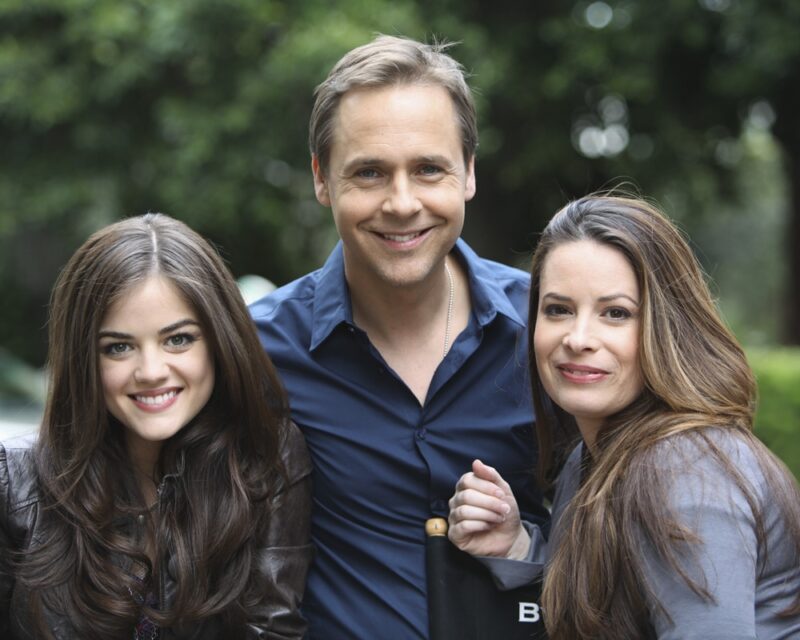
You’ve moved so fluently between acting and producing and advocating for fan communities. Which of those hates gives you the most creative satisfaction?
Well, I’m doing the podcast (“The House of Halliwell”) with the boys, Brian Krause and Andrew Fuller, and it’s fun to get to re-watch it now, with enough time apart, so I can see it as an audience member. Before, I was just watching for specific things, and I wanted to adjust something. Whereas now, I can just watch it as a fan and see what people saw about it. It took me a moment after Shannen passing away to even want to (watch it), because hearing her voice was difficult. But now I can watch it and see things about her that I didn’t see before. I can see things about the show, that the escapism and just taking an hour out of your own life to be absorbed in another universe is very important. And as grounded and as real as I wanted it to be. Escape is a good thing, especially now.
And speaking of Shannen, you’ve worked with these strong, opinionated women throughout your career. What was one thing those relationships taught you about collaboration that you have carried forward?
The thing that I always took away from Charmed is that we were just so lucky to have the opportunities that we did. We are now still so lucky to have, 20 years after it’s ended, any meaningful impact. That is not common, and it does have a life of its own. It is above any trivial personality conflicts we had when we were working. And it’s pretty trivial. It has more meaning than that. When people get down on the fact that, “Oh, we didn’t all get along,” I say it’s more realistic that we fight like sisters, yeah? Yeah, I disagree with them all the time, and to me that makes it more like a family than if we had all just been swimmingly cool.
And if someone was coming to Supanova and they’ve never seen Charmed or Pretty Little Liars, is there one episode or a scene that you’d want to start them on to understand the “Holly Marie Combs energy?”
It would be Picket Fences. What I did when I was 19 was my training ground that made me the actor that I became. I wasn’t working every day, I was in a new town and I didn’t have any friends, so, on my days off, I was able to sit and watch them work on set, and I learned a lot just being around (that show).
I mean, I’m a David E. Kelly fan. He’s married to Michelle Pfeiffer, so…
He must’ve done something right!
Supanova Expo Pty Ltd has delivered 100+ events and counting across Australia, beginning in Sydney in 2002, providing bespoke intimate events all the way to multi-day consumer expos showcasing sci-fi, fantasy, comics, anime, gaming, cosplay and much more. Run by a diverse and passionate team of professionals, Supanova is held annually in Sydney, Melbourne, Brisbane, Perth, Adelaide, and the Gold Coast, and is Australia’s longest-running, leading, and largest event of its kind. For more information and tickets, head to the official site here.
