

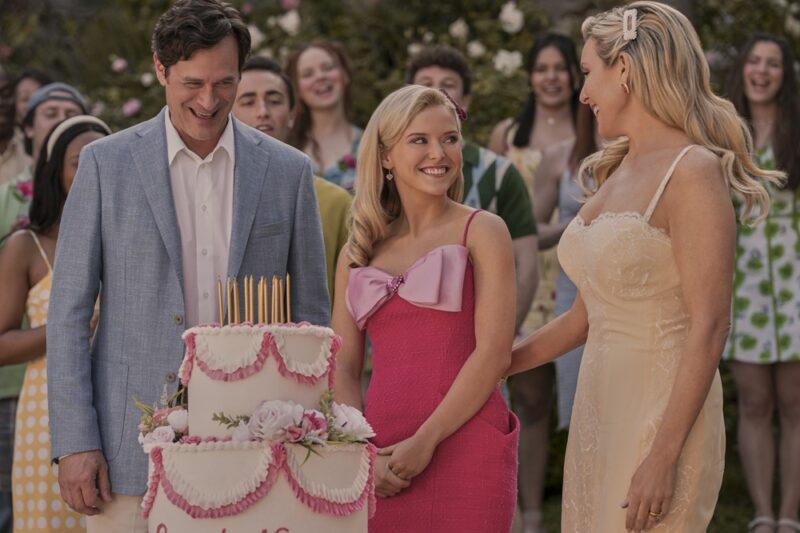
There are few characters as effortlessly likeable as Elle Woods. Twenty-five years after Reese Witherspoon first turned the bubbly sorority girl into one of cinema’s most enduring heroines, Elle arrives with the daunting task of telling us something new about a character who already felt complete.
The good news is that the series has found the perfect actress to wear the pink.
Lexi Minetree steps into one of modern comedy’s most recognisable roles with remarkable confidence, capturing everything that made Witherspoon’s performance so beloved without ever feeling like a simple impersonation. She has Elle’s infectious optimism, unwavering kindness and genuine warmth, and understands that the character’s greatest strength has never been her intelligence or her fashion sense, but her refusal to let cynicism change who she is. It’s a genuinely winning performance, and one that makes it incredibly easy to root for her from the opening episode.
Set six years before the events of Legally Blonde, the series follows sixteen-year-old Elle as her seemingly perfect Beverly Hills life is turned upside down when her family is forced to relocate to Seattle after her plastic surgeon father (Tom Everett Scott) becomes embroiled in a scandal. Suddenly removed from the sunshine, glamour and popularity she has always known, Elle finds herself navigating a new school where plaid has replaced pink, grunge reigns supreme and she immediately sticks out like a sore thumb.
It’s an entertaining premise, but also an unexpectedly familiar one.
Almost immediately, Elle begins echoing the emotional beats of Legally Blonde. Once again, Elle is a fish out of water. Once again, she’s judged for her appearance before anyone takes the time to know her. Once again, she slowly discovers that authenticity, kindness and perseverance matter far more than popularity.
Those themes remain just as uplifting today as they were in 2001. The problem is that we’ve already watched Elle learn these lessons.
As a standalone coming-of-age comedy, the series works remarkably well. As a prequel, however, it unintentionally undermines the very film that inspired it. One of the joys of Legally Blonde is watching Elle arrive at Harvard believing she only has one path in life before discovering strengths she never realised she possessed. If she has already undergone such a significant personal transformation in high school, that later journey inevitably loses some of its impact.
It’s difficult not to spend much of the series wondering whether Elle would have been stronger had it simply existed as its own alternate interpretation of the character rather than insisting on fitting into established canon.
Thankfully, the series has plenty working in its favour beyond Minetree.
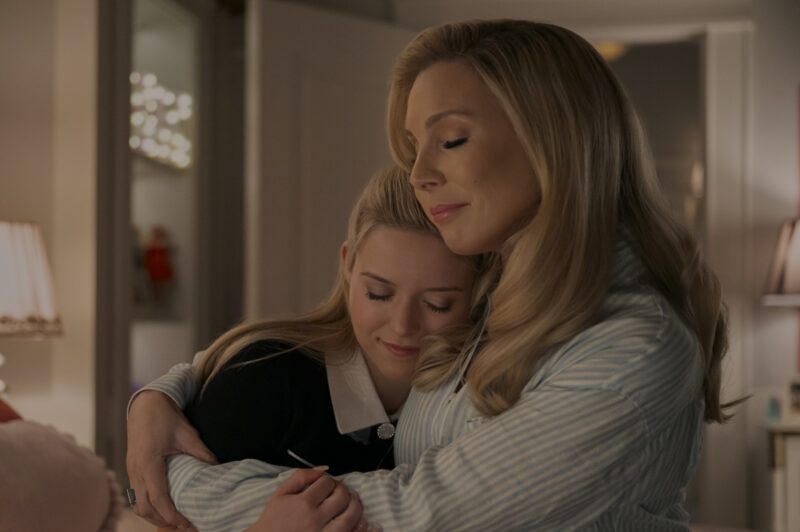
Scott and June Diane Raphael are delightful as Elle’s parents, Wyatt and Eva, whose marriage receives considerably more depth than the original film ever afforded them. Their struggles adjusting to life in Seattle add genuine emotional texture, while their comic timing provides many of the series’ biggest laughs. The expanded family dynamic gives the show an emotional foundation that often proves more compelling than some of the high-school storylines themselves.
The supporting cast is equally charming, and while many of the familiar teen archetypes are present – the mean girl, the misunderstood outsider, the love interests = the performances are earnest enough to keep them engaging. There’s an undeniable sweetness running through the entire series that feels increasingly rare in modern teen television.
That sincerity ultimately becomes Elle‘s greatest strength.
Rather than chasing darker trends or manufactured angst, the show embraces optimism in much the same way Legally Blonde once did. Elle genuinely wants to help people. She believes the best in others, even when they don’t deserve it. The series never treats that kindness as weakness, and that remains one of the franchise’s most enduring qualities.
Yet despite all its charm, the writing rarely takes meaningful risks.
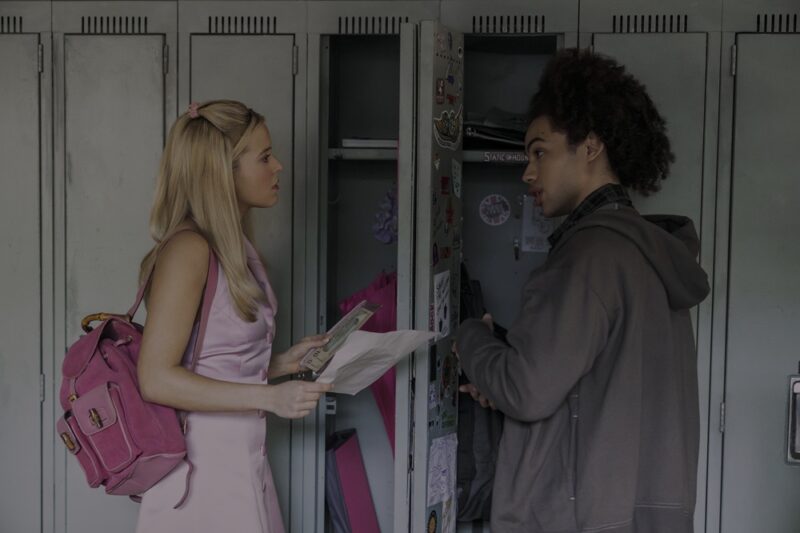
The Seattle setting never fully feels like mid-’90s Seattle beyond surface-level grunge aesthetics, and several storylines play out exactly as expected. More frustratingly, the series seems reluctant to challenge our perception of Elle in any substantial way. It wants to celebrate everything audiences already love about her, but in doing so, it rarely uncovers anything we didn’t already know.
That’s perhaps the greatest disappointment.
A prequel should deepen our understanding of a beloved character or reveal a side of them we’ve never seen before. Instead, Elle largely recreates the emotional trajectory that made Legally Blonde so memorable in the first place. It isn’t that the series misunderstands Elle Woods – it understands her remarkably well. It simply tells a story that feels too similar to the one we’ve already watched.
Still, thanks largely to Minetree’s enormously appealing performance, Elle remains an easy series to enjoy. She captures the same generosity, humour and resilience that made Witherspoon’s portrayal iconic while bringing enough youthful earnestness to make the role feel like her own.
If you’re looking for another excuse to spend time in Elle Woods’ world, you’ll likely leave smiling. Just don’t expect this prequel to redefine the character or enrich the original film in the way its premise promises. More often than not, it simply reminds you why Legally Blonde remains so difficult to improve upon.
All eight episodes of Elle are available to stream on Prime Video from July 1st, 2026.
