

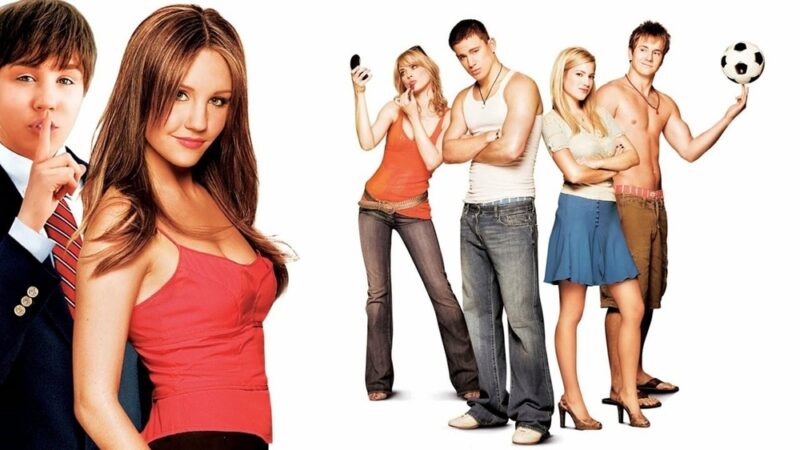
Twenty years on, She’s the Man remains one of those rare teen comedies that didn’t just survive its era – it quietly outgrew it.
Released in the US on March 17th, 2006, the film arrived at the tail end of a very specific wave: glossy, high-concept teen comedies built around identity swaps, social hierarchies, and romantic chaos. But what sets She’s the Man apart, even now, is how confidently it commits to its premise, and how much of that confidence rests on Amanda Bynes.
As Viola Hastings, Bynes delivers a performance that feels almost out of time. Broad without being lazy, physical without losing emotional grounding, and relentlessly funny, she carries the film through tonal shifts that would derail lesser comedies. Her turn as “Sebastian” isn’t just a gimmick – it’s a fully embodied character, built on awkward posture, forced swagger, and an undercurrent of panic that makes every scene land, regardless of how unbelievable it actually is. It’s no surprise that, while the film received mixed reviews on release, her performance has since become the centrepiece of its enduring cult status.
Opposite her, Channing Tatum – then largely unknown – brings an endearing sincerity to Duke Orsino. Watching it now, there’s a certain charm in seeing Tatum before the polish: looser, goofier, and perfectly willing to be the butt of the joke. His comedic timing, especially in the film’s more absurd moments (“Do you like…cheese?”), hints at the career he would go on to build. It’s also a reminder that Bynes was right – he was a star in the making.
Loosely inspired by William Shakespeare’s “Twelfth Night,” the film takes the classic mistaken-identity setup and filters it through mid-2000s American teen culture: boarding schools, soccer rivalries, and debutante balls included. What could have been a shallow update instead becomes something surprisingly layered. Beneath the farce, She’s the Man is fundamentally about gender performance: who gets taken seriously, who gets dismissed, and how much of identity is something we play rather than inherently are.
Of course, it’s still a comedy first – and a very funny one. Director Andy Fickman leans into the chaos, embracing the escalating misunderstandings, the romantic entanglements, and the sheer ridiculousness of Viola’s situation. The supporting cast – from David Cross’s gleefully unhinged principal to Vinnie Jones’ deadpan coach – adds to a tone that never quite takes itself seriously, even when the stakes (in true teen movie fashion) feel enormous.
But part of what makes revisiting She’s the Man in 2026 so interesting is the context that’s grown around it. Bynes has since spoken candidly about the toll the role took on her, particularly the discomfort she felt seeing herself transformed onscreen. That hindsight adds a bittersweet layer to what is otherwise such a joyful, committed performance. It’s a reminder that the film’s exploration of identity – played for laughs at the time – touched on something more personal and complicated behind the scenes.
And yet, the film itself still works. The jokes land. The romance is disarmingly sweet. The central idea that talent should matter more than gender feels just as relevant, if not more so, two decades later. If anything, She’s the Man feels ahead of its time in the way it plays with fluidity and perception, even if it couches those ideas in broad comedy.
What’s perhaps most surprising is how rewatchable it remains. In an era where many of its contemporaries feel dated or disposable, She’s the Man has endured. Not because it was perfect, but because it was specific, committed, and just a little bit fearless.
Twenty years later, it’s no longer just a teen comedy. It’s a cult classic, a star-making showcase, and a reminder of a moment when mainstream comedies were willing to be this unapologetically weird.
