
The AACTA Awards red carpet always feels like a curious collision of celebration and anticipation – part victory lap for the year that was, part tea-leaf reading for the year to come. Under the camera flashes and polished smiles, there’s often a deeper conversation happening about what Australian screen culture is becoming, what it values, and where its storytellers want to go next.
This year, that conversation was especially vibrant.
As talent drifted through the press line in equal parts glittering and slightly chaotic, it quickly became clear that 2025 in Australian screen wasn’t just about what had been released, but about what it made people feel, and what it made them hungry to do next.
The Bump Effect
If there was one piece of Australian television that kept coming up again and again, it was Bump, a series that seems to have burrowed deeply into the industry’s collective consciousness.
Comedienne Julia Zemiro lit up when discussing the show, admitting she hadn’t initially thought it would be “for her,” only to fall completely under its spell; “I just fell in love with the young, new actors that Claudia (Karvan) had found to play the leads,” she said. “I loved this other aspect of having a Spanish offshoot. To hear Spanish in a show…she made subtitles normal.”
Zemiro was particularly struck by the way the show handled climate and environmental anxiety – not didactically, but atmospherically; “There’s an episode where the show starts and there’s just ash in the sky and it’s slightly orange. The whole show is orange, and you don’t sort of question it, but you know what’s going on because you live in Australia.” For her, that willingness to sit in unease, rather than explain it away, felt like a creative leap forward for Australian television.
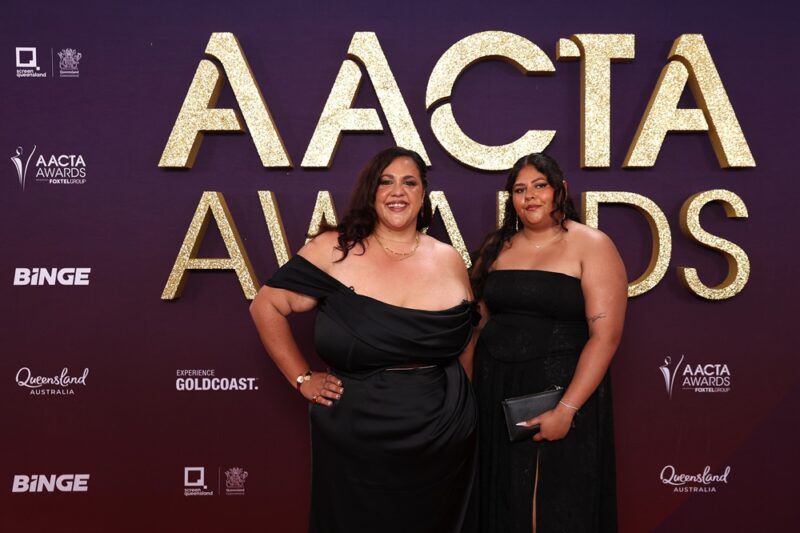
Steph Tisdell echoed that admiration, though with her trademark self-deprecating humour; “I was really into Heartbreak High, which was a surprise,” she laughed. “It made me realize how old I am. But it was so cleverly done and so unafraid. As a writer, you go, ‘Oh, maybe I couldn’t go that hard.’ And then you realize… actually, we totally can.”
She reflected on how younger creators are shifting the cultural language of Australian screen, even if it leaves her feeling slightly outpaced; “Young people speak like drag queens now – and I love drag queens – but that used to be so niche. My brothers have stolen it all!”
If anything, that playful generational tension felt emblematic of the current industry moment: older artists watching, learning from, and being challenged by the boldness of the new guard.
The Margot & Jacob Moment
Looking forward, excitement around upcoming Australian projects was palpable – particularly when it came to the collaboration between Margot Robbie and Jacob Elordi in the forthcoming “Wuthering Heights.”
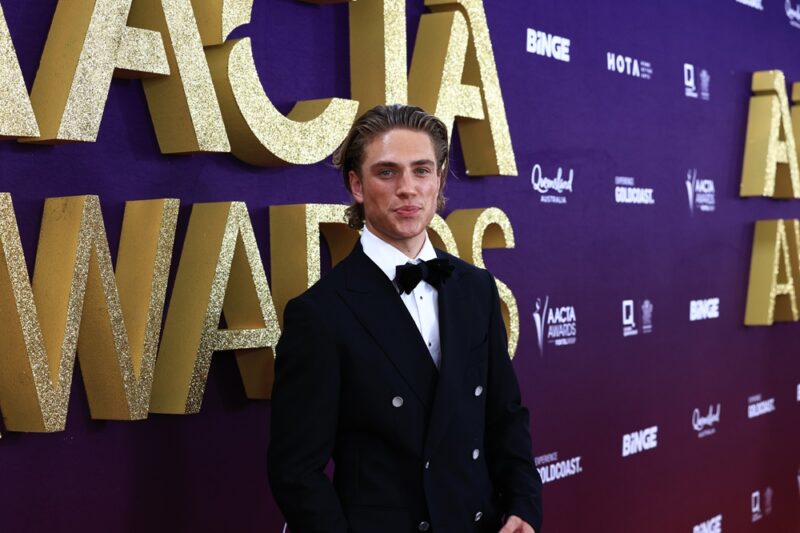
Chaad Hewitt could barely contain his enthusiasm; “I’m really excited to see what Margot and Jacob are about to produce. It just feels organic – like there’s a real connection there, both on set and off.”
For Hewitt, their partnership represents something larger than just two big names aligning, it signals a new wave of Australian talent shaping stories from a position of creative power; “There’s such a buzz around Australian talent right now. Not just Margot and Jacob, but the whole ecosystem.”
Dreams, Desires, and Genre Fantasies
Beyond celebrating the past year, many of the actors on the carpet were refreshingly candid about what they want next.
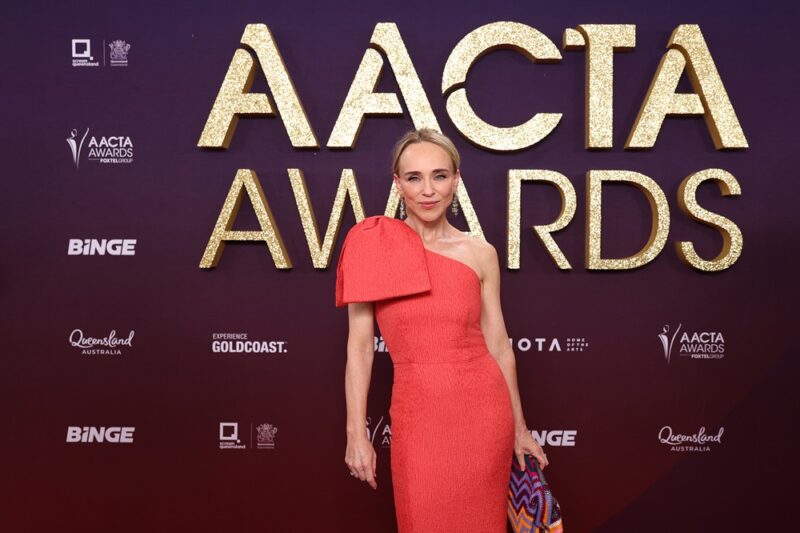
Susie Porter offered one of the most pointed reflections of the night, speaking openly about the roles she hopes to move toward; “I’d love to do a lead role – as a nun, or an addicted police officer. Something where I’m not just ‘the mother of someone.’ That’s fine, but I’d like to be identified as an individual.”
Her comments touched on a larger conversation in the industry about how women – particularly women of a certain age – are cast and perceived; “I know I’m going to be playing older mothers and eventually grandmothers, and that’s okay. But I want to put it out there: I want something that’s mine.”
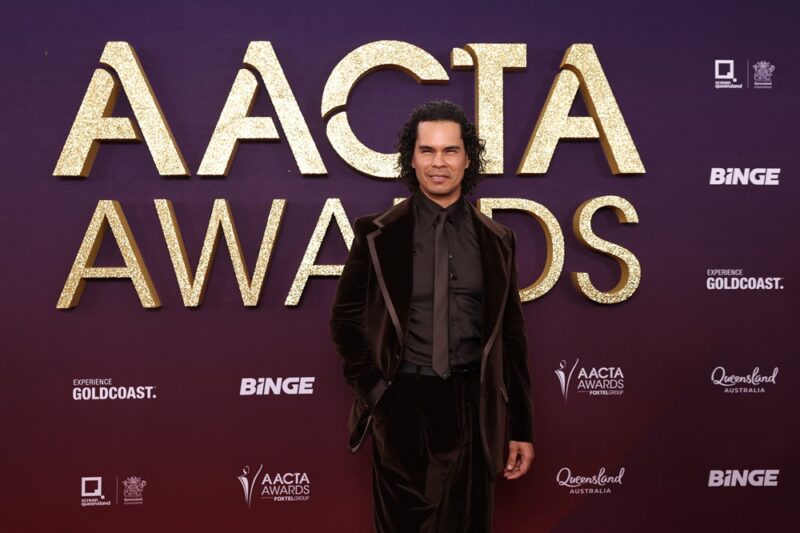
Meanwhile, Mark Coles Smith leaned enthusiastically into his love of genre storytelling; “I love the language of genre – that dance between the familiar and the new.”
His dream? Something unapologetically fantastical; “I want to be riding into Mordor on horseback. Or give me a fishy tail – make me a merman! I want to make mermen cool again.” But beyond spectacle, Coles Smith is also hungry for comedy, a space he feels he’s been underutilized in. He reminisced about his time on KGB, an Indigenous comedy series for the ABC, recalling how freeing it was to improvise and play; “Comedy sets can be so fun – there’s a level of encouragement and chaos that’s really creative. If we could blend fantasy and comedy? That would be a dream.”
Indie Spirit & Creative Ambition
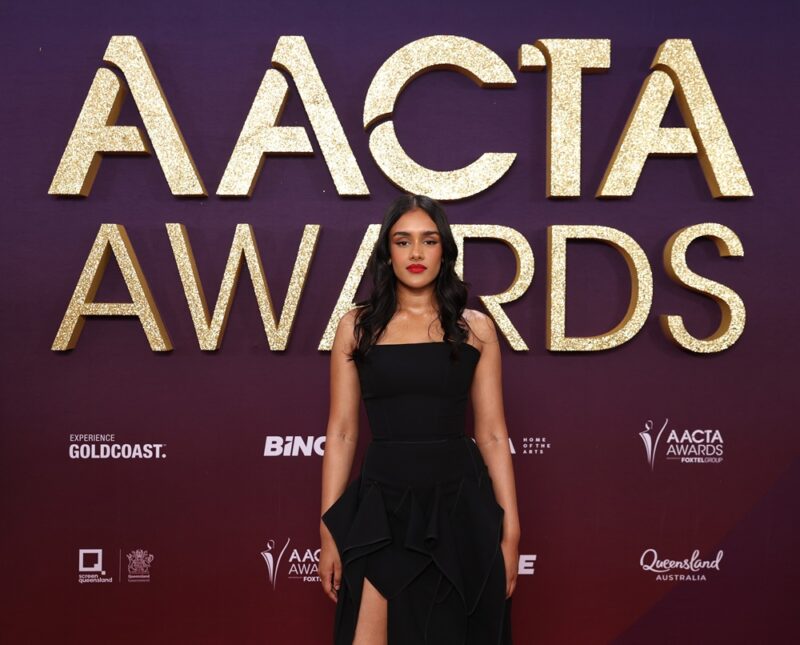
For The Pitt star Shabana Azeez, 2025 has been about celebrating independent Australian cinema while plotting her next move. She proudly noted that Lesbian Space Princess won Best Indie Film – a win she clearly cherishes; “Casting directors, please, my dream is to do another great Australian indie and round out my indie trio.”
Her ideal next project? A tonal shift – something that would complete a kind of creative trilogy, though she kept that tantalizingly under wraps.
And when she’s not on set? She turns to Guy Montgomery’s Guy Mont-Spelling Bee for solace; “That show gets me through bad shoot days. I put it on and think, ‘Yeah, I can spell shirt.’ It’s an easy win.” She also singled out Aaron Chen as “a revelation” in Australian comedy – someone whose performance style feels genuinely distinctive.
A Red Carpet That Reflected a Growing Industry
As the night rolled on, what became clear was that this year’s AACTA Awards red carpet wasn’t just about awards, it was about momentum.
There was pride in what Australian screen has achieved in 2025: shows like Bump and Heartbreak High pushing boundaries, indie films finding audiences, and global stars like Robbie and Elordi reinvesting in homegrown storytelling. But more than that, there was hunger – for better roles, bolder genres, sharper comedy, and more risk-taking.
If this red carpet was any indication, the most exciting part of Australian screen isn’t just what we’ve seen – it’s what’s still to come.
This year’s AACTA Awards ceremony took place on February 6th, 2026, as part of the AACTA Festival (February 4th – 8th, 2026).
