

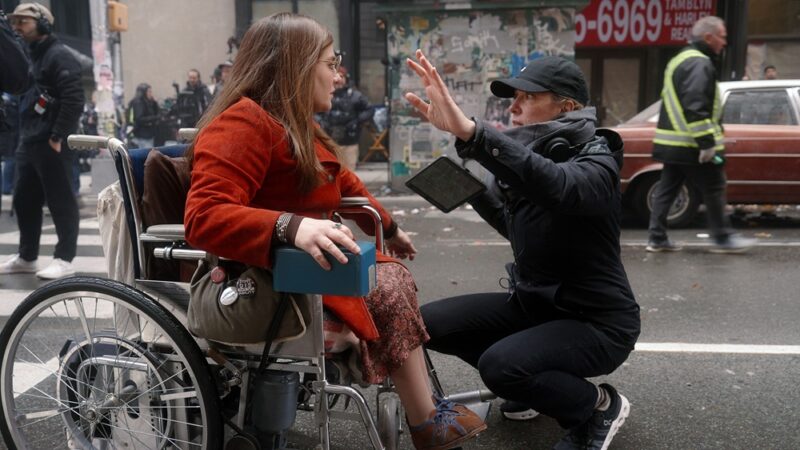
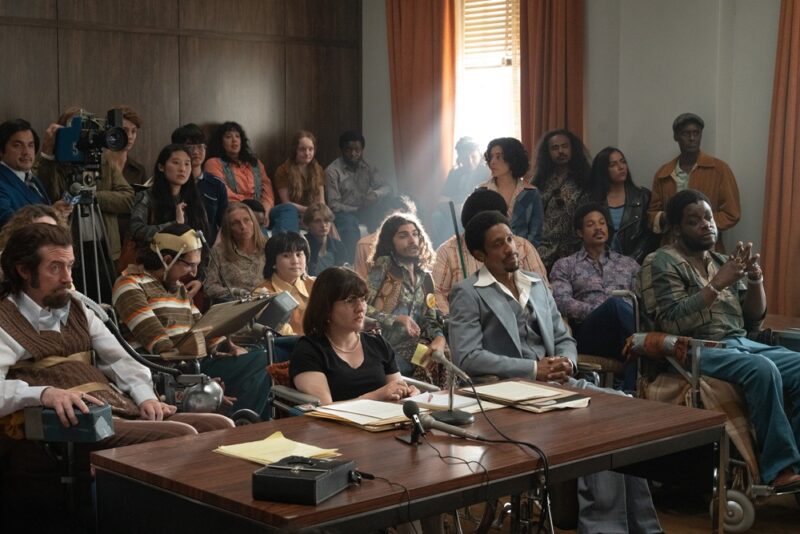
History has a habit of remembering its revolutionaries as larger-than-life figures, their imperfections smoothed over in favour of the extraordinary things they achieved. But for Ruth Madeley, portraying disability rights activist Judy Heumann in Being Heumann meant looking beyond the icon to find the complicated, funny, occasionally stubborn woman underneath. Directed by Academy Award winner Siân Heder (CODA), the film revisits the remarkable 1977 occupation of a San Francisco federal building, when Heumann and a determined coalition of disabled activists refused to be ignored by a government unwilling to honour their rights. What unfolds is a rebellious, frequently irreverent celebration of collective resistance, reminding audiences that the accessibility so many take for granted today was never simply given, but fiercely fought for.
Speaking with our Peter Gray ahead of the film’s release on Apple TV, Madeley reflected on the uncomfortable expectation that disabled people should be considered inspirational simply for existing, the responsibility of portraying a woman she personally idolised, and the creative freedom Heder afforded her to explore the contradictions behind Heumann’s extraordinary legacy. Their conversation also touched on the importance of allowing disabled characters to be messy, imperfect and unapologetically human, and why celebrating the victories of the past shouldn’t distract us from the battles still being fought. As Madeley so eloquently reminds us, progress isn’t simply about recognising how far we’ve come, but questioning how much further we could go.
I wanted to ask you first about the burden of being inspirational, because I think we’ve often encouraged figures like Judy to be seen through this lens of inspiration. I feel like sometimes that can flatten their humanity. What I loved about Being Heumann is that she’s funny, she’s stubborn, she’s complicated…did you feel a particular responsibility to protect those imperfections rather than simply present her as someone we’re supposed to like all the time?
Well, first things first, you’ve given me a brilliant title for my autobiography: The Burden of Being Inspirational. I love that. But yeah, I love this question. I think one of the tropes surrounding disabled people is that we’re inspirational just for existing. I mean, I’ve been called inspirational for many things, such as going out and doing my shopping. That is not inspirational at all. Unless I’m severely hungover, then it is!
But I think one of the most beautiful things about Judy, and also Siân (Heder) and Rebeka’s (Taussig) writing, is that she wasn’t perfect. That was so important to me to play, because disability in the industry has often been portrayed in a way where you’re either saintly or you’re so bitter about being disabled that you become the villain.
And Judy wasn’t either of those things. For me, that was such a precious thing to portray on screen, not just to show Judy and all of her layers, but also, from a craft perspective, to get to play all of those things. That was one of the biggest privileges and joys for me. But yeah, it was really important to me to show all the things behind the icon that was Judy: her real humanity, her vulnerabilities, her fun, her humour, her wit, and also the moments where she could be a bit messy and a bit of a nightmare for people.
Well, speaking of Judy, I know that she was involved in developing this film before she passed away. I imagine that gives the performance a particular emotional weight. How did you navigate the balance between honoring the woman she wanted the world to know and giving yourself permission as an actor to discover things about her that she might not necessarily have recognized in herself?
Yeah, you know, I think that was one of my favourite things about working with Siân. Siân was fantastic at giving actors the space to find all of those things. And I admit, at the start, it was hard because I, as a disabled woman myself, idolised Judy and what she did for my community. So it was tricky at first to break away from the icon that she was and show the other sides to her. But I think that was one of my favourite things about working with Siân, having that freedom to play.
And I think the fact that Judy wasn’t with us anymore when we were filming, that she wasn’t there to ask questions, meant it became a little bit of an investigation with each scene, finding those tiny truths and tiny moments within each of the scenes that Siân created. That was really important, and fun as well. Really fun.
And one of the more confronting things about revisiting this history is recognizing how many of these conversations from 1977 still feel so familiar today. When you’re playing someone whose achievements have genuinely changed the world, how do you celebrate that progress without allowing the audience to feel that the work is somehow finished?
I mean, this is very timely, this coming out now. But I feel I’m an incurable optimist, so I’m all about celebrating how far we’ve come, even in the past year. But I think one of the biggest things for me is people enjoying the movie, really enjoying the story. Whether this was reality or not, this is an excellent, fun story that audiences are going to love. And that in itself is important. It never feels like a history lesson or a documentary where you’re being educated in some way. We want audiences to enjoy the ride, because it is a ride.
And then just having, I guess, a general awareness of the physical world around you and how that didn’t just happen. We didn’t just have curb cuts; they were fought for. And one of the loveliest bits of feedback we’ve been getting is that people are becoming more aware of what’s around them and wanting to speak up about disability rights and disability access when there’s no disabled person in the room. I think that’s the biggest thing.
But yeah, I’m very much about celebration, but not resting on your laurels and thinking, “It’s great that we’re here,” but asking, “How far could we be this time next year?”
Being Heumann is streaming on Apple TV from November 13th, 2026.
