

Judgement is coming.
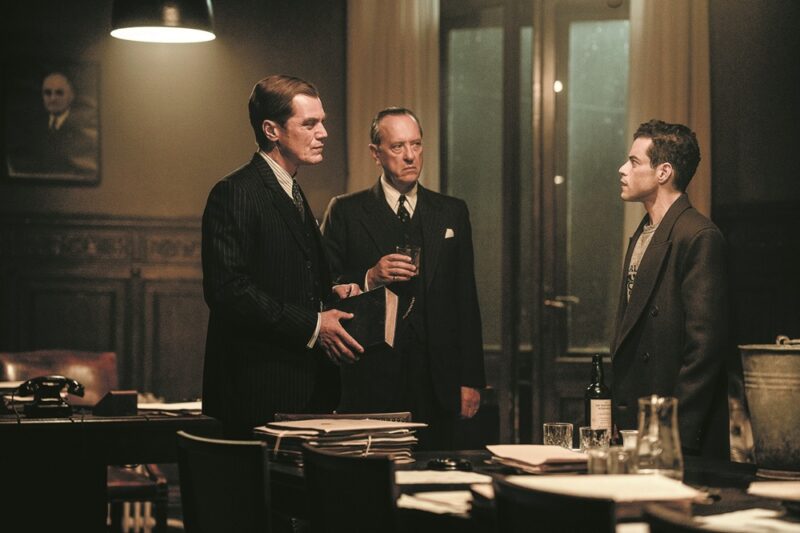
The Allies, led by the unyielding chief prosecutor, Robert H. Jackson (Michael Shannon), have the task of ensuring the Nazi regime answers for the unveiled horrors of the Holocaust, while a US Army psychiatrist (Rami Malek) is locked in a dramatic psychological duel with former Reichsmarschall Herman Göring (Russell Crowe).
Based on the book “The Nazi and the Psychiatrist” by Jack El-Hai, Nuremberg is a psychological historical thriller about the international criminal trials held by France, the Soviet Union, the United Kingdom, and the United States against leaders of the defeated Nazi Germany for plotting and carrying out invasions of several countries across Europe and committing atrocities against their citizens in the Second World War.
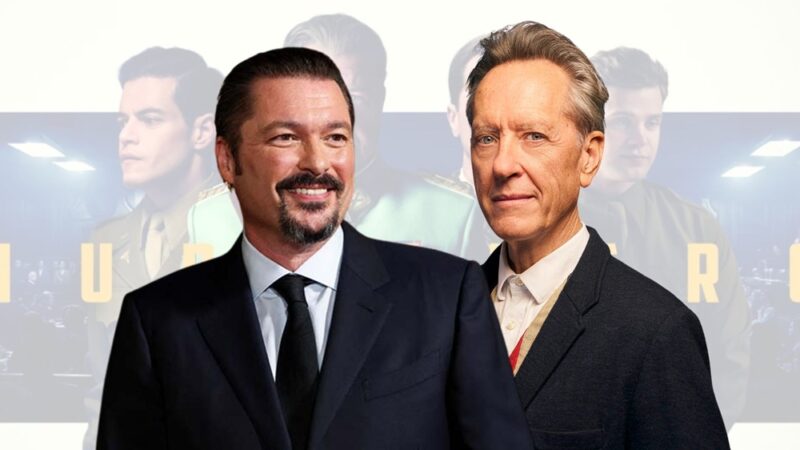
Ahead of the film’s World Premiere earlier this year at the Toronto International Film Festival, where it received a 4-minute standing ovation and universal praise for Crowe’s performance, our Peter Gray was on the ground for the red carpet, chatting to both writer/director James Vanderbilt (Scream VI, the forthcoming Scream 7) and actor Richard E. Grant (who stars as Sir David Maxwell Fyfe, a British Conservative politician, lawyer and judge who combined a legal career with political ambitions that took him to the offices of Solicitor General, Attorney General, Home Secretary and Lord High Chancellor of Great Britain).
With the film now releasing in Australian theatres, here’s their red carpet exchange about the film’s relevance and honouring its figures.
James, I’m just going to quickly say I loved what you did with the last two Scream films! I’m very excited for Scream 7.
James Vanderbilt: Oh, thank you. Incredible. You’re not mad about Dewey?
No, it had to be done. I am a bit mad about Samara Weaving being knocked off at the beginning (of Scream VI)…
James Vanderbilt: Oh, that’s fair. I was shooting Ready or Not 2 just in April. Samara’s the best!
On to Nuremberg. The Nuremberg trials are very much remembered as landmark in the international justice system. How do you think this story resonates in our current climate? When the definition of accountability for leaders is still being questioned?
James Vanderbilt: I think it has always resonated. I started writing this film 13 years ago, and it resonated then. I think that the story of the Nuremberg trials and the world coming together to do this amazing thing has always been applicable to our lives. The thing I love about it is it’s really a story about justice versus vengeance and the world coming together to do what I think is a very noble act. I think (this film) will resonate 10, 20, 50 years from now. That’s the hope.
Richard, I feel like with the roles you have played, you often gravitate towards characters that have wit and edge a lot of the time. Did you find any of that in Sir David Maxwell Fyfe?
Richard E. Grant: He is somebody that absolutely lived his life by legal due process. He was very measured, kept all of his emotions under control, like a British man of his class in that era would, and did do. YouTube was the invaluable resource to be able to see him deliver everything. I’ve never been in a situation in any job of being able to see the person you’re playing. Doing that was extraordinary. I felt a responsibility to honour that.
Nuremberg is now screening in Australian theatres.
