
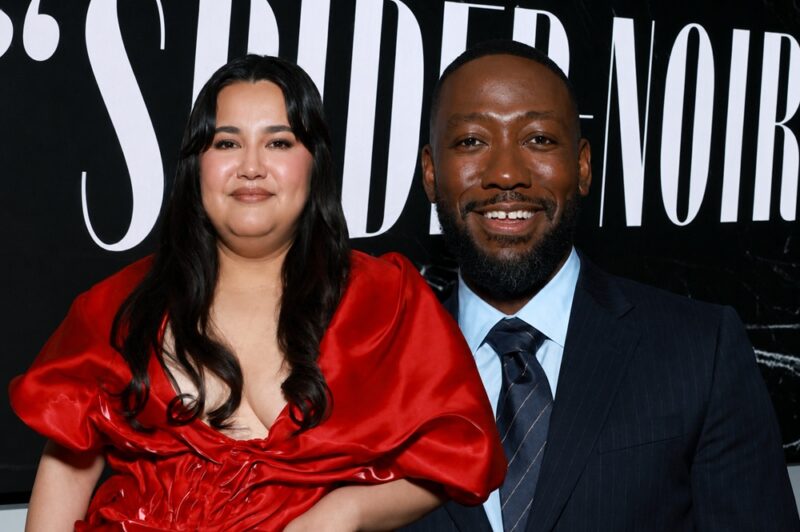
In the world of Spider-Noir, shadows stretch longer, dialogue crackles with old-Hollywood rhythm, and even the city itself feels suspended somewhere between pulp detective fiction and comic-book mythology. But for stars Lamorne Morris and Karen Rodriguez, grounding that heightened world meant focusing less on stylisation and more on humanity.
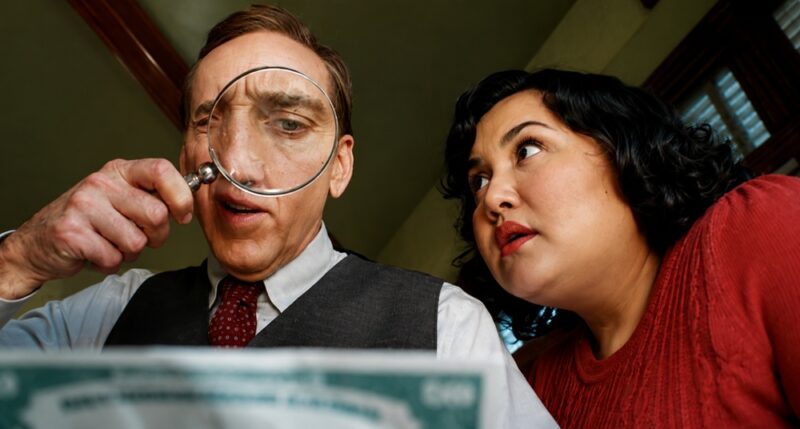
Based on the Marvel comic Spider-Man Noir, the upcoming live-action series follows Ben Reilly (played by Nicolas Cage), a weary private investigator navigating 1930s New York while reckoning with his past as the city’s lone masked hero. Morris steps into the role of Robbie Robertson – reimagined here as a risk-taking freelance journalist chasing stories that might finally change his fortunes – while Rodriguez plays Janet, Reilly’s sharp secretary and investigative partner, inspired by the fast-talking noir archetypes of classic detective cinema.
For Morris, stepping into the shoes of such an iconic Marvel character came with equal parts excitement and pressure.
“A mixture of both,” he says when asked whether he felt obligated to honour decades of comic history while still making the role his own. “You do want to service the fans as much as you can, and fans can be pretty tough sometimes on variants of a character.”
At the same time, Morris found freedom in the fact that Spider-Noir exists within its own alternate universe. Robbie Robertson has appeared across Spider-Man media for decades, most memorably portrayed by Bill Nunn in Sam Raimi’s original trilogy, but Morris points out that audiences rarely get to fully explore Robbie’s inner life onscreen.
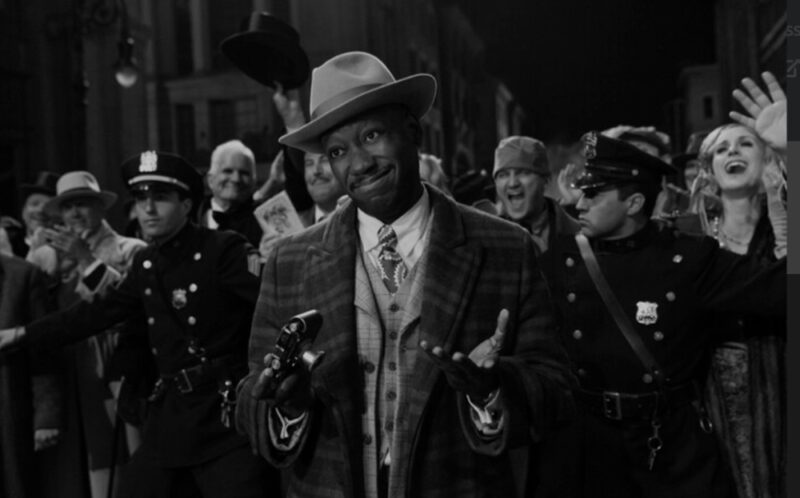
“In the series, you get more room to play. You get eight episodes to kind of figure it out,” he explains. “With great writing, you get a chance to explore a little bit of that backstory.”
That freedom was established early through conversations with creators Oren Uziel and Steve Lightfoot. “They said, ‘We trust your instincts, and we want to see what you do.’”
The result, according to Morris, is a version of Robbie who balances dramatic weight with moments of levity – particularly opposite Rodriguez’s Janet.
“He gets to do a lot where you can see his more dramatic side,” Morris says, “but there’s a lot of levity, especially when he’s around Janet. We get to be silly, we get to goof off and play. I think fans will really enjoy that dynamic.”
That chemistry clearly extended beyond the screen. When reflecting on her most lasting memory from production, Rodriguez becomes emotional describing her final day on set – a moment made even more meaningful after fracturing her foot during filming.
“It was such a whirlwind job,” she recalls. “It was such an exercise of relinquishing myself, and I couldn’t have done it with better people.”
Her wrap day scene happened to be with Morris and Cage, and as the crew gathered to celebrate her final moments on the production, Rodriguez found herself overwhelmed by the atmosphere surrounding her.
“I just looked at Nic, and he looked so… parental, almost. So proud, and so sweet,” she says. “It just felt like, ‘I’ve done it. I did it.’ I don’t think I’ll ever forget it.”
Morris agrees with Rodriguez’s description of Cage’s presence. While the Oscar-winning actor carries what Morris calls a “larger-than-life air,” he was equally struck by Cage’s attentiveness in quieter moments between takes.
One of Morris’ favourite memories unexpectedly revolves around conversations about watches.
“He’s given me the history of movement and which company started this and which company started that,” Morris laughs. “Then the next day he’d come in and show me something new.”
What stayed with him wasn’t just Cage’s knowledge, but the care behind the interaction.
“He meets so many people,” Morris says. “And I thought, man, this is really cool. This is why you’re him. You get to see one of your heroes be human.”
That humanity appears central to how both actors approached the show’s unusual tonal balancing act. Spider-Noir exists at the intersection of two heightened genres: hard-boiled noir and superhero storytelling. Yet rather than leaning too heavily into stylisation, both Morris and Rodriguez say they constantly returned to character and relationships first.
“For me, it started out as the struggle,” Morris admits. “As performers, we love to believe we can do everything. So when you get dealer’s choice, you go, ‘How do I blend it? How do I merge the worlds?’”
Eventually, he realised the answer was simpler.
“You have to take a step back and go, ‘How do I help the story?’ Because if the story doesn’t track, no one’s going to give a damn about my cadence or my buttery, silky tone.”
Rodriguez approached it similarly, focusing less on technical performance choices and more on Janet’s role within the emotional architecture of the series.
“For Janet, it was that pace, that banter, that archetype of His Girl Friday,” she says. “The way people stay on top of each other in conversation, the movement, the way we occupied space physically – I think all of that really invoked those old films.”
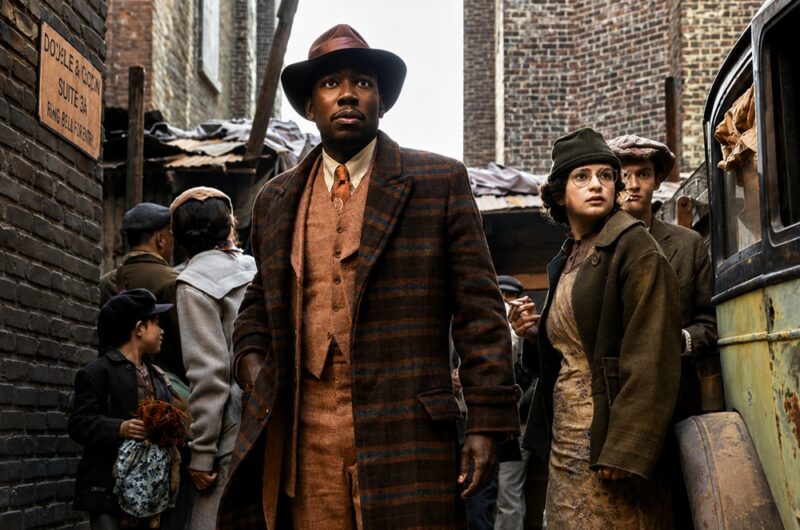
Visually, Spider-Noir embraces classic noir aesthetics in a particularly ambitious way: the series was filmed simultaneously in both colour and black-and-white. While audiences may obsess over the monochrome imagery and expressionistic lighting, the actors say the production’s departments handled much of that heavy lifting for them.
“I thankfully didn’t have to worry about it,” Rodriguez says. “I just had to do my job.”
Watching the finished footage, however, gave her a deeper appreciation for how noir visual language subtly manipulates viewers emotionally.
“The camera angles alone, the composition of frame, how it can be off-kilter – whether you notice it or not, it makes you uneasy as a viewer,” she explains. “Who’s in the light and who’s in the shadow matters.”
She even noticed details about Janet she hadn’t consciously registered during filming.
“She has halo lighting all the time,” Rodriguez says with a smile. “She’s like a little angel. You’re safe with her.”
Morris initially approached the project by studying classic noir performances and films from the era, wondering whether he needed to mimic the rhythms or mannerisms of old Hollywood stars. But eventually, he landed on the same conclusion as Rodriguez.
“At the end of the day, you come to the same conclusion: just play it real,” he says. “Play the story, and add your own version to it.”
That philosophy may ultimately be what allows Spider-Noir to stand apart from other comic-book adaptations. Beneath the stylised lighting, rapid-fire banter and monochrome shadows is a cast less interested in imitation than emotional truth – finding the humanity inside a universe built on myth.
Spider-Noir will premiere globally on Prime Video – in both Authentic Black & White and True-Hue Full Colour – on May 27th, 2026.
*Header image credit: Jason Mendez/Getty Images for Prime Video.
Related Posts:
- Interview: Trap House director Michael Dowse and star Kate del Castillo…
- Interview: Director Daniel Nettheim and The Killings at Parrish Station…
- Interview: Abigail directors Tyler Gillett and Matt Bettinelli-Olpin on…
- Interview: Anna Camp and Justin Bartha on their high-concept comedy…
- The heightened Los Angeles legacy of J. Paul Getty (and why art in L.A.…
- Interview: Michael Morris on bringing back Renée Zellweger in Bridget…
